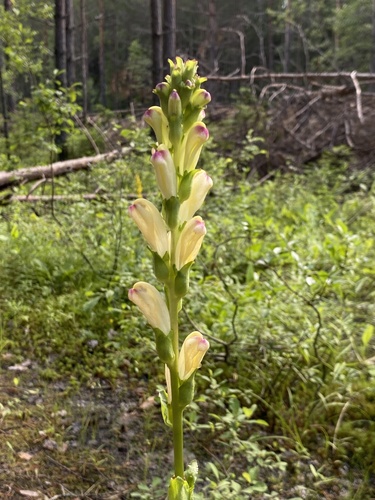
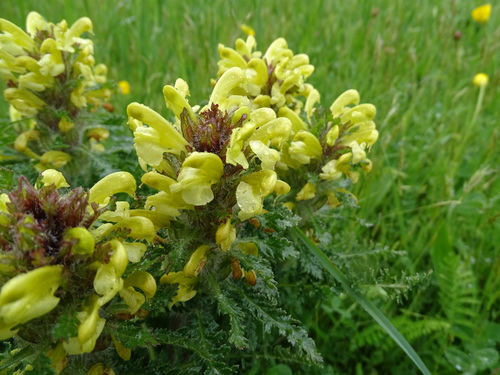
Striga hermonthica
(Delile) Benth.
Purple witchweed
iNaturalist· cc-by
(c) Denis Bastianelli, some rights reserved (CC BY), uploaded by Denis Bastianelli
iNaturalist· cc-by-nc
(c) International Institute of Tropical Agriculture, some rights reserved (CC BY-NC)
iNaturalist· cc-by-nc-sa
(c) Marco Schmidt, some rights reserved (CC BY-NC-SA)
Summary
Source: WikipediaStriga hermonthica, commonly known as purple witchweed or giant witchweed, is a hemiparasitic plant that belongs to the family Orobanchaceae. It is devastating to major crops such as sorghum (Sorghum bicolor) and rice (Oryza sativa). In sub-Saharan Africa, apart from sorghum and rice, it also infests maize (Zea mays), pearl millet (Pennisetum glaucum), and sugar cane (Saccharum officinarum). Striga hermonthica has undergone horizontal gene transfer from Sorghum to its nuclear genome. The S. hermonthica gene, ShContig9483, is most like a Sorghum bicolor gene, and additionally shows significant but lesser similarity to a gene from Oryza sativa. It shows no similarity to any known eudicot gene.
Description
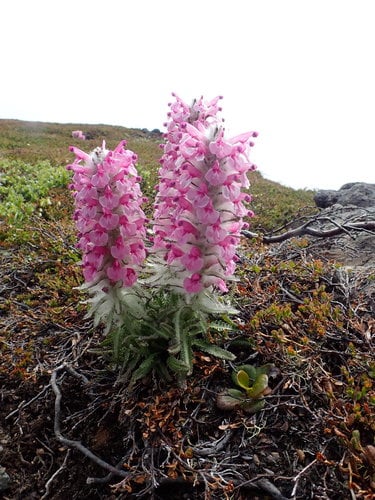
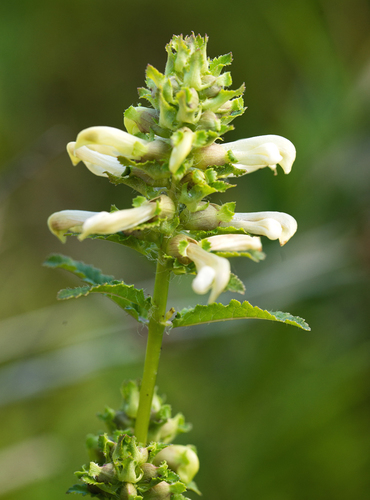
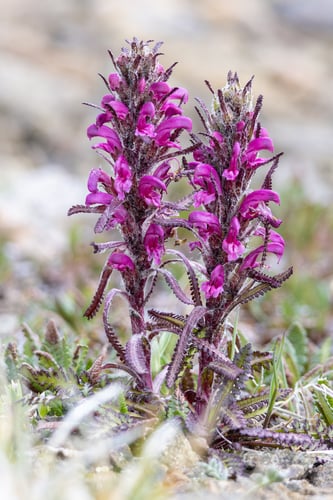
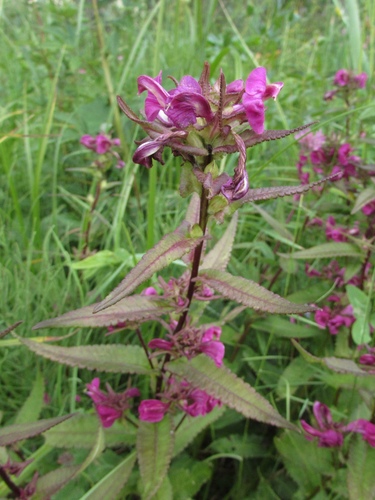
An erect herb. It grows partly on other plants. It has a few branches. It grows 30-40 cm high. It can be 1 m high. The flowers are bright pink.
This description is brief — help expand it
Edible Uses
The leaves are used as flavoring.
Known Hazards
This is a serious parasitic plant to food crops.
Distribution
It is a tropical plant. It grows in dry grassy areas in West Africa.
Where It Grows
Africa, Benin, Burkina Faso, Cameroon, Central Africa, East Africa, Guinea, Guinée, Guinea-Bissau, Madagascar, Senegal, West Africa,
Cultivation
In general, the genus Striga is found in the semi-arid to moist tropics, tolerating a relatively wide range of climatic and soil conditions. It grows in areas with a mean annual rainfall ranging from 250 - 1,500mm per year, with a decrease in the severity of infestation in areas with higher rainfall. The plant is not particular to soil type or pH, and can be abundant on lighter soils, as well as on heavy clay soils. Striga hermonthica is a major pest problem in agriculture, especially in semi-arid marginal areas, parasitizing cereal crops, especially sorghum, millet, maize and rice. Globally, the genus Striga has a greater impact on human welfare than any other parasitic angiosperms because their hosts are often subsistence crops in areas marginal for agriculture. These furtive pathogens attack their hosts underground and, by the time the flowering stem of the parasite emerges and is evident, the crop is damaged. Control of the parasite is difficult to achieve because of the intimate association between the parasitic weed and its host. The seeds germinate in response to specific germination stimulants exuded by host roots. After germination, a haustorium is formed in the root of the host plant through differentiation of the root apex. A vascular connection is subsequently established between the two plants, allowing the parasite to absorb water and nutrients that are essential for its development.
Other Uses
The plant is used both as a dye in its own right, and also as a mordant in indigo dyeing, where it is used to deepen the colour.
Notes
It has also been out in the family Scrophulariaceae. This is a serious parasitic plant to food crops. It can be controlled in sorghum crops by planting Celosia argentea between the sorghum plants.
Synonyms
Also Known As
Data, Djida, Ndokum, Saga, Shilo, Silo
References (3)
- Bonou, A., et al, 2013, Valeur economique des Produits Forestiers Non Ligneux (PFNL) au Benin. Editions Universitaires Europeennes p 95
- Burkill, H. M., 1985, The useful plants of west tropical Africa, Vol. 5. Kew.
- World Checklist of Useful Plant Species 2020. Royal Botanic Gardens, Kew