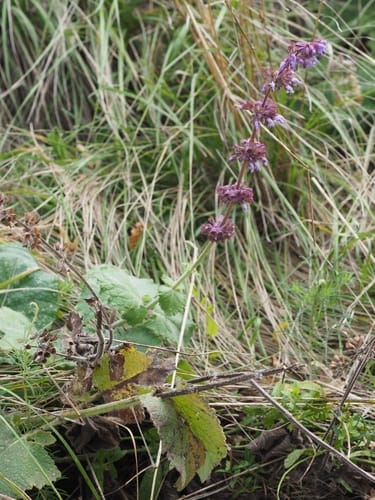
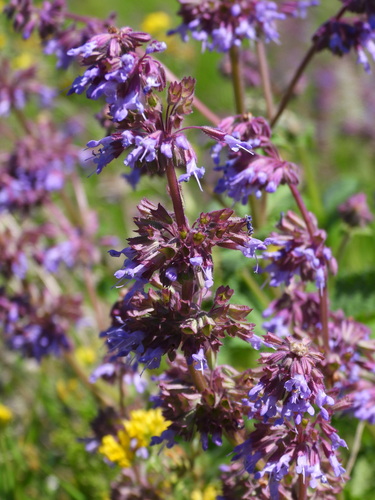
Plectranthus glandulosus
Hook. f.
Fru-fru
gbif· cc-by
Royal Botanic Gardens, Kew
Description
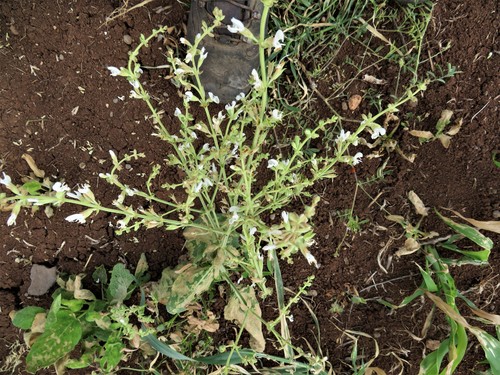
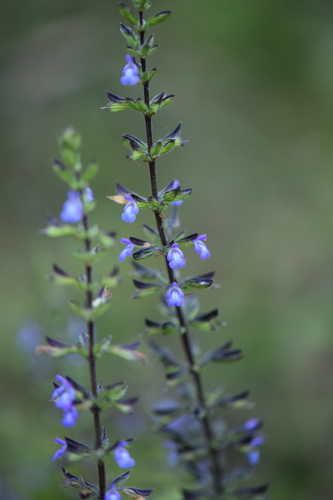
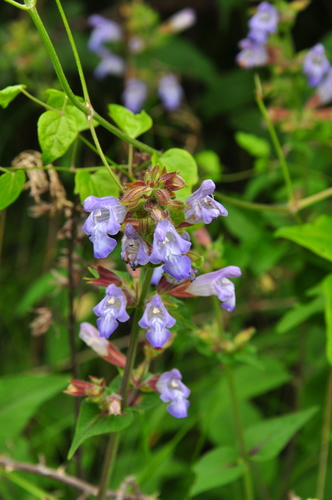
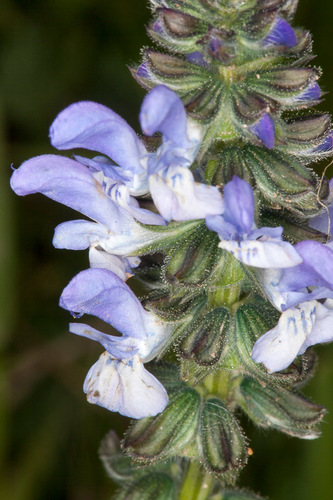
A coarse scrambling herb of the Lamiaceae family native to mountain forest openings in tropical regions, growing to approximately 3 m high with a strong aromatic scent.
Edible Uses
The leaves are used as a flavouring.
Medicinal Uses
The plant is used to treat influenza in Cameroon.
Distribution
It is a tropical plant. It grows in openings in mountain forest. In Nigeria it has been recorded at 1,440 m above sea level.
Where It Grows
Africa, Cameroon, Central Africa, Equatorial Guinea, Guinea, Guinée, Mali, Nigeria, West Africa,
Cultivation
The whole plant is strongly aromatic.
Propagation
Seed - sow in well-drained soil, covering lightly with a thin layer of sand, and place in a warm but shaded spot. The seed germinates in about three weeks. Cuttings of Plectranthus species generally root easily - soft tips root faster than semi-hardwood growth. The cuttings are best taken 60 - 100mm long with three or four nodes, making the cut just below a node. Place them in sand, perlite, vermiculite or peat, or any mixture of these, keep them moist and shaded and they should root in 2 - 3 weeks
Synonyms
References (3)
- Burkill, H. M., 1985, The useful plants of west tropical Africa, Vol. 3. Kew.
- Chapman, J. D. & Chapman, H. M., 2001, The Forest Flora of Taraba and Andamawa States, Nigeria. WWF & University of Canterbury. p 180
- Lukhoba, C. W., et al, 2006, Plectranthus: A review of ethnobotanical uses. Journal of Ethnopharmacology 103 (2006) 1–24