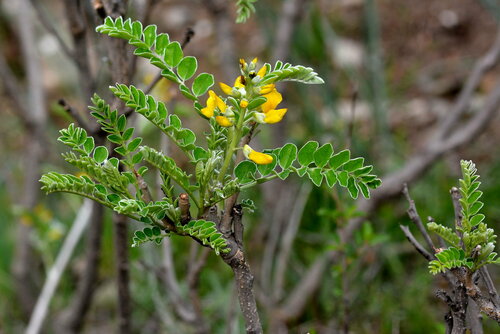
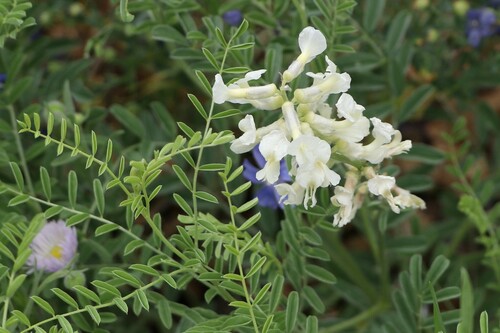
Philenoptera cyanescens
(Schumach. & Thonn.) Roberty
Indigo vine, African indigo
iNaturalist· cc-by-nc-sa
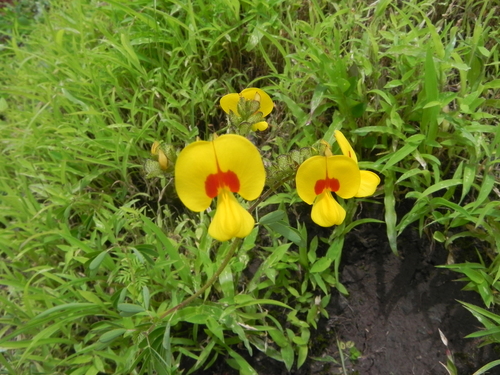
(c) Marco Schmidt, some rights reserved (CC BY-NC-SA), uploaded by Marco Schmidt
iNaturalist· cc-by-nc
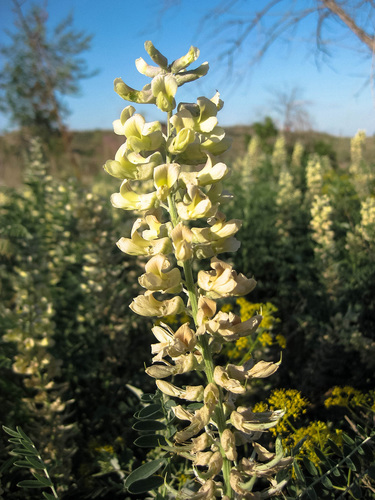
(c) AYENA Jacques, some rights reserved (CC BY-NC), uploaded by AYENA Jacques
iNaturalist· cc-by-nc
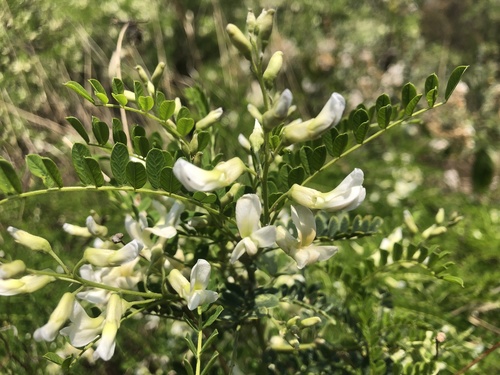
(c) Carel Jongkind, some rights reserved (CC BY-NC), uploaded by Carel Jongkind
Summary
Source: WikipediaPhilenoptera cyanescens is a species of shrub from family Fabaceae. It is commonly known as elu in Yoruba, anunu by Igbo people as talaki in Hausa, sauru in Tiv and as ebelu by the Edo people It is a traditional source of indigo in West Africa to dye fabric.
Description
A woody climber or straggling shrub. It can grow 2-3 m high as a bush when cultivated. It can grow 15-20 m long. The branches are silky when young. The flowers are reddish. They are in groups 25 cm long.
Edible Uses
The leaves are used as a flavouring.
Medicinal Uses
The plant has long been used in traditional medicine in Africa. Modern research has confirmed the plant's anti-inflammatory activity, which is attributed to the presence of oleanane derivatives and glycyrrhetinic acid. A triterpene component of the plant has been found active against arthritis. The leaves and roots are applied as a poultice or dressing to treat skin diseases and ulcers. The roots are believed to be more effective. The root has been suggested as a possible treatment for leprosy. The ground-up root is applied to yaws, whilst washing with water containing the powdered root helps to cure sores. The leaves and bark are used as a laxative. A decoction of leafy twigs and roots is given to women during or after childbirth and is also taken as an aphrodisiac. This decoction is also used to treat arthritic conditions, venereal diseases and diarrhoea. The leaf sap is drunk as a treatment against intestinal disorders and dysentery.
Distribution
It is a tropical plant. It grows in coastal districts and forests. It in on the edge of savannah forests in West Africa. It can be along the edges of forests and mangroves.
Where It Grows
Africa, Benin, Burkina Faso, Cameroon, Central Africa, Equatorial Guinea, Ghana, Guinea, Guinée, Guinea-Bissau, Ivory Coast, Liberia, Mali, Niger, Nigeria, Senegal, Sierra Leone, Sri Lanka, Togo, Trinidad-Tobago, West Africa*,
Cultivation
Although many species within the family Fabaceae have a symbiotic relationship with soil bacteria, this species is said to be devoid of such a relationship and therefore does not fix atmospheric nitrogen.
Other Uses
The indican-containing leaves and young sprouts are used after fermentation to obtain the blue indigo dye, which is used for colouring textiles and other material. The fermented material enters the market in kind of plant balls (aró in Yoruba). There is some export of the dye from Liberia to Europe. All aerial parts of the plant yield an indigo dye, which has been used in West Africa at least since the 11th century. It is still used to dye blue to blue-black cotton cloth, bark cloth (formerly), raffia and other vegetable fibres, leather, hair and wood carvings. Yoruba women use the plant, locally called ‘elu’, as their source of indigo dye in the art of making ‘adire cloth’, a decorative technique similar to batik (a method of dyeing a fabric by which the parts of the fabric not intended to be dyed are covered with removable wax), creating pale blue patterns on a dark blue ground. The dye is also very important in the cottage industry in Sierra Leone where ‘gara cloth’ is made. ‘Gara’ is the Madinka word for the traditional indigo dye found in many types of textiles of Sierra Leone. The source of this dye is the ‘gara’ leaf obtained from Philenoptera cyanescens. At present the word ‘gara’ is used both for the dyeing process (using both synthetic and natural dyes) and for the dyed products. It is believed that in the middle of the 19th century Susu and Madinka traders from Guinea, who came to settle in Kabala in the northern province of Sierra Leone, encouraged the native Temne women to develop gara dyeing. Traditionally woven cloth known as ‘country cloth’ dyed with gara was used by chiefs for ceremonial dresses, bridal dowry, burial clothes, court fines and gifts to important visitors. At present gara is worn by a much wider circle of people for aesthetic and cultural reasons. It is used for daily and ceremonial uniforms in some schools and offices. In the hotel industry gara is used widely as napkins, tablecloths, bedspreads, curtains and as backdrop for conference halls and lounges. The leaves contain 0.1 - 0.3% of precursors of indoxyl and can yield an indigo dyestuff which contains up to 43% indigotin. During the dyeing process, in addition to indigotin and indirubin, a series of yellow flavonoid colorants such as quercetin, a quercetin glycoside, kaempferol and rhamnetin also become attached to the fibre, but they gradually disappear through wearing of the cloth, exposure to the sun and repeated washing. In Ghana the fruits are believed to yield a better dye than the leaves. The leaves and young shoots are bruised to a pulp and made up into balls about 10 - 12 cm in diameter, called ‘arô’ in Yoruba. These balls are dried in the sun and sold on markets. Sometimes only dry broken leaves and twigs are sold, not pulped into balls. The dye bath is prepared by soaking crushed balls in hot water, the number of balls depending on the desired intensity of the blue colour. Yoruba women in south-western Nigeria use from 50 balls for a bright blue up to 150 for a blue-black colour. The necessary alkalinity is obtained by adding lye from wood-ash. The solution is left to ferment for 6 - 8 days and the dye bath is then usually ready for the cloth to be steeped in it. The leaves are chewed with potash to stain the teeth black.
Synonyms
Also Known As
Bumidi, Caro-ba, Gara, Malila-de-tinta, Mantenam-buamade, Mantenam, Tinta-grande, Yoruba indigo
References (5)
- Burkill, H. M., 1985, The useful plants of west tropical Africa, Vol. 5. Kew. (As Lonchocarpus cyanescens)
- Flora of West Tropical Africa, Vol 1 Part 2
- Kew Plants of the World Online
- Ubom, R. M., 2010, Ethnobotany and Diversity Conservatioon in the Niger Delta, Nigeria. International Journal of Botany. 6(3): 310-322 (As Lonchocarpus cyanescens)
- Wiersema, J. H. & Leon, B., 2013, World Economic Plants. A Standard Reference CRC Press. 2nd Ed. p 515