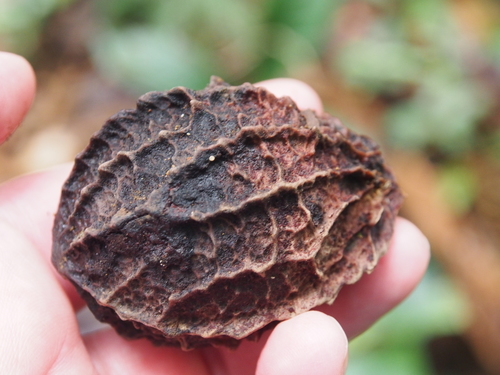
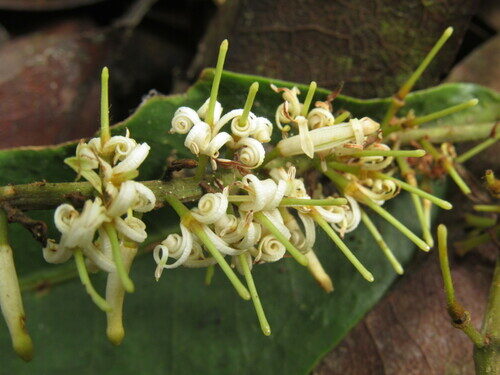
Lasianthera africana
P. Beauv.
wikimedia· cc-by-sa
Wikimedia Commons - Andikan Efiok Eduok
Description
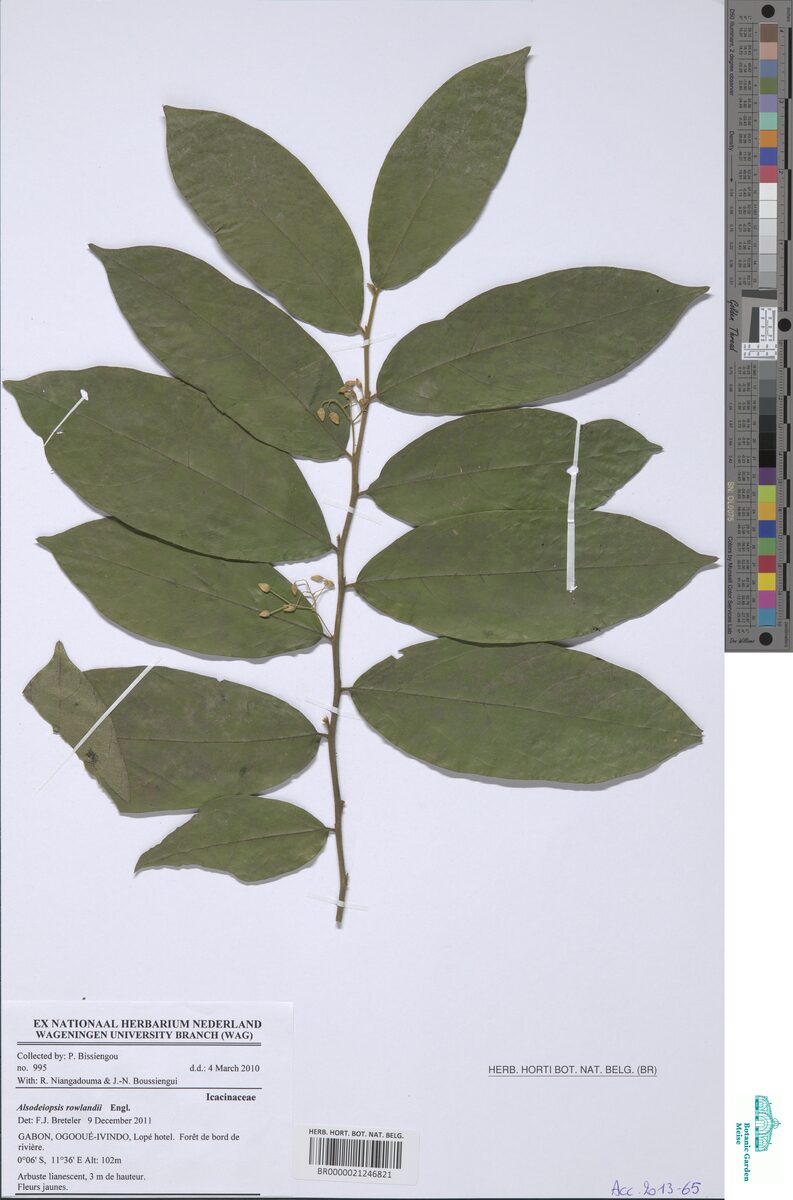
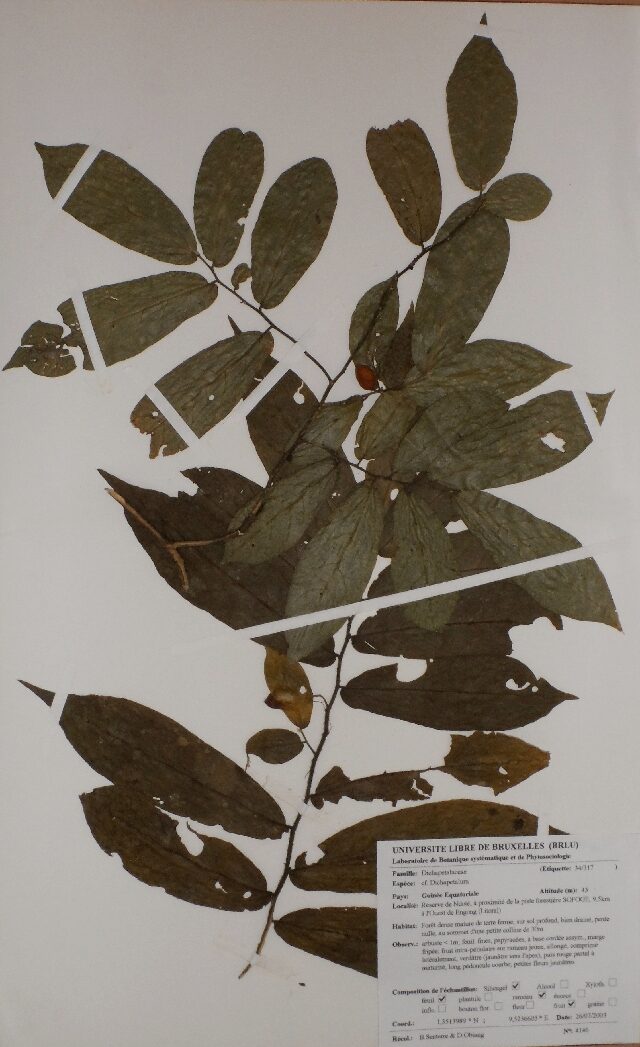
A shrub. It keeps growing from year to year. It can be 1-4 m tall. The small branches are angular. The leaves are oblong but heart shaped at the base and taper to the tip. They are 8-15 cm long by 3-6 cm wide. They are arranged alternately along the stem.
Edible Uses
The leaves are dried and used in soups. Some varieties are bitter and are treated by washing multiple times in boiling water and adding potash to remove the bitterness.
Traditional Uses
Caution: The leaves contain alkaloids. The leaves can be dried and stored. They are used in soups. Some varieties can be bitter. To remove this they are washed several times in boiling water and also have potash added.
Known Hazards
The leaves contain alkaloids.
Distribution
It is a tropical plant. It grows as an under-storey plant in secondary jungle in West Africa. It grows along the side of rivers.
Where It Grows
Africa, Cameroon, Central Africa, Congo, Equatorial Guinea, Gabon, Nigeria, West Africa,
Cultivation
Plants can be grown from stem cuttings.
Other Information
It is a commonly eaten vegetable in Nigeria. It is both cultivated and harvested from the wild.
Nutrition
| Part | Moisture | kJ | kcal | Protein | Vit A | Vit C | Iron | Zinc |
|---|---|---|---|---|---|---|---|---|
| Leaves | 77 | 305 | 73 | 3 | — | — | — | — |
Also Known As
Editan, Etitan, Etoi, oi, Itebele, Kpurugiza, Nak-nka, Odindang, Uyoro
References (9)
- Akinola, R., et al, 2020, A Review of Indigenous Food Crops in Africa and the Implications for more Sustainable and Healthy Food Systems. Sustainability 2020, 12, 3493;
- Burkill, H. M., 1985, The useful plants of west tropical Africa, Vol. 2. Kew.
- FAO Corporate Document Repository. The Major Significance of 'Minor' Forest Products. Appendix 3
- Grubben, G. J. H. and Denton, O. A. (eds), 2004, Plant Resources of Tropical Africa 2. Vegetables. PROTA, Wageningen, Netherlands. p 301
- Isong, E. U., & Idiong, U. I., 1997, Comparative studies on the nutritional and toxic composition of three varieties of Lesianthera africana. Plant Food for Human Nutrition. 51:79-84 (As Lesianthera africana)
Show all 9 references Hide references
- Udo, E. S., et al, 2009, Life-form and Density of Valuable Non-timber Plants in Ukpom Community Forest, Akwa Ibom State, Nigeria. African Research Review 3(3) p 8
- Uusiku, N.P. et al, 2010, Nutritional value of leafy vegetables of sub-Saharan Africa. Journal of Food Composition and Analysis 23 (2010) 499-509 (As Lesianthera)
- World Checklist of Useful Plant Species 2020. Royal Botanic Gardens, Kew
- Zapfack, L., et al, 2001, Ethnobotanical Survey of the Takamanda Forest Reserve. Consultancy Report PROFA, Cameroon. p 28