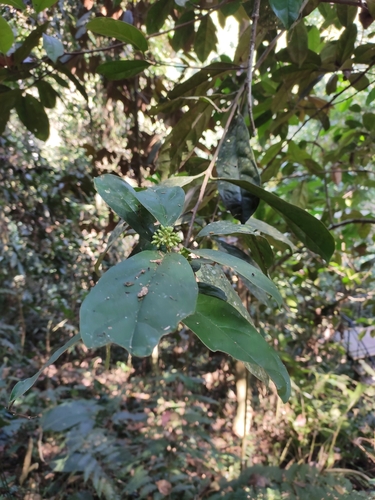
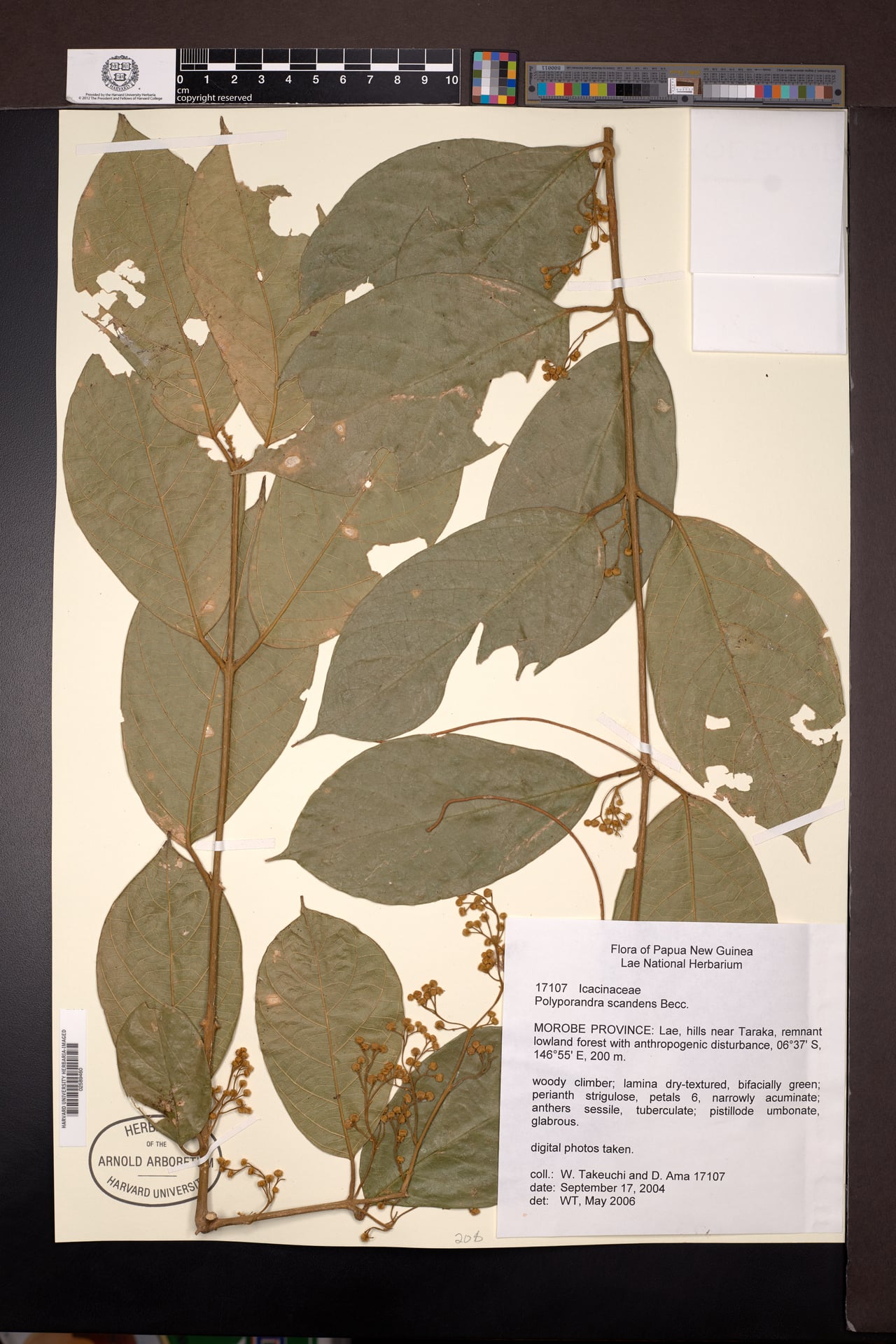
Calatola laevigata
Standl.
Palo de Papa, Smooth calatola
iNaturalist· cc-by-nc
(c) Juan Camilo Muñoz, some rights reserved (CC BY-NC), uploaded by Juan Camilo Muñoz
iNaturalist· cc-by-nc-sa
(c) Mateo Hernandez Schmidt, some rights reserved (CC BY-NC-SA), uploaded by Mateo Hernandez Schmidt
Description
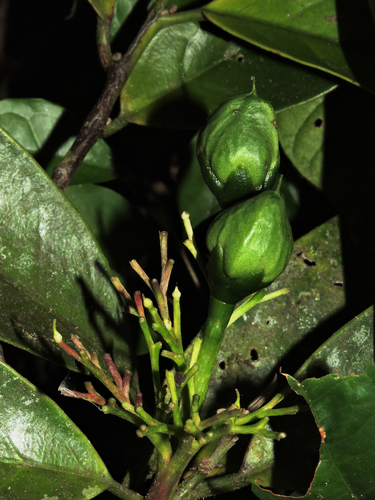
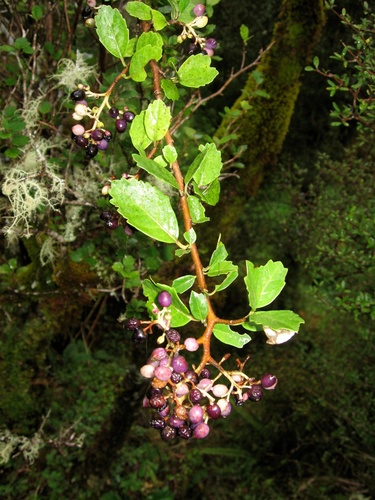
A tree. It grows 15 m high. The trunk is 25 cm across. The leaves are oblong and 16 cm long. Plants are separately male and female. Male spikes are 6 cm long. The fruit are narrowly oval and 5 cm long. They are covered with low ridges.
Edible Uses
The seed kernels are roasted and eaten whole or ground and used in tortillas.
Traditional Uses
The kernels of the seeds are roasted and eaten or ground and used in tortillas.
This uses section is brief — help expand it
Distribution
A tropical plant. It grows between 800 and 2,300 m above sea level in Mexico.
Where It Grows
Belize, Central America, Guatemala, Honduras, Mexico, North America,
Notes
There are about 6 Calatola species.
Also Known As
Aguacate de mono, Azulillo, Bone, Calate, Calatola, Calatolazno, Duraznillo, Onmanchinte, Palo de tinta, Ruez de calatola
References (8)
- Altschul, S.V.R., 1973, Drugs and Foods from Little-known Plants. Notes in Harvard University Herbaria. Harvard Univ. Press. Massachusetts. no. 2568
- Bircher, A. G. & Bircher, W. H., 2000, Encyclopedia of Fruit Trees and Edible Flowering Plants in Egypt and the Subtropics. AUC Press. p 73
- Gonzalez-Espinosa, M. et al, 2011, The Red List of Mexican Cloud Forest Trees. Flora and Fauna International, Cambridge. p 38
- Grandtner, M. M., 2008, World Dictionary of Trees. Wood and Forest Science Department. Laval University, Quebec, Qc Canada. (Internet database http://www.WDT.QC.ca)
- Menninger, E.A., 1977, Edible Nuts of the World. Horticultural Books. Florida p 76
Show all 8 references Hide references
- Segura, S., et al, 2018, The edible fruit species in Mexico. Genet Resour Crop Evol (2018) 65:1767–1793
- Smith, N., Mori, S.A., et al, 2004, Flowering Plants of the Neotropics. Princeton. p 192
- Standley, P. C. & Record, S. J., 1936, The Forests and Flora of British Honduras. (Belize). p 230