Calatola costaricensis
Standl.
Costa Rica calatola, Catola
iNaturalist· cc-by-sa
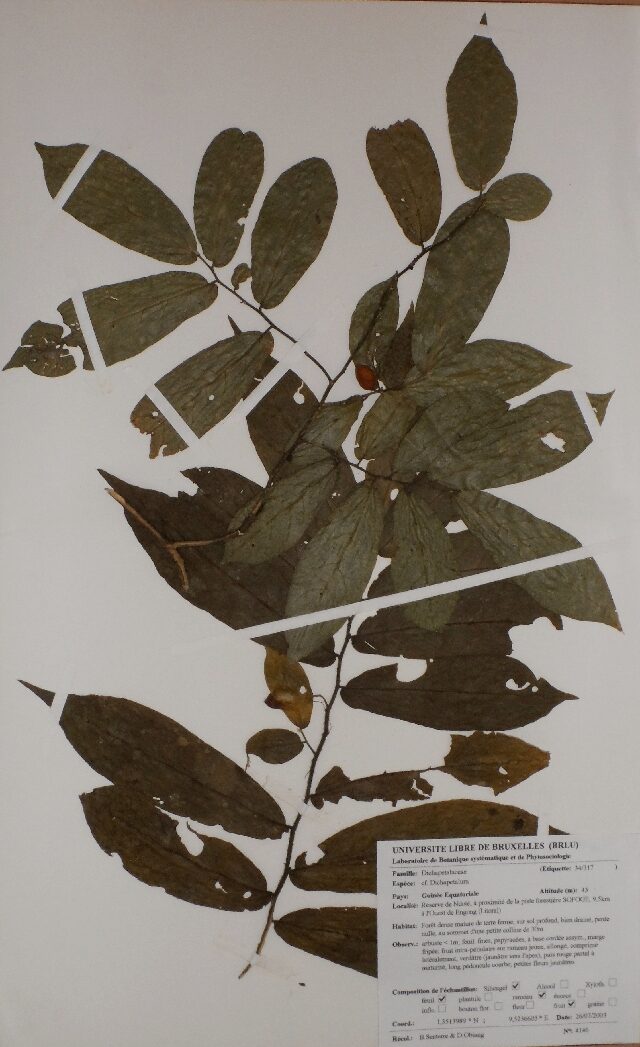
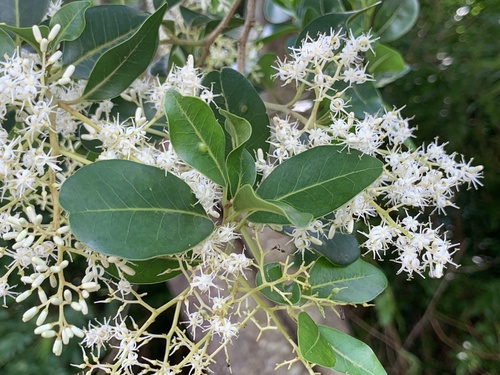
(c) Lena Struwe, some rights reserved (CC BY-SA), uploaded by Lena Struwe
iNaturalist· cc-by-nc
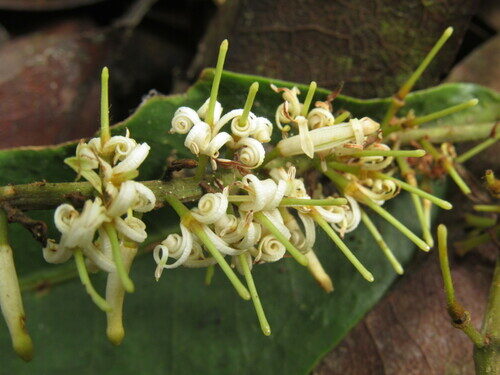
(c) Jan Meerman, some rights reserved (CC BY-NC), uploaded by Jan Meerman
iNaturalist· cc-by-nc
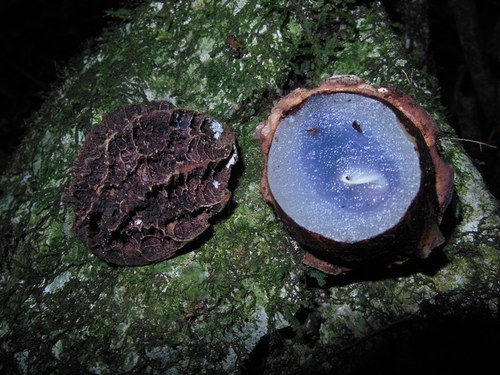
(c) Jan Meerman, some rights reserved (CC BY-NC), uploaded by Jan Meerman
Summary
Source: WikipediaCalatola costaricensis is a lower-storey rainforest tree in the family Metteniusaceae, reaching up to 15 m (49 ft) in height. It is found from southern Mexico to northern South America. It is notable for the size of its deeply sculpted seeds, which are up to 7 cm (2.8 in) in length by about 5 cm (2.0 in) wide.
Description
A tree. It grows 15 m tall. The trunk has low branches. The crown is dense. The leaves are simple and alternate. The leaves are oblong and 10-25 cm long. The flowers are small and green or white. Trees are separately male and female. The fruit is fleshy with a bony layer around the seed. This is 7 cm long.
Edible Uses
The seed is best roasted before eating.
Traditional Uses
The seed is best roasted then eaten. Caution: It can cause nausea if eaten raw or in large amounts.
This uses section is brief — help expand it
Known Hazards
Can cause nausea if eaten raw or in large amounts.
Distribution
It is a tropical plant. In Costa Rica it grows from sea level to 2,000 m altitude. It grows in lower mountain and wet forests.
Where It Grows
Amazon, Andes, Belize, Bolivia, Brazil, Central America*, Colombia, Costa Rica, Ecuador, El Salvador, Guatemala, Honduras, Jamaica, Mexico, Nicaragua, North America, Panama, Peru, South America, Venezuela, West Indies,
Cultivation
Plants are grown from seed. Seed will float in the sea for 1 year but may not grow after this.
Notes
There are about 6 Calatola species.
Synonyms
Also Known As
Anpo, Cuchipsun, Genipaparana, Gowe, Huevo de burro, Ishoan zu'je, Mati muyo, Nashum, Palo azul, Pio, Piu, Piyu, Sapil de corazon, Tintamino, Wema, Wenkamowe, Yana mucu
References (9)
- Bircher, A. G. & Bircher, W. H., 2000, Encyclopedia of Fruit Trees and Edible Flowering Plants in Egypt and the Subtropics. AUC Press. p 73
- Condit, R., et al, 2011, Trees of Panama and Costa Rica. Princeton Field Guides. p 246
- Grandtner, M. M., 2008, World Dictionary of Trees. Wood and Forest Science Department. Laval University, Quebec, Qc Canada. (Internet database http://www.WDT.QC.ca)
- Grandtner, M. M. & Chevrette, J., 2013, Dictionary of Trees, Volume 2: South America: Nomenclature, Taxonomy and Ecology. Academic Press p 89
- Kew Plants of the World Online
Show all 9 references Hide references
- Macbride, J. F., 1951, Flora of Peru. Vol. 8 Part 3A No. 1. Field Museum Natural History. Chicago. p 223 (As Calatola venezuelana)
- Roa, J. A. G. & Boada, D. S. G., 2018, Fundación para el Fortalecimiento de la Fruticultura y Plantas Alimenticias no Convencionales en Colombia.
- Torre, de la, L., et al, 2008, Enciclopedia de las Plantas Útiles del Ecuador. Herbario QCA. Pontificia Universidad Católica del Ecuador. p 382
- Zuchowski W., 2007, Tropical Plants of Costa Rica. A Zona Tropical Publication, Comstock Publishing. p 336