Aframomum exscapum
(Sims) Hepper
Guinea grains
iNaturalist· cc-by-nc
(c) Carel Jongkind, some rights reserved (CC BY-NC), uploaded by Carel Jongkind
wikimedia· cc0
Wikimedia Commons - Édouard Heckel
Summary
Source: WikipediaAframomum exscapum is a species of plant in the ginger family, Zingiberaceae. It was first described by John Sims and got its current name from Frank Nigel Hepper. Its Susu name is dadigogo. Another name is balancounfa. It was described in 1891 by Edouard Heckel, who wrongly attributed to it the name of Ceratanthera Beaumetzi.
Description
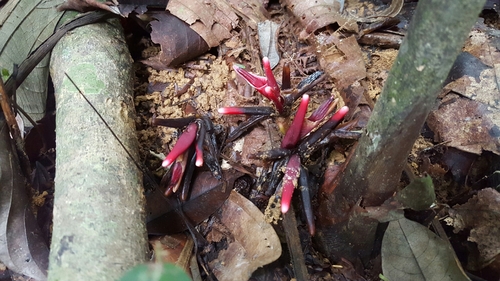
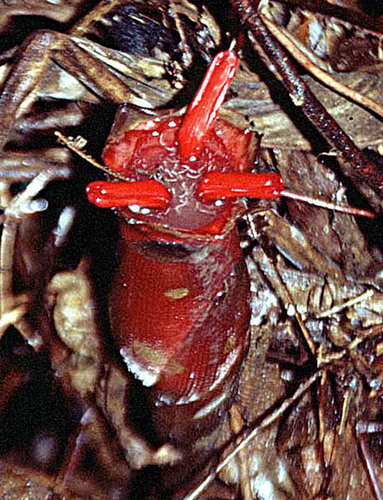
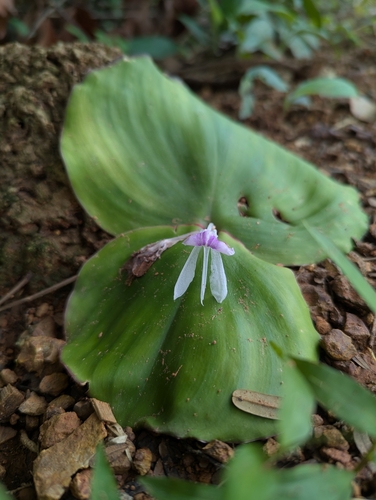
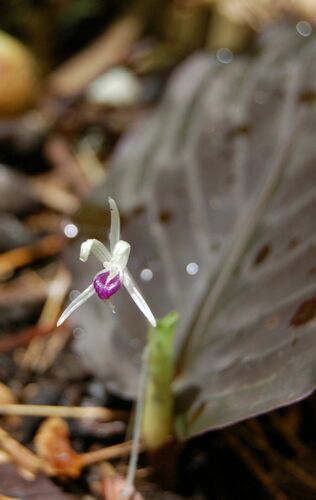
A ginger family plant. It is a herb with stems 1-2 m high. The leaves are on the upper part of the leafy stems. The flowers are white with some pink colour and they have a yellow throat. The fruit are hairy and red. They have deep corrugates along them. The seeds are black and shiny.
Edible Uses
The fruit are used as a spice, with pungent seeds. The leaves are cooked and eaten.
Traditional Uses
The fruit are used as a spice. The seeds are pungent. The leaves are cooked and eaten.
This uses section is brief — help expand it
Distribution
It is a tropical plant. It grows in forests.
Where It Grows
Africa, Cameroon, Central Africa, Côte d'Ivoire, Guinea, Guinée, Ivory Coast, Liberia, Nigeria, Sierra Leone, West Africa,
Notes
There are about 50 Aframomum species.
Synonyms
Also Known As
Alligator pepper, Dadi-gogo, Grains of paradise, Kable, Miekoteh, Moukoule
References (6)
- Burkill, H. M., 1985, The useful plants of west tropical Africa, Vol. 5. Kew.
- Dibong, S. D., et al, 2011, Inventory and Biodiversity of species edible wild fruits sold in the markets of Douala, Cameroon. International Journal of Applied Biology and Pharmaceutical Technology. 2(3).
- Diop, A. l., et al, 2021, Cultural importance of wild edible plants in three sympatric communities: Agni, Akyé and Gwa in the Department of Alépé (Southeast of Côte d’Ivoire). Ethnobotany Research and Applications 22:35. p 7
- e-monocot.org/taxon/urn:kew.org:wcs:taxon:218372
- Seidemann J., 2005, World Spice Plants. Economic Usage, Botany, Taxonomy. Springer. p 9
Show all 6 references Hide references
- World Checklist of Useful Plant Species 2020. Royal Botanic Gardens, Kew