Cotula anthemoides
L.
Gansgras
iNaturalist· cc-by-nc-sa
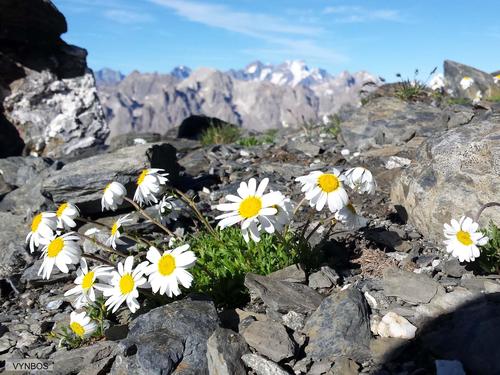
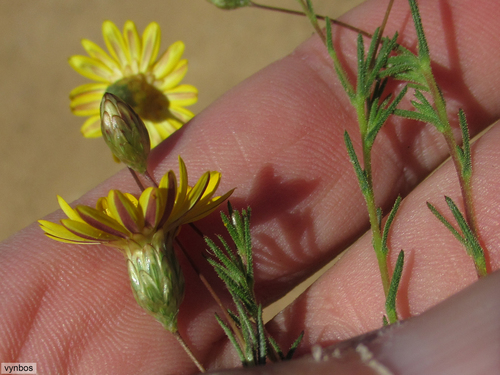
(c) Rob Palmer, some rights reserved (CC BY-NC-SA), uploaded by Rob Palmer
iNaturalist· cc-by-nc
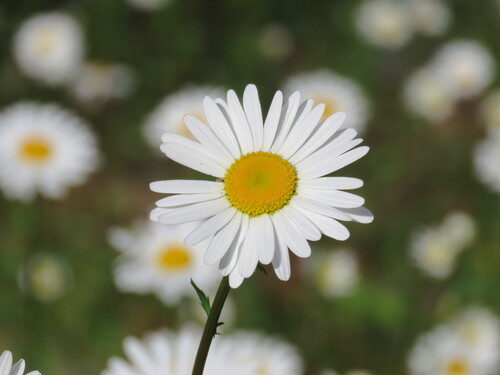
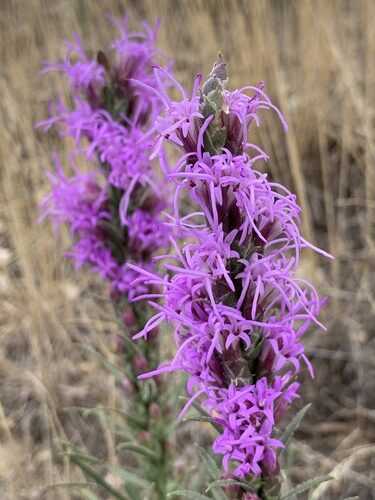
(c) Dewald du Plessis, some rights reserved (CC BY-NC)
iNaturalist· cc-by-nc
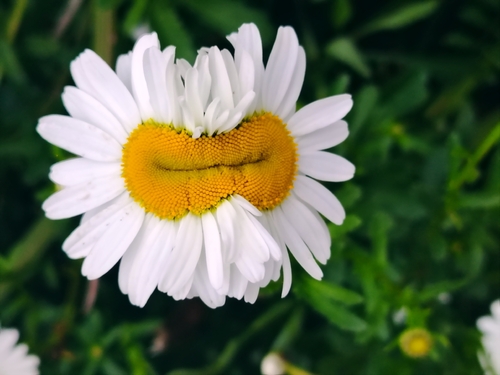
(c) Dewald du Plessis, some rights reserved (CC BY-NC)
Summary
Source: WikipediaCotula anthemoides is a species of flowering plant in the Aster family that is widely distributed across Africa and southern Asia. It has also been introduced to Albania, France, and Poland.
Description
An annual herb. It grows 30 cm high. It has many branches from the base. The leaves do not have leaf stalks. The leaves at the base clasp the stem. The edges are dissected and the tips form sharp points. The flower heads occur singly. They are on long stalks and are flat topped.
Edible Uses
The leaves are cooked and eaten.
Traditional Uses
The leaves are cooked and eaten.
This uses section is brief — help expand it
Medicinal Uses
The flower heads are used in traditional medicine to treat rheumatic pain. A poultice is created by crushing the flower parts into powder and then warming them with oil.
Distribution
It is a subtropical plant. It grows in seasonally flooded grassland. It grows between 115-2,135 m above sea level. It can grow in arid places. In Yunnan.
Where It Grows
Africa, Asia, Botswana, China, East Africa, Eswatini, Lesotho, Mozambique, Namibia, South Africa, Southern Africa, Swaziland, Zambia,
Synonyms
Also Known As
Umhlonyane, Umqokolo
References (8)
- Fowler, D. G., 2007, Zambian Plants: Their Vernacular Names and Uses. Kew. p 76
- Fox, F. W. & Young, M. E. N., 1982, Food from the Veld. Delta Books. p 128
- Long, C., 2005, Swaziland's Flora - siSwati names and Uses http://www.sntc.org.sz/flora/
- Royal Botanic Gardens, Kew (1999). Survey of Economic Plants for Arid and Semi-Arid Lands (SEPASAL) database. Published on the Internet; http://www.rbgkew.org.uk/ceb/sepasal/internet [Accessed 11th April 2011]
- Ruiters-Welcome, A. K., 2019, Food plants of southern Africa. Ph.D. thesis. Univ. of Johannesburg p 33
Show all 8 references Hide references
- Shava, S., 2000, The Use of Indigenous Plants as Food by a Rural Community in the Eastern Cape: an Educational Exploration. Masters Thesis Rhodes University. p 63
- Welcome, A. K. & Van Wyk, B.-E., 2019, An inventory and analysis of the food plants of southern Africa. South African Journal of Botany 122 (2019) 136–179
- Xu, You-Kai, et al, 2004, Wild Vegetable Resources and Market Survey in Xishuangbanna, Southwest China. Economic Botany. 58(4): 647-667.