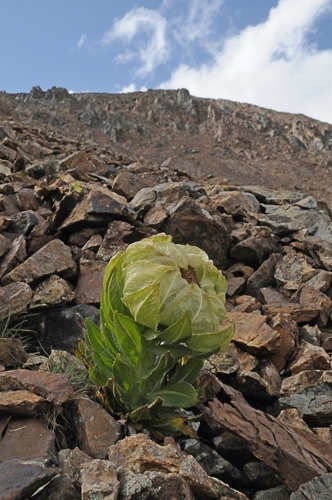
Liatris punctata
Hook.
Snakeroot, Dotted blazing star, Mexican blazing star, Nebraska blazing star
iNaturalist· cc-by-nc
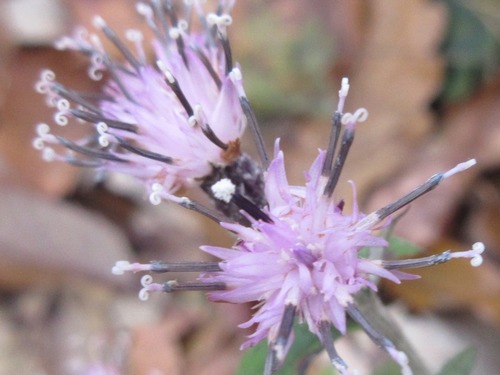
(c) palr76, some rights reserved (CC BY-NC)
iNaturalist· cc-by-nc
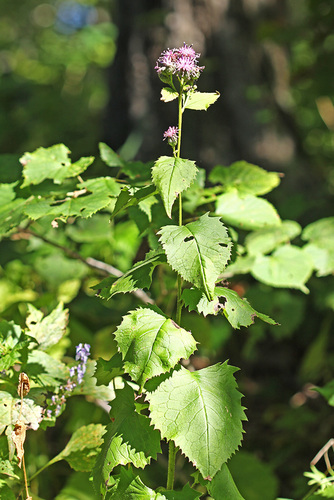
(c) Ron Marusak, some rights reserved (CC BY-NC), uploaded by Ron Marusak
iNaturalist· cc-by-nc
(c) kenttrulsson, some rights reserved (CC BY-NC), uploaded by kenttrulsson
Description
Liatris punctata is a PERENNIAL growing to 0.6 m (2ft). See above for USDA hardiness. It is hardy to UK zone 3. It is in flower from August to September, and the seeds ripen in October. The species is hermaphrodite (has both male and female organs) and is pollinated by Bees. It is noted for attracting wildlife. Suitable for: light (sandy) and medium (loamy) soils, prefers well-drained soil and can grow in nutritionally poor soil. Suitable pH: mildly acid, neutral and basic (mildly alkaline) soils. It can grow in semi-shade (light woodland) or no shade. It prefers dry or moist soil.
Edible Uses
Root - raw or cooked[46, 61, 105, 161, 212, 257]. A sweet flavour when harvested in the spring and baked. Eating the root is said to improve the appetite.
Medicinal Uses
Antipruritic Diuretic Poultice StomachicAn infusion of the roots has been used in the treatment of stomach aches, bloody urine and women's bladder complaints. The root has been chewed and the juice swallowed in the treatment of swollen testes. A decoction of the roots is used as a wash for itching skin complaints. A poultice of the boiled roots is applied to swellings.
Distribution
Eastern N. America - Alberta to New Mexico and Texas, east to Minnesota and Nebraska..
Where It Grows
NORTHERN AMERICA: Canada (Saskatchewan, Alberta, Manitoba), United States (Michigan, Ohio, Illinois, Iowa, Kansas, Minnesota, Missouri, Nebraska, North Dakota, Oklahoma, South Dakota, Wisconsin, Colorado, Montana, Wyoming, Arkansas, Louisiana, New Mexico, Texas), Mexico (Chihuahua, Coahuila de Zaragoza, Nuevo León, San Luis Potosí, Tamaulipas (north))
Cultivation
Grows well in a moderately good light soil.Tolerates poor soils. Plants are prone to rot overwinter in wet soils. A good bee plant. Rodents are very fond of the tubers so the plants may require some protection.
Propagation
Seed - best sown as soon as it is ripe in autumn in a greenhouse. Sow stored seed as soon as possible in the year in a greenhouse. Prick out the seedlings into individual pots when they are large enough to handle and grow the plants on in the greenhouse for their first year. Plant them out into their permanent positions in early summer. Division in spring. Larger clumps can be replanted direct into their permanent positions, though it is best to pot up smaller clumps and grow them on in a cold frame until they are rooting well. Plant them out in the spring. Basal cuttings taken in spring as growth commences. Harvest the shoots when they are about 10cm long with plenty of underground stem. Pot them up into individual pots and keep them in light shade in a cold frame or greenhouse until they are rooting well. Plant them out in the summer.