Corchorus schimperi
Cufod.
Horn-fruited jute
iNaturalist· cc-by-nc
(c) robburrett, some rights reserved (CC BY-NC)
iNaturalist· cc0
no rights reserved
iNaturalist· cc0
no rights reserved
Description
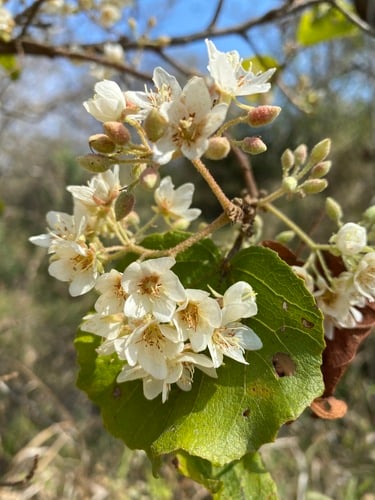
A herb. It lies along the ground. It is an annual plant. The branches have a line of curled hairs along one side. The leaves are oblong to sword shaped. They are 5 cm long by 1.5 cm wide. There are a few hairs on the edges. There are rounded teeth along the edge. The flowers are in clusters of 1-3 in the axils of the leaves. The fruit is a 3 angled capsule. It can be 2.5 cm long.
Edible Uses
The leaves are cooked and eaten as a green vegetable.
Traditional Uses
The leaves are cooked and eaten as a green vegetable.
This uses section is brief — help expand it
Distribution
It is a subtropical plant. It grows in sands and clays and grows between 1,310-1,950 m above sea level. It can grow in arid places.
Where It Grows
Africa, Botswana, East Africa, Eswatini, Ethiopia, Kenya, Malawi, Namibia, South Africa, Southern Africa, Swaziland, Tanzania, Zambia, Zimbabwe,
Notes
These have also been in the Tiliaceae.
Also Known As
Murere-luhya
References (3)
- Long, C., 2005, Swaziland's Flora - siSwati names and Uses http://www.sntc.org.sz/flora/
- Royal Botanic Gardens, Kew (1999). Survey of Economic Plants for Arid and Semi-Arid Lands (SEPASAL) database. Published on the Internet; http://www.rbgkew.org.uk/ceb/sepasal/internet [Accessed 11th June 2011]
- World Checklist of Useful Plant Species 2020. Royal Botanic Gardens, Kew