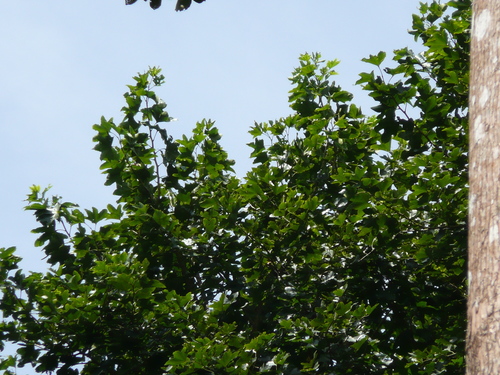
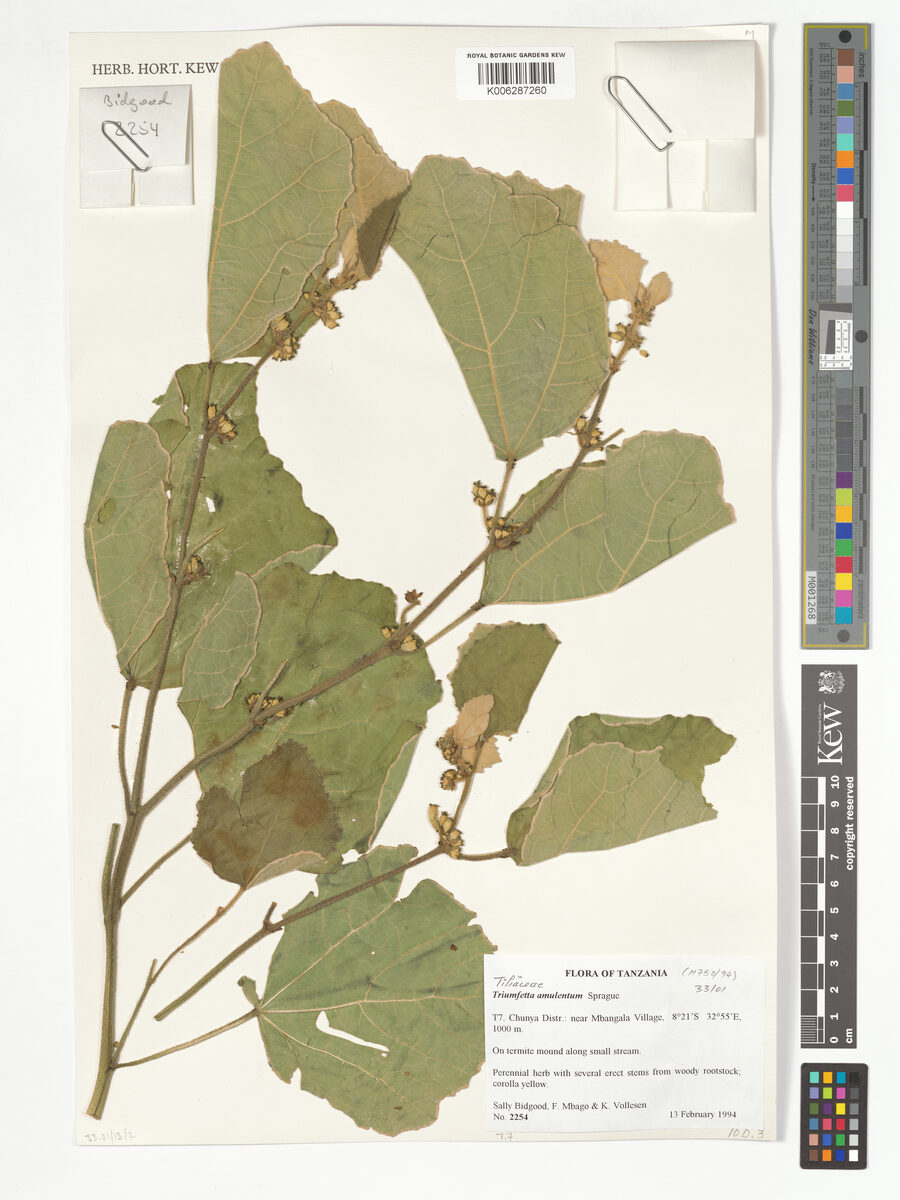
Cola urceolata
K. Schum.
gbif· cc-by-nc-sa
MBG
gbif· cc-by-nc-sa
MBG
gbif· cc-by-nc-sa
MBG
Summary
Source: WikipediaCola urceolata, also known as bemange, bokosa, eboli, egwasa, ikaie, lekukumu, lungandu, lusakani, matadohohu, nesunguna, ngbilimo, ngono, and zimonziele, is a flowering shrub in the family Malvaceae. The specific epithet (urceolata) comes from Latin urceus (= pitcher, jug) and means "urn-shaped".
Description
A small shrub. It grows 2-3 m high. The leaves are oval and taper to both ends. They are wavy. The flowers are 5 mm long and have no petals. The fruit are 10 cm long. There are 3-5 seeds in each bright red pod. The young pods are green. The edible aril around the seeds is eaten.
Edible Uses
The fruit and other edible parts of the plant are eaten raw or cooked in its native range.
Traditional Uses
The pulp around the fruit is eaten raw. The leaves are cooked and eaten as a leafy vegetable.
This uses section is brief — help expand it
Distribution
It is a tropical plant. It grows in forests including seasonally flooded forests and in disturbed sites.
Where It Grows
Africa, Cameroon, Central Africa, Central African Republic, CAR, Congo DR, Congo R, Gabon,
Production
In Central African Republic flowers have been recorded from January to March and fruit from June to September.
Notes
Also put in the family Sterculiaceae.
Also Known As
Balembe, Limbabaliyekondo, Losakanu, Nzanzainza, Nzanzalinza, Ongando oitchi, Sakanu, Tongombo
References (6)
- Danforth, R.M., & Boren, P.D., 1997, Congo Native fruits. Twenty-five of the best. Privately published. p 49
- Dibong, S. D., et al, 2011, Inventory and Biodiversity of species edible wild fruits sold in the markets of Douala, Cameroon. International Journal of Applied Biology and Pharmaceutical Technology. 2(3).
- Liengola, I. B., 2001, A contribution to the study of native edible plants by the Turumbu and Lokele of the Tshopo District, Province Orientale, D. R. Congo. Syst. Geogr. Pl. 71:687-698
- Mosango M., Szafranski F., 1985, Plantes sauvages à fruits comestibles dans les environs de Kisangani (Zaïre). In: Journal d'agriculture traditionnelle et de botanique appliquée, 32e année, pp. 177-190
- Termote, C., et al, 2011, Eating from the wild: Turumbu, Mbole and Bali traditional knowledge of non-cultivated edible plants, District Tshopo, DRCongo, Gen Resourc Crop Evol. 58:585-618
Show all 6 references Hide references
- World Checklist of Useful Plant Species 2020. Royal Botanic Gardens, Kew