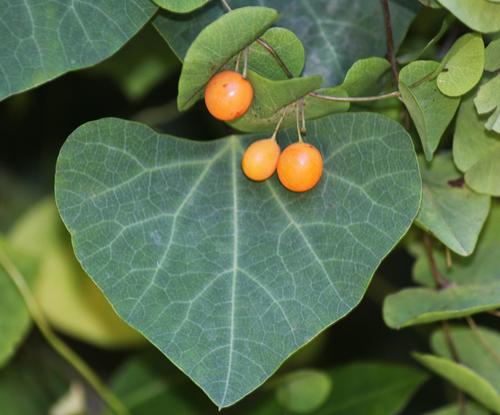
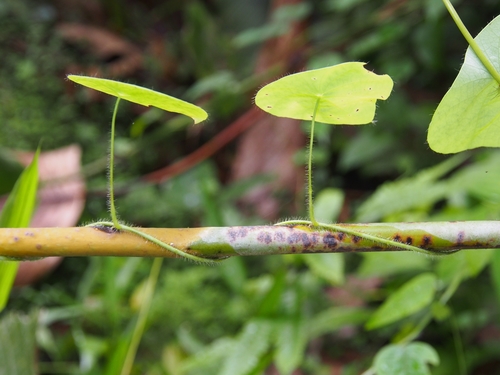
Haematocarpus thompsonii
Miers
gbif· cc0
Royal Botanic Garden Edinburgh
Description
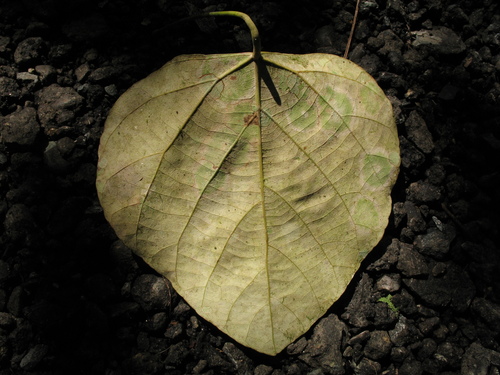
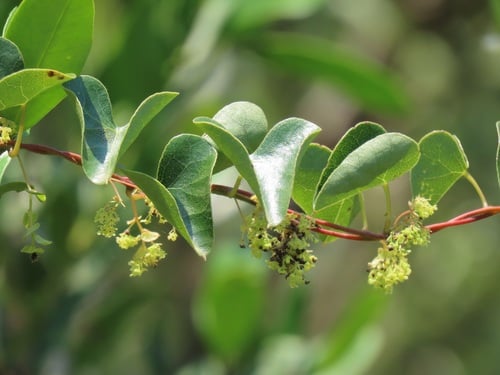
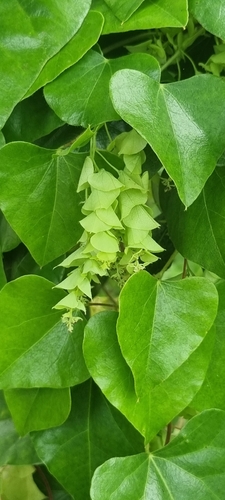
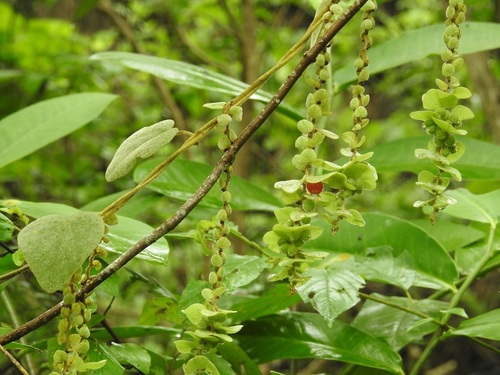
A woody climber. It climbs over tall trees. The leaves are simple and alternate. The leaves are oval and taper to both ends. They are 6-18 cm long by 4-8 cm wide. They are more pale underneath. The flowers are on the stem. Male and female flowers are on separate plants. The fruit are fleshy and 4-5 cm long by 2-3 cm wide. The ripe fruit are dark red with red juice.
Edible Uses
The ripe fruit are eaten.
Traditional Uses
The ripe fruit are eaten.
This uses section is brief — help expand it
Distribution
A tropical plant. It grows near the banks of rivers and up to 650 m above sea level.
Where It Grows
Andamans, Asia, Bangladesh, Himalayas, India, Indonesia, Northeastern India, SE Asia, Sikkim,
Production
In NE India plants flower and fruit April to May.
Synonyms
Also Known As
Agniphol, Inramjidukha, Thei-chhung-sen
References (9)
- Ambasta, S.P. (Ed.), 2000, The Useful Plants of India. CSIR India. p 255
- Dobriyal, M. J. R. & Dobriyal, R., 2014, Non Wood Forest Produce an Option for Ethnic Food and Nutritional Security in India. Int. J. of Usuf. Mngt. 15(1):17-37 (As Haematocarpus validus)
- Jeeva, S., 2009, Horticultural potential of wild edible fruits used by the Khasi tribes of Meghalaya. Journal or Horticulture and Forestry Vol. 1(9) pp. 182-192
- Kar, A., et al, 2013, Wild Edible Plant Resources used by the Mizos of Mizoram, India. Kathmandu University Journal of Science, Engineering and Technology. Vol. 9, No. 1, July, 2013, 106-126 (As Haematocarpus validus)
- Majumdar, K and Datta, N., 2009, Traditional wild edible fruits for the forest dwellers of Tripura, India. Pleione 3(2) 167-178
Show all 9 references Hide references
- Pasha, M. K. & Uddin, S. B., 2019, Minor Edible Fruits of Bangladesh. Bangladesh J. Plant Taxon. 26(2): 299–313
- Sawian, J. T., et al, 2007, Wild edible plants of Meghalaya, North-east India. Natural Product Radiance Vol. 6(5): p 418
- Singh, H.B., Arora R.K.,1978, Wild edible Plants of India. Indian Council of Agricultural Research, New Delhi. p 62
- Singh, V. B., et al, (Ed.) Horticulture for Sustainable Income and Environmental Protection. Vol. 1 p 217