Secamone stuhlmannii
K. Schum
gbif· cc-by
Royal Botanic Gardens, Kew
gbif· cc-by-nc-sa
MBG
gbif· cc-by-nc-sa
MBG
Description
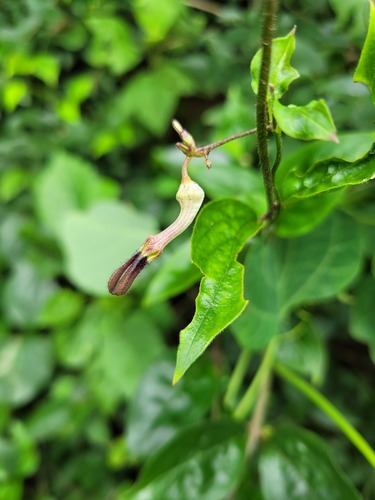
A woody creeper. It has rusty hairs. The leaves are simple and opposite. The leaves are 1-6 cm long by 1-2 cm wide. The flowers are in groups at the ends of the plant or in the axils of leaves. The flowers have both sexes. The fruit are a pair of follicles. These are 6-10 cm long by 1 cm wide. They taper to a point.
Edible Uses
The leaves are cooked and eaten as a vegetable, particularly during times of food scarcity.
Traditional Uses
The leaves are cooked and eaten as a vegetable in times of food scarcity.
This uses section is brief — help expand it
Medicinal Uses
A root decoction is used against stomach problems.
Distribution
It is a tropical plant. It grows in bushland between 800-1,700 m above sea level.
Where It Grows
Africa, East Africa, Kenya, Malawi, Rwanda, Tanzania, Uganda,
Other Uses
The fibrous stems are used for rope. The whole plant contains latex. No uses are mentioned.
Notes
There are about 80 Secamone species. Also put in the family Asclepiadaceae.
Synonyms
References (2)
- Grubben, G. J. H. and Denton, O. A. (eds), 2004, Plant Resources of Tropical Africa 2. Vegetables. PROTA, Wageningen, Netherlands. p 455
- World Checklist of Useful Plant Species 2020. Royal Botanic Gardens, Kew