Asclepias albens
(E. Mey.) Schltr.
Cartwheels
iNaturalist· cc-by-nc
(c) ottohirzel, some rights reserved (CC BY-NC), uploaded by ottohirzel
iNaturalist· cc-by-nc
(c) georgfritz, some rights reserved (CC BY-NC)
iNaturalist· cc-by-nc
(c) fayne, some rights reserved (CC BY-NC), uploaded by fayne
Description
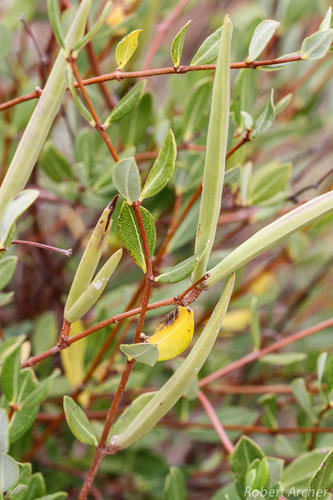
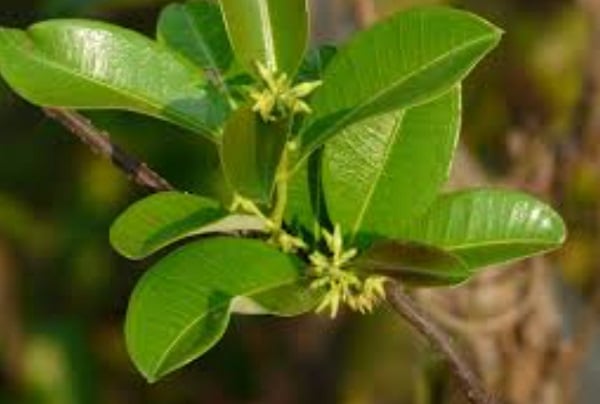
A herb. It can lie along the ground. The leaves are simple and oval. They are on short stalks. They are hairy on both surfaces. There are many flowers in a flat topped group at the top of the plant. They are green with yellow centres. They have a scent. The fruit are 5 cm long. They have fleshy ridges and a beak at the tip.
Edible Uses
Young leaves are cooked and eaten. Stems and flowers are also edible portions.
Traditional Uses
The young leaves are cooked and eaten. CAUTION: It contains milky sap which contains poisonous glycosides.
This uses section is brief — help expand it
Known Hazards
Contains milky sap which contains poisonous glycosides.
Distribution
It is a subtropical plant. It grows between 10-1,700 m above sea level.
Where It Grows
Africa, Eswatini, South Africa, Southern Africa, Swaziland,
Cultivation
Plants can be grown from seeds. They do not transplant easily.
Synonyms
Also Known As
Idoyi, Ishongwe, Tshalale, Umdzayi
References (6)
- Fox, F. W. & Young, M. E. N., 1982, Food from the Veld. Delta Books. p 106
- Jardin, C., 1970, List of Foods Used In Africa, FAO Nutrition Information Document Series No 2.p 79 (As Gomphocarpus albens)
- Long, C., 2005, Swaziland's Flora - siSwati names and Uses http://www.sntc.org.sz/flora/
- Martin, F.W. & Ruberte, R.M., 1979, Edible Leaves of the Tropics. Antillian College Press, Mayaguez, Puerto Rico. p 177 (As Gomphocarpus albens)
- Ruiters-Welcome, A. K., 2019, Food plants of southern Africa. Ph.D. thesis. Univ. of Johannesburg p 20
Show all 6 references Hide references
- Welcome, A. K. & Van Wyk, B.-E., 2019, An inventory and analysis of the food plants of southern Africa. South African Journal of Botany 122 (2019) 136–179