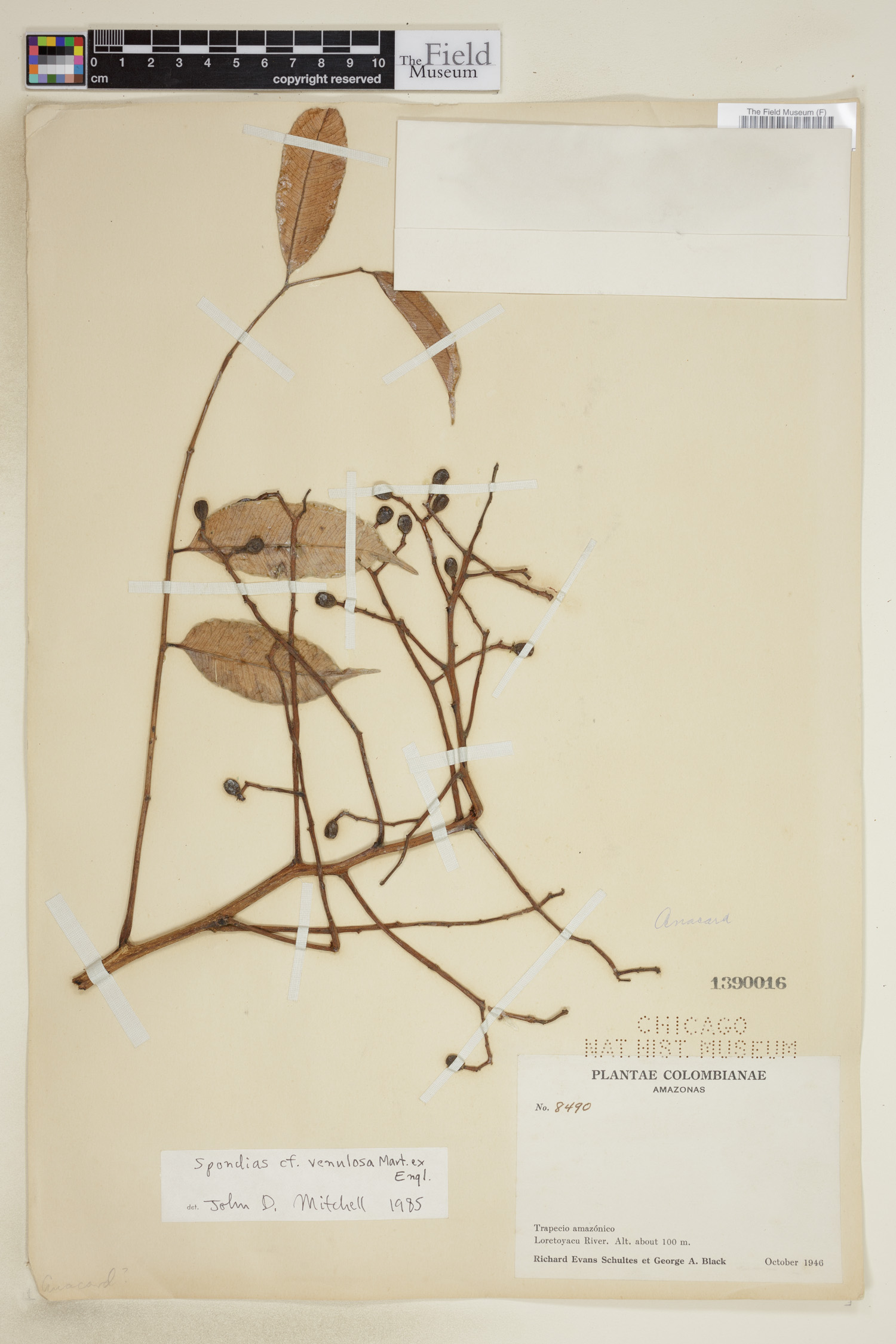
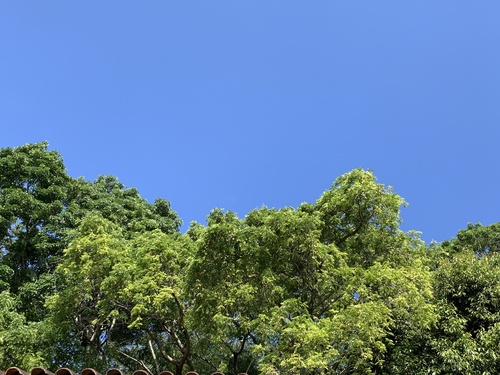
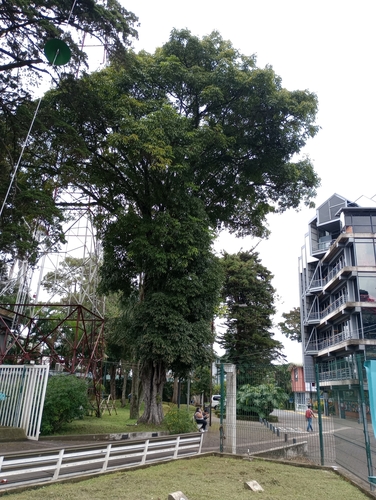
Pistacia terebinthus
L.
Terebinth
wikimedia· cc-by-sa
Balles2601 (iNaturalist profile: Balles2601) (via Wikimedia Commons)
wikimedia· cc-by-sa
Ram Eisenberg (via Wikimedia Commons)
wikimedia· cc-by-sa
Awinch1001 (via Wikimedia Commons)
iNaturalist· cc-by-nc-nd
(c) Bill Kirby1, some rights reserved (CC BY-NC-ND)
iNaturalist· cc-by-nc
(c) Clement Rivier Photos, some rights reserved (CC BY-NC), uploaded by Clement Rivier Photos
iNaturalist· cc-by-nc
(c) Carlos Bernal, some rights reserved (CC BY-NC)
Summary
Source: WikipediaPistacia terebinthus, also called the terebinth, is a deciduous shrub species of the genus Pistacia, native to the Mediterranean region from the western regions of Morocco and Portugal to Greece and western and southeastern Turkey. At one time terebinths growing on the eastern shores of the Mediterranean Sea were regarded as a separate species, Pistacia palaestina, but these are now considered to be a synonym of P. terebinthus.
Description
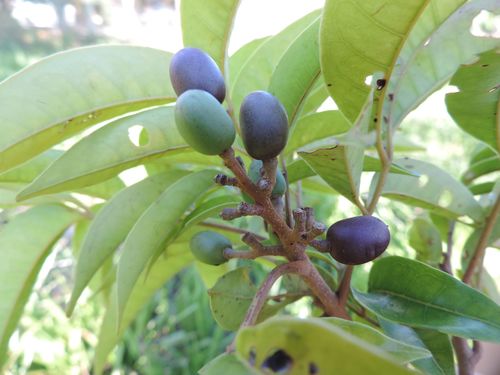
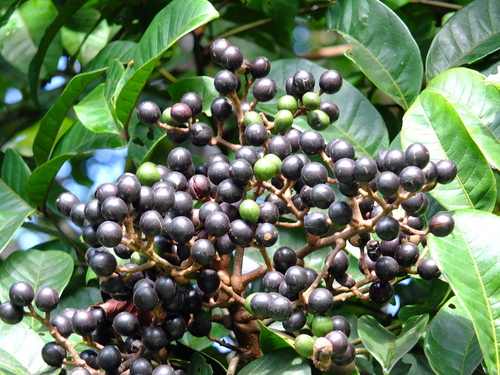
A shrub or small tree. It grows 10 m tall. It loses its leaves during the year. The leaves are compound and 10-20 cm long. The pinnae have 5-11 opposite oval leaflets. These are shiny and 2-6 cm long by 103 cm wide. Trees are separately male and female. The flowers are reddish-purple. The fruit are small and round and 5-7 mm long. They are blue and turn red to black when ripe.
Edible Uses
The seed can be eaten raw or cooked — it has a sweetish flavour, sweeter and oilier than an almond. An edible oil is also obtained from the seed. The immature fruits, including the stems, are preserved in vinegar and salt; known as atsjaar, they are used as a relish alongside wines served at meals. The fruit is about 7mm long and 6mm wide, each containing a single seed. Young leaves are cooked and used as a vegetable. A resin tapped from the trunk is used as both a food ingredient and a chewing gum.
Traditional Uses
The fruit are used to make a drink. The dry fruit is used as coffee. The fruit are eaten fresh, dried or roasted. They are also used to make a special bread. The young leaves are eaten alone. They are also added to pickles. They are also fried with onion and egg. The flowers are eaten raw. The oil from the fruit is used in cooking.
Medicinal Uses
The resin from this tree is antiseptic, antispasmodic, cytostatic, expectorant and vulnerary. Taken internally, it is used to treat chronic bronchial infections, streptococcal infections, urinary and renal infections, haemorrhage, gallstones, tapeworm and rheumatism. Externally it is applied for arthritis, gout, sciatica, scabies and lice. It has also been used in the treatment of cancer.
Known Hazards
None mentioned.
Distribution
It is a Mediterranean climate plant. It grows up to 600 m above sea level.
Where It Grows
Balkans, Bosnia, Britain, Canada, Crete, Cyprus, Europe, Gibraltar, Greece, Iran, Italy, Lebanon, Macedonia, Mediterranean, Middle East, Morocco, North America, Portugal, Slovenia, Spain, Syria, Turkey, Türkiye,
Cultivation
Requires a deep well-drained light soil, preferring a hot dry position in full sun. It grows best in a sandy to stony alkaline soil. This species is hardy in most of Britain but it is slow growing. This contradicts the report, also in, that this plant is only hardy to zone 9 and is therefore intolerant of anything other than the lightest frosts. Any pruning that needs to be done is best carried out in the spring. Dioecious, male and female plants must be grown if seed is required.
Propagation
Pre-soak the seed for 16 hours in alkalized water, or for 3–4 days in warm water, and sow in late winter in a cold frame or greenhouse. Two months of cold stratification may speed up germination, so sowing in early winter may be preferable. Germination is variable and can be slow. Prick out seedlings into individual pots when large enough to handle and grow on for at least their first winter under glass. Plant out into permanent positions in early summer, with some protection from winter cold advisable for the first year or two. Cuttings of half-ripe wood from juvenile trees can be taken in July and rooted in a frame. Layering is also possible.
Other Uses
The tree yields the resin known as Cyprus turpentine, obtained by making incisions in the bark (not the trunk) from midsummer to mid-autumn. It is used medicinally — primarily in cancer treatment — and also as a chewing gum. The plant can be used as a rootstock for the pistachio nut, P. vera. A red dye is obtained from galls formed on the leaves by aphids. The plant is also a source of tannin.
Other Information
It is cultivated.
Nutrition
| Part | Moisture | kJ | kcal | Protein | Vit A | Vit C | Iron | Zinc |
|---|---|---|---|---|---|---|---|---|
| Nuts | 7 | 2234 | 534 | 6.4 | — | — | — | — |
Synonyms
Also Known As
Bitme, Bittim, Cetek, Cetlemik, Citlenbik, Kizwan, Legnamaro, Lihopernata rujevina, Menengic, Sigoro, Smrdljika, Tetre
References (17)
- Biscotti, N. & Pieroni, A., 2015, The hidden Mediterranean diet: wild vegetables traditionally gathered and consumed in the Gargano area, Apulia, SE Italy. Acta Societatis Botanicorum Poloniae 84 (3): 327-338
- Biscotti, N. et al, 2018, The traditional food use of wild vegetables in Apulia (Italy) in the light of Italian ethnobotanical literature. Italian Botanist 5:1-24
- Ciftcioglu, C. G., 2015, Sustainable wild-collection of medicinal and edible plants in Lefke region of North Cyprus. Agroforest Syst. Springer
- Demir, I. & Ayaz, N., 2022, Wild edible plants contributing to the traditional foods of Mardin (Turkey) Province. Indian Journal of Traditional Knowledge Vol 21(3), July 2022, pp 569-582
- Dogan, Y., et al, 2004, The Use of Wild Edible Plants in Western and Central Anatolia (Turkey). Economic Botany 58(4) pp. 684-690
Show all 17 references Hide references
- Dogan, Y., 2012, Traditionally used wild edible greens in the Aegean Region of Turkey. Acta Societatis Botanicorum Poloniae 81(4): 329-342
- Dogan, Y. et al, 2013, Wild Edible Plants sold in the Local Markets of Izmir, Turkey. Pak. J. Bot. 45(S1): 177-184
- Ertug, F, Yenen Bitkiler. Resimli Türkiye Florası -I- Flora of Turkey - Ethnobotany supplement
- Hadjichambis, A. C., et al, 2007, Wild and semi-domesticated food plant consumption in seven circum-Mediterranean areas. International Journal of Food Sciences and Nutrition. 2007, 1-32.
- Hancer, C. K., et al, 2020, Traditional Knowledge of Wild Edible Plants of Biga (Çanakkale), Turkey. Acta Societatis Botanicorum Poloniae / 2020 / Volume 89 / Issue 1 / Article 8914
- http://www.botanic-gardens-ljubljana.com/en/plants
- Kayabasi, N. P., et al, 2018, Wild edible plants and their traditional use in the human nutrition in Manyas (Turkey). Indian Journal of Traditional Knowledge. Vol. 17(2), April 2018, pp 299-306
- Özdemir, E. and Kültür, S., 2017, Wild Edible Plants of Savaştepe District (Balıkesir, Turkey), Marmara Pharm J 21/3: 578-589
- Redzic, S. J., 2006, Wild Edible Plants and their Traditional Use in the Human Nutrition in Bosnia-Herzegovina. Ecology of Food and Nutrition, 45:189-232
- Wiersema, J. H. & Leon, B., 2013, World Economic Plants. A Standard Reference CRC Press. 2nd Ed. p 536
- World Checklist of Useful Plant Species 2020. Royal Botanic Gardens, Kew
- Zeven, A. C. & de West, J. M. J., 1982, Dictionary of cultivated plants and their regions of diversity. Wageningen. p 117