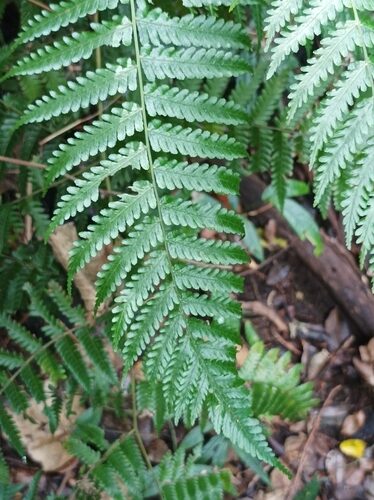
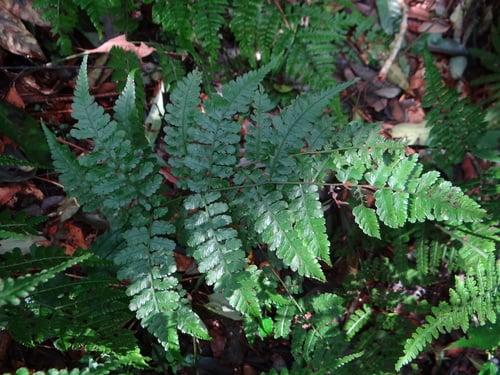
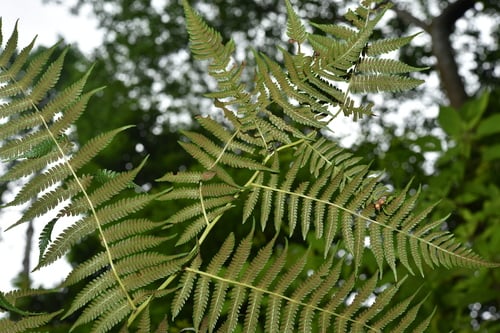
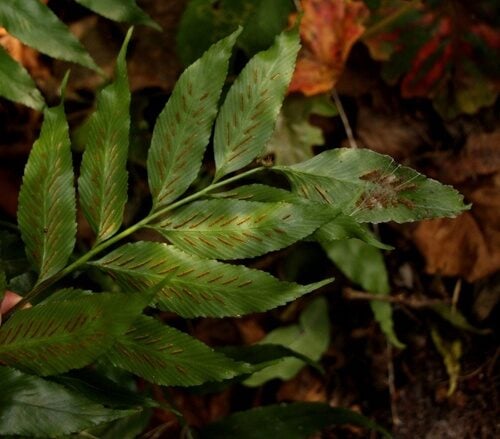
Deparia petersenii
(Kunze) M. Kato
Japanese lady fern, Black lady fern
iNaturalist· cc-by-nc
(c) Wendy Hood, some rights reserved (CC BY-NC)
iNaturalist· cc-by-nc
(c) Wendy Hood, some rights reserved (CC BY-NC)
iNaturalist· cc-by
(c) Saryu Mae 前 朝琉, some rights reserved (CC BY)
Description
A fern. It has creeping stems. They are slender and dark brown. The fronds vary in size from 6 cm x 1 cm to 1 m x 25 cm. They are deeply divided.
This description is brief — help expand it
Edible Uses
The young leaves or fronds are cooked and eaten in stir-fries, with other foods, or in soups, either fresh or dried.
Traditional Uses
The young leaves or fronds are cooked and eaten in stir-fries, with other food or in soups. They are used fresh or dried.
This uses section is brief — help expand it
Distribution
It is a tropical and subtropical plant. In China it has been recorded between sea level to 2,500 m above sea level or higher. It is near streams in broad-leaved evergreen forests. It grows in partly shaded areas. In Argentina it grows between 100-1,000 m above sea level.
Where It Grows
Argentina, Asia, Australia, Brazil, China, Indochina, Indonesia, Japan, Korea, New Zealand, North America, Pacific, Polynesia, SE Asia, South America, Taiwan, USA,
Cultivation
Plants can be grown from spores.
Notes
Also put in the family Woodsiaceae.
Synonyms
Also Known As
Pakis nona jepang
References (5)
- Flora of North America. www.eFloras.org
- Global Plants JSTOR
- Liu, Y., et al, 2012, Food uses of ferns in China: a review. Acta Societatis Botanicorum Poloniae 84(4): 263-270 (As Athyriopsis japonica var. oshimense)
- Sukarya, D. G., (Ed.) 2013, 3,500 Plant Species of the Botanic Gardens of Indonesia. LIPI p 864
- www.eFloras.org Flora of China