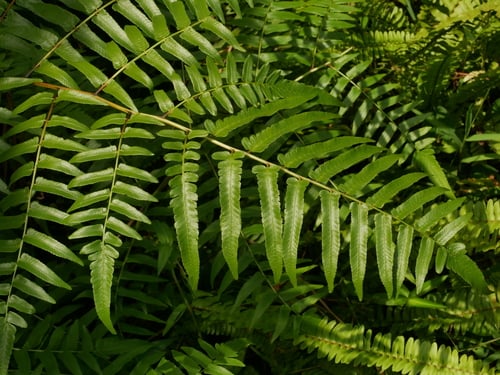
Diplazium asperum
Blume
Fern
iNaturalist· cc-by-nc
(c) liangfern, some rights reserved (CC BY-NC)
iNaturalist· cc-by-nc
(c) liangfern, some rights reserved (CC BY-NC)
iNaturalist· cc-by-nc
(c) liangfern, some rights reserved (CC BY-NC)
Description
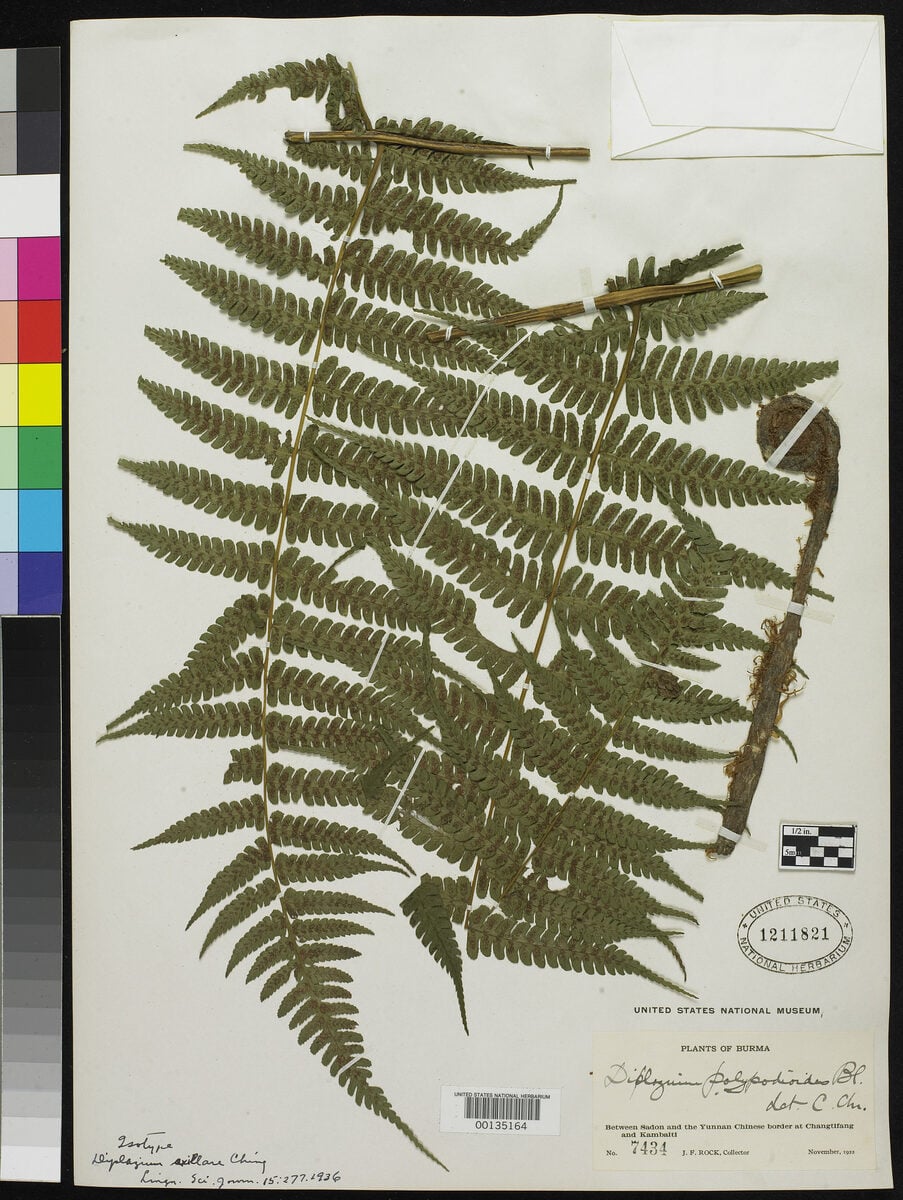
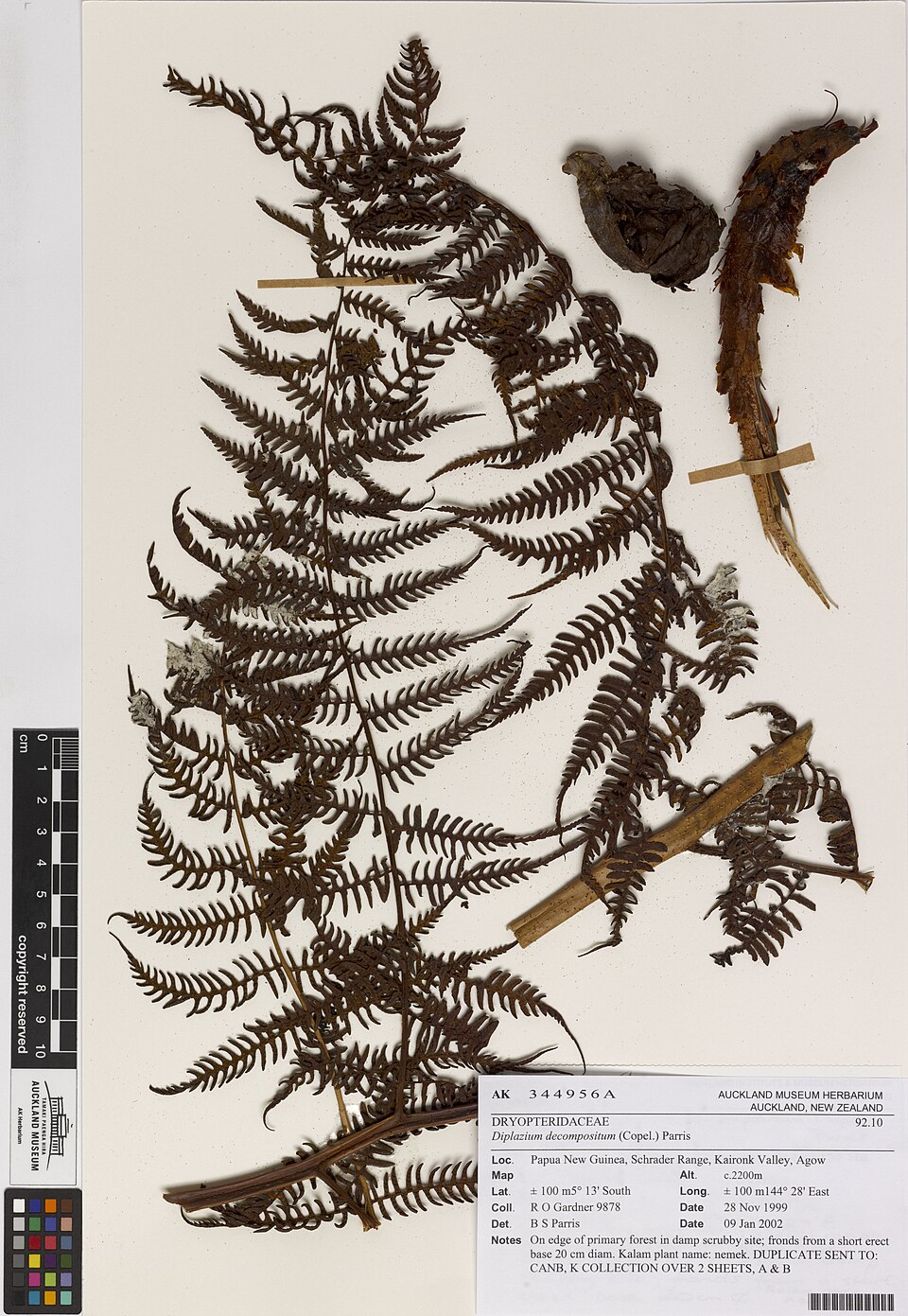
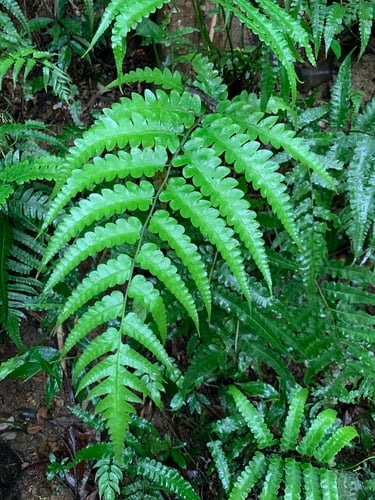
A fern which grows on land. It has fronds 3 metres high. The stem is mostly underground and densely covered with roots. This rhizome can be 10-50 cm long. The leaves are crowded and have long stalks. The leaf stalks are rough. Leaves can be 3 m long and arranged in spirals. The leaf stalk is rough. The leaves are twice divided. The leaflets are sword shaped and get shorter towards the tip. The spore bodies or sori are along the veins under the leaf. Probably now Diplazium polypodioides.
Edible Uses
Young, not quite unfolded frond tips are eaten cooked and can be stored for 6-7 days. Commonly eaten in some countries as an occasional wild edible leaf.
Traditional Uses
The young, not quite unfolded leaves are eaten cooked. The frond tips can be stored for 6-7 days.
This uses section is brief — help expand it
Distribution
A tropical plant. These ferns mostly occur between 250 and 1500 metres above sea level. They grow best in humid, moist and lightly shaded places near creeks and on forest edges.
Where It Grows
Asia, Cambodia, China, Himalayas, India, Indochina, Indonesia, Laos, Malaysia, Myanmar, Northeastern India, Pacific, Papua New Guinea, PNG, Philippines, SE Asia, Sri Lanka, Taiwan, Thailand, Vietnam,
Cultivation
They grow wild.
Other Information
A wild edible leaf eaten occasionally in mid altitude areas of Papua New Guinea. It is commonly eaten in some countries.
Notes
There are about 400 Diplazium species. They are mostly tropical. They have also been put in the families Aspleniaceae and Athyriaceae.
Synonyms
Also Known As
Dhekia sak, Dingkhia, Kasmor, Lingura, Paku benter, Paku ikan
References (12)
- Ambasta S.P. (Ed.), 2000, The Useful Plants of India. CSIR India. p 61 (As Athyrium asperum)
- Baro, D., Baruah, S. and Borthukar, S. K. 2015, Documentation on wild vegetables of Baksa district, BTAD (Assam). Scholars Research Library. Archives of Applied Science Research, 2015, 7 (9):19-2
- Burkill, I.H., 1966, A Dictionary of the Economic Products of the Malay Peninsula. Ministry of Agriculture and Cooperatives, Kuala Lumpur, Malaysia. Vol 1 (A-H) p 848
- Dobriyal, M. J. R. & Dobriyal, R., 2014, Non Wood Forest Produce an Option for Ethnic Food and Nutritional Security in India. Int. J. of Usuf. Mngt. 15(1):17-37
- Dutta, U., 2012, Wild Vegetables collected by the local communities from the Churang reserve of BTD, Assam. International Journal of Science and Advanced Technology. Vol. 2(4) p 121
Show all 12 references Hide references
- French, B.R., 1986, Food Plants of Papua New Guinea, A Compendium. Asia Pacific Science Foundation p 82
- Hariyadi, B., 2008, The Entwined Tree: Traditional Natural Resource Management of Serampas, Jambi, Indonesia. Ph. D thesis. Univ. or Hawaii. p 402
- Heyne, K., 1927 ed, Nutt. Plant. Ned. Ind. p 99
- Ochse, J. J. et al, 1931, Vegetables of the Dutch East Indies. Asher reprint. p 598
- Patiri, B. & Borah, A., 2007, Wild Edible Plants of Assam. Geethaki Publishers. p 162
- Piggott, A. G. 1988, Ferns of Malaysia in Colour. Tropical press, Malaysia. p 313
- Powell, J.M., Ethnobotany. In Paijmans, K., 1976, New Guinea Vegetation. Australian National University Press. p 109