Elymus repens
(L.) Gould
Quackgrass, Couch grass, English couch, Twitch
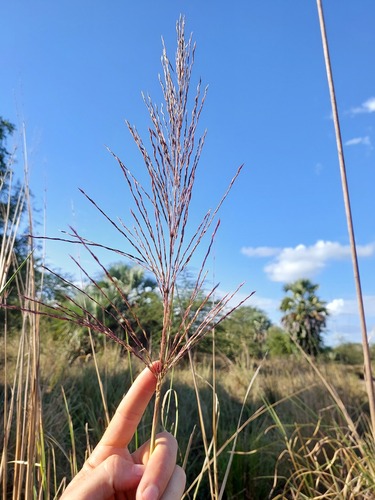
iNaturalist· cc-by-nc
(c) Dmitry Ivanov, some rights reserved (CC BY-NC), uploaded by Dmitry Ivanov
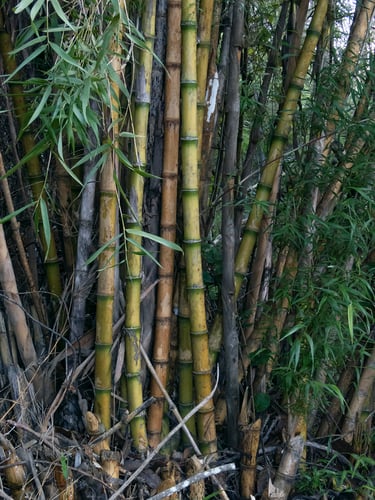
iNaturalist· cc-by-nc
(c) Дмитрий Левченко, some rights reserved (CC BY-NC)
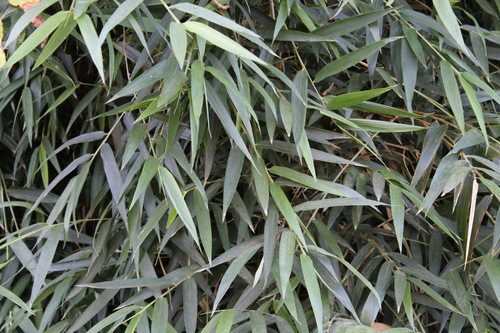
iNaturalist· cc-by-nc
(c) abigailgraham, some rights reserved (CC BY-NC)
Summary
Source: WikipediaElymus repens, commonly known as couch grass , is a very common perennial species of grass native to most of Europe, Asia, the Arctic, and northwest Africa. It has been brought into other mild northern climates for forage or erosion control, but is often considered a weed. Other names include common couch, twitch, quick grass, quitch grass (also just quitch), dog grass, quackgrass, scutch grass, and witchgrass.
Description
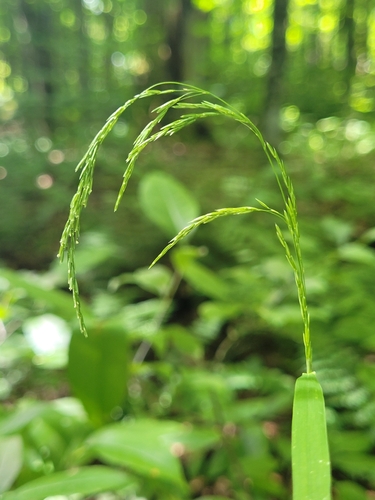
A creeping and branching grass. It forms underground stems or rhizomes. It keeps growing from year to year. It can grow 1 m tall. The rhizomes allow it to spread. It can grow in tufts or spread in large patches. The leaf blades are 6-30 cm long by 3-10 mm wide and flat. The leaves are rough to the touch. They are dull green. The flowers are on a drooping spike 1-1.5 cm long.
Edible Uses
The rhizomes are dried, ground into flour, and mixed with cereal flour for bread and flatbread, or used in soups and steeped for tea or as a coffee substitute. The seeds are ground into flour. The young shoots are eaten raw as a snack or cooked as a vegetable.
Traditional Uses
The rhizome is dried and ground into flour and added to cereal flour to make dough bread or flat bread. It is also used in soups. The dried roots are used for tea and as a coffee substitute. The seeds are edible. They are ground into flour. The shoots are eaten raw as a snack or vegetable.
Medicinal Uses
The dried rhizomes of couch grass were broken up and used as incense in medieval northern Europe where other resin-based types of incense were unavailable. Elymus repens (Agropyron repens) rhizomes have been used in the traditional Austrian medicine against fever, internally as a tea, syrup, or cold maceration in water, or externally applied as a crude drug.
Known Hazards
The roots can suppress the growth of other plants.
Distribution
It is a temperate plant. In Argentina it grows from sea level to 1,100 m above sea level. Tasmanian Herbarium.
Where It Grows
Africa, Argentina, Asia, Australia, Belarus, Britain, Canada, Central Asia, Chile, China, Czech Republic, Denmark, Europe, Falklands, Finland, France, Germany, Hungary, India, Iraq, Ireland, Italy, Japan, Korea, Lithuania, Luxembourg, Mediterranean, Middle East, Mongolia, New Zealand, Netherlands, North Africa, North America, North Australia, Norway, Pakistan, Poland, Russia, Scandinavia, Sicily, Slovakia, Slovenia, South America, Spain, Sweden, Tajikistan, Tasmania, Turkey, Türkiye, USA,
Cultivation
Plants are very easily grown from small pieces of rhizome. They can also be grown from seed. Seed does not breed true so that plants vary.
Production
The root is collected in spring, cut in short pieces, dried and stored.
Other Information
It is a famine food. It is sold in local markets.
Notes
The seeds have 18.5 g protein in 100 g fresh weight. It is rich in Vitamins A, B, K and organic acids. The roots can suppress the growth of other plants.
Synonyms
Also Known As
Agripiro invasor, Ayrik, Ayrikotu, English twitch, Grama, Kveke, Plazeča pirnica, Pyrei, Quack grass, Quick-grass, Rope twitch, Tarackbuza, Wheat grass, Witch Grass
References (41)
- Ambasta S.P. (Ed.), 2000, The Useful Plants of India. CSIR India. p 22 (As Agropyron repens)
- Bircher, A. G. & Bircher, W. H., 2000, Encyclopedia of Fruit Trees and Edible Flowering Plants in Egypt and the Subtropics. AUC Press. p 15 (As Agropyron repens)
- Bodkin, F., 1991, Encyclopedia Botanica. Cornstalk publishing, p 60 (As Agropyron repens)
- Cribb, A.B. & J.W., 1976, Wild Food in Australia, Fontana. p 156 (As Agropyron repens)
- Denes, A., et al, 2012, Wild plants used for food by Hungarian ethnic groups living in the Carpathian Basin. Acta Societatis Botanicorum Poloniae 81 (4): 381-396
Show all 41 references Hide references
- Dogan, Y., & Nedelcheva, A., 2015, Wild plants from open markets on both sides of the Bulgarian-Turkish border. Indian Journal of Traditional Knowledge. Vol. 14(3): 351-358
- Duke, J.A., 1992, Handbook of Edible Weeds. CRC Press. p 20 (As Agropyron repens)
- Esperanca, M. J., 1988. Surviving in the wild. A glance at the wild plants and their uses. Vol. 1. p 289 (As Agropyron repens)
- Flora of Pakistan. www.eFloras.org
- Girard, N. J., 2020, Sustainable Foraging of Wild Edible Plants in Norway. A Biocultural Approach. M. Sc. thesis Norwegian University. p 133
- Hedrick, U.P., 1919, (Ed.), Sturtevant's edible plants of the world. p 31 (As Agropyron repens)
- https://en.wikipedia.org/wiki/List of wild edible plants in Mongolian cuisine (As Agropyron repens)
- Hussey, B.M.J., Keighery, G.J., Cousens, R.D., Dodd, J., Lloyd, S.G., 1997, Western Weeds. A guide to the weeds of Western Australia. Plant Protection Society of Western Australia. p 54
- Irving, M., 2009, The Forager Handbook, A Guide to the Edible Plants of Britain. Ebury Press p 328
- Kermath, B. M., et al, 2014, Food Plants in the Americas: A survey of the domesticated, cultivated and wild plants used for Human food in North, Central and South America and the Caribbean. On line draft. p 334
- Kolosova, V., et al, 2020, Foraging in Boreal Forest: Wild Food Plants of the Republic of Karelia, NW Russia. Foods 2020, 9, 1015; p 19
- Kiple, K.F. & Ornelas, K.C., (eds), 2000, The Cambridge World History of Food. CUP p 1763 (As Agropyron repens)
- Lamp, C & Collet F., 1989, Field Guide to Weeds in Australia. Inkata Press. p 8 (As Agropyron repens)
- Lamp, C.A., Forbes, S.J. and Cade, J.W., 1990, Grasses of Temperate Australia. Inkata Press. p 60 (As Agropyron repens)
- Licata, M., et al, 2016, A survey of wild plant species for food use in Sicily (Italy) – results of a 3-year study in four Regional Parks. Journal of Ethnobiology and Ethnomedicine 12:12
- Lim, T. K., 2015, Edible Medicinal and Non Medicinal Plants. Volume 9, Modified Stems, Roots, Bulbs. Springer p 3, 82
- Luczaj, L., 2012, Ethnobotanical review of wild edible plants of Slovakia. Acta Societatis Botanicorum Poloniae 81(4):245-255
- Luczaj, L. et al, 2012, Wild food plant use in 21st century Europe: the disappearance of old traditions and the search for new cuisines involving wild edibles. Acta Soc Bot Pol 81(4):359–370
- Łukasz Łuczaj and Wojciech M Szymański, 2007, Wild vascular plants gathered for consumption in the Polish countryside: a review. J Ethnobiol Ethnomedicine. 3: 17
- MacKinnon, A., et al, 2009, Edible & Medicinal Plants of Canada. Lone Pine. p 377
- Moerman, D. F., 2010, Native American Ethnobotany. Timber Press. p 209
- Paczkowska, G. & Chapman, A.R., 2000, The Western Australian Flora. A Descriptive Catalogue. Western Australian Herbarium. p 103
- Plants for a Future database, The Field, Penpol, Lostwithiel, Cornwall, PL22 0NG, UK. http://www.scs.leeds.ac.uk/pfaf/ (Also as Agropyron repens)
- Polat, R., et al, 2015, Survey of wild food plants for human consumption in Elazig (Turkey). Indian Journal of Traditional Knowledge. Vol. 1(1): 69-75 (As Agropyron repens)
- SAYCE, (As Triticum repens)
- Simkova, K. et al, 2014, Ethnobotanical review of wild edible plants used in the Czech Republic. Journal of Applied Botany and Food Quality 88, 49-67
- Soukand, R., et al, 2017, Multi-functionality of the few: current and past uses of wild plants for food and healing in Liubań region, Belarus. Journal of Ethnobiology and Ethnomedicine (2017) 13:10
- Sp. pl. 1:86. 1753 (As Triticum repens)
- Stern, G., 1986, Australian Weeds. A Source of Food and Medicine. Harper & Row. p 52 (As Agropyron repens)
- Tasmanian Herbarium Vascular Plants list p 79
- Tasmanian Herbarium Vascular Plants list p 85
- Turner, N. J. et al, 2011, Edible and Tended Wild Plants, Traditional Ecological Knowledge and Agroecology. Critical Reviews in Plant Sciences, 30:198-225
- Trudy Bot. Inst. Akad. Nauk S.S.S.R., Ser. 1, Fl. Sist. Vyssh. Rast. 1:14. 1933
- Upson, R., & Lewis R., 2014, Updated Vascular Plant Checklist and Atlas for the Falkland Islands. Falklands Conservation and Kew.
- Wiersema, J. H. & Leon, B., 2013, World Economic Plants. A Standard Reference CRC Press. 2nd Ed. p 268
- World Checklist of Useful Plant Species 2020. Royal Botanic Gardens, Kew