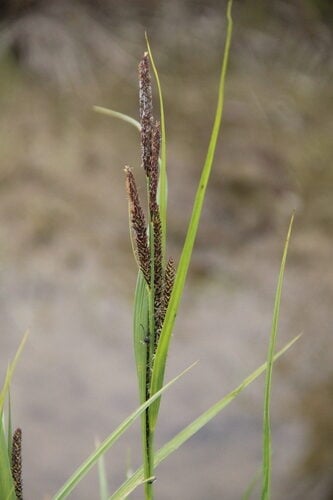
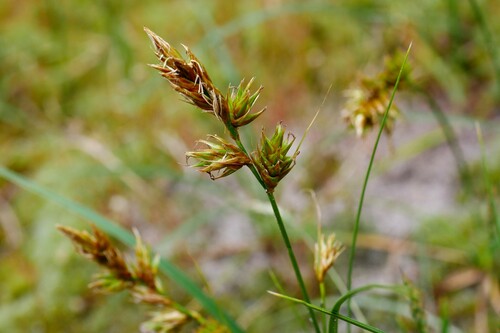
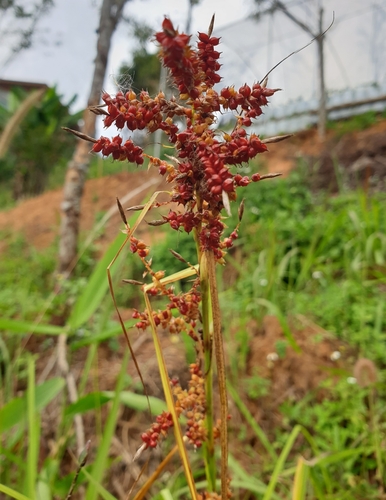
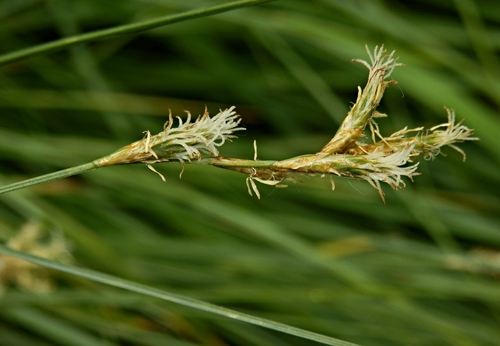
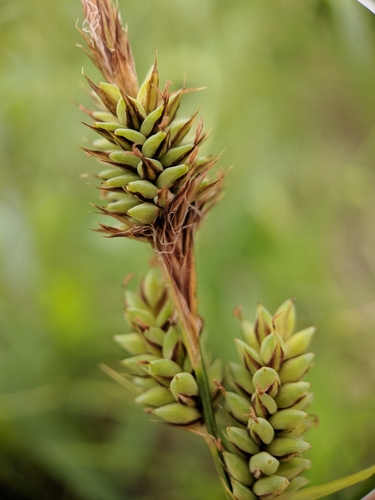
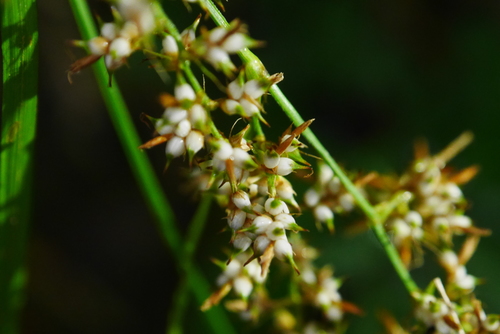
Scirpus sylvaticus
L.
Wood club rush
iNaturalist· cc-by-nc
(c) Stas & Lana, some rights reserved (CC BY-NC), uploaded by Stas & Lana
iNaturalist· cc-by-nc
(c) Sebastian J. Dunkl, some rights reserved (CC BY-NC), uploaded by Sebastian J. Dunkl
iNaturalist· cc-by-nc-sa
(c) Amadej Trnkoczy, some rights reserved (CC BY-NC-SA)
Summary
Source: WikipediaScirpus sylvaticus, the wood clubrush, is a species of flowering plant in the sedge family. Scirpus sylvaticus can reach 1 m, and has triangular stems. S. sylvaticus widespread in Eurasia, is very common in the European part of Russia and in Southern Siberia. It is most often a coastal species, occurring in wet habitat such as marshes in brackish and saltwater, along swamps, along the banks of water bodies, in marshy forests and in wet meadows. It is a perennial herb growing from a rhizome system with associated tubers. This plant is an important food source for waterfowl. The seeds are food for birds and other animals, such as muskrats.
Description
A sedge of the family Cyperaceae found in temperate regions. The stem bases and leaves are edible portions of this plant.
This description is brief — help expand it
Edible Uses
The base of the stems are chewed by children, and both stem bases and leaves can be eaten.
Distribution
It is a temperate plant.
Where It Grows
Albania, Austria, Balkans, Belarus, Belgium, Central Asia, Europe, Luxembourg, Mediterranean, Norway, Poland, Russia, Scandinavia, Siberia, Slovenia,
Other Information
The base of the stems are chewed by children.
Also Known As
Gozdni sitec, Skogsivaks
References (3)
- Girard, N. J., 2020, Sustainable Foraging of Wild Edible Plants in Norway. A Biocultural Approach. M. Sc. thesis Norwegian University. p 130
- http://www.botanic-gardens-ljubljana.com/en/plants
- Łukasz Łuczaj and Wojciech M Szymański, 2007, Wild vascular plants gathered for consumption in the Polish countryside: a review. J Ethnobiol Ethnomedicine. 2007; 3: 17