Corchorus fascicularis
Lam.
iNaturalist· cc0
no rights reserved, uploaded by S.MORE
iNaturalist· cc-by-nc
(c) Bart Wursten, some rights reserved (CC BY-NC)
Description
An annual herb. It grows 50-60 cm tall. The stem is woody. It can keep growing for a few years. The leaves have 3 ribs. They are narrowly oval and 2-6 cm long by 1-2 cm wide. There are 2-5 flower in a group. The flowers are yellow. They are 5-6 mm across.
Edible Uses
The young leaves are cooked and eaten. The leaves, flowers, and stems are also dried and used in sauces.
Traditional Uses
The young leaves are cooked and eaten. The leaves, flowers and stems are dried and used in sauces.
This uses section is brief — help expand it
Distribution
It is a tropical plant. It grows in hot places. It can be along river banks and in flooded rice fields.
Where It Grows
Africa, Arabia, Asia, Australia, Benin, Burkina Faso, East Africa, Ethiopia, Guinea, Guinée, Guinea-Bissau, India, Kenya, Middle East, Myanmar, Pakistan, SE Asia, Sierra Leone, Sri Lanka, South Sudan, Tanzania, West Africa, Zambia, Zimbabwe,
Other Uses
A fibre obtained from the stems has been used for making ropes.
Notes
These have also been in the Tiliaceae.
Synonyms
Also Known As
Awachuwaey, Djambo, Hirankhori, Kaala, Kamunwe, Khwe-pilaw, Kibwando, Mlenda, Nyaluhanga, Pilaw-thin-lon-byut
References (13)
- Awas, T., 1997, A Study on the Ecology and Ethnobotany of Non-cultivated Food Plants and Wild Relatives of Cultivated crops in Gambella Region, Southwestern Ethiopia. Addis Ababa University. p 69
- Ekka, N. S. & Ekka, A., 2016, Wild Edible plants Used by Tribals of North-east Chhattisgarh (Part-I), India. Research Journal of Recent Sciences. Vol. 5(ISC-2015), 127-131 (2016)
- Flora of Pakistan. www.eFloras.org
- Fowler, D. G., 2007, Zambian Plants: Their Vernacular Names and Uses. Kew. p 44
- Fondio, L. & Grubben, G.J.H., 2004. Corchorus olitorius L. [Internet] Record from Protabase. Grubben, G.J.H. & Denton, O.A. (Editors). PROTA (Plant Resources of Tropical Africa), Wageningen, Netherlands. < http://database.prota.org/search.htm>. Accessed 15 October 2009.
Show all 13 references Hide references
- Gallagher, D. E., 2010, Farming beyond the escarpment: Society, Environment, and Mobility in Precolonial Southeastern Burkina Faso. PhD University of Michigan.
- Grubben, G. J. H. and Denton, O. A. (eds), 2004, Plant Resources of Tropical Africa 2. Vegetables. PROTA, Wageningen, Netherlands. p 560
- Lulekal, E., et al, 2011, Wild edible plants in Ethiopia: a review on their potential to combat food insecurity. Afrika Focus - Vol. 24, No 2. pp 71-121
- Maundu, P. et al, 1999, Traditional Food Plants of Kenya. National Museum of Kenya. 288p
- Misra, S., 2020, Survey of edible plants for human consumption in south Odisha, India. Journal of Emerging Technologies and Innovative Research (JETIR) Vol. 7, Issue 12 p 278
- Ruffo, C. K., Birnie, A. & Tengnas, B., 2002, Edible Wild Plants of Tanzania. RELMA p 230
- Salako, V. K. et al, 2013, Home gardens: an assessment of their biodiversity and potential contribution to conservation of threatened species and crop wild relatives in Benin. Genet Resour Crop Evol
- World Checklist of Useful Plant Species 2020. Royal Botanic Gardens, Kew
More from Malvaceae
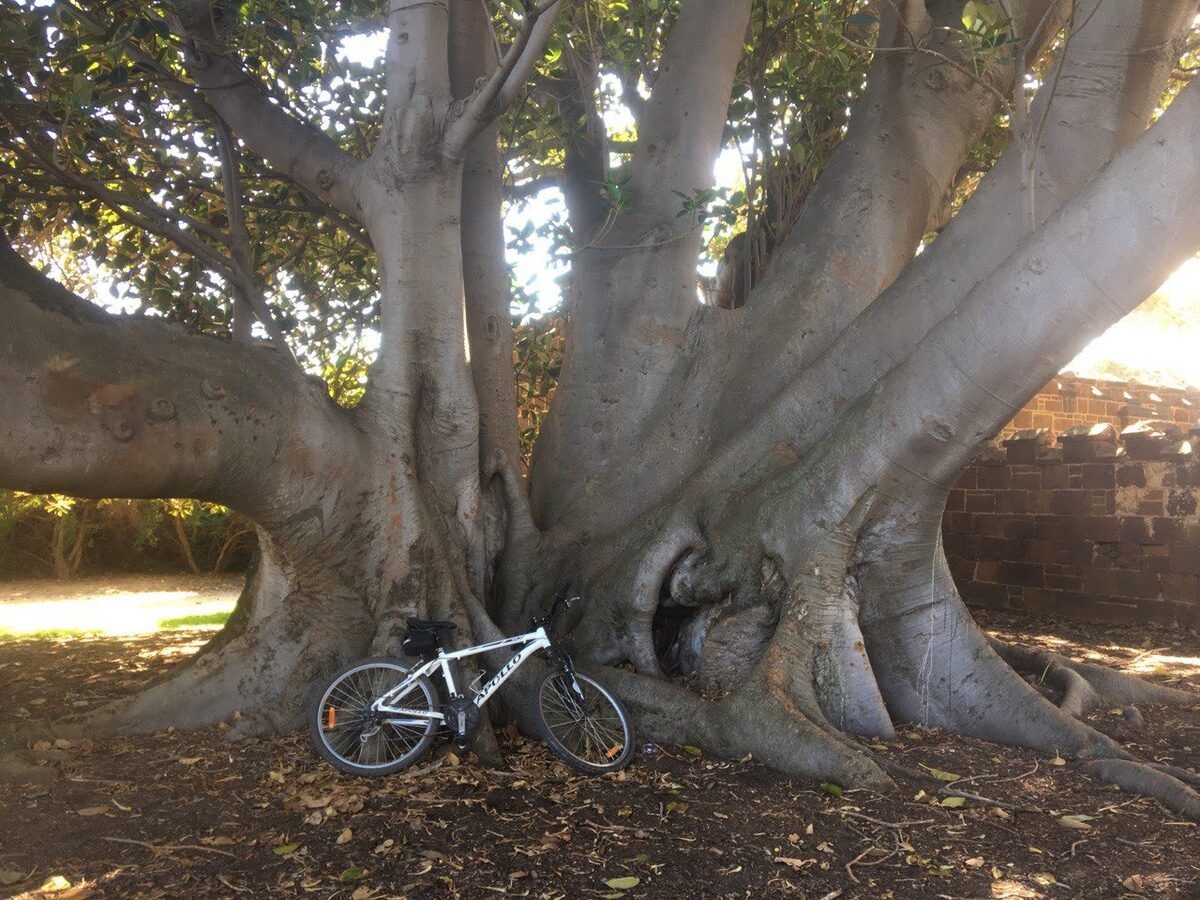
Brachychiton macrophylla
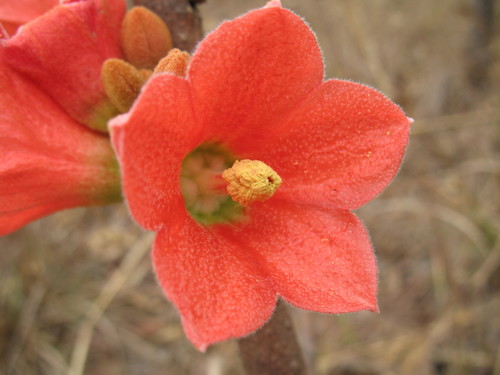
Brachychiton megaphyllus
Red flowered kurrajong
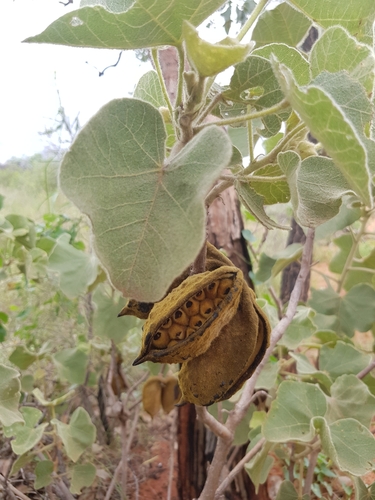
Brachychiton multicaulis
Wild curry kurrajong
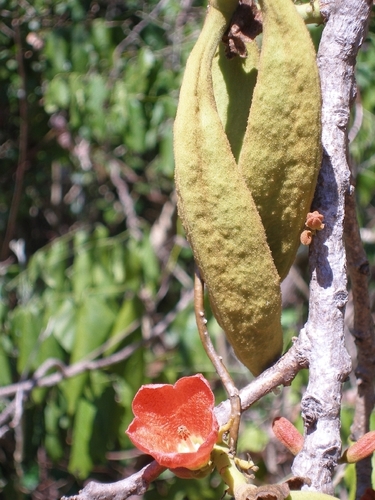
Brachychiton paradoxus
Red Kurrajong, Red-flowered Kurrajong
Brachychiton populneus
Black kurrajong
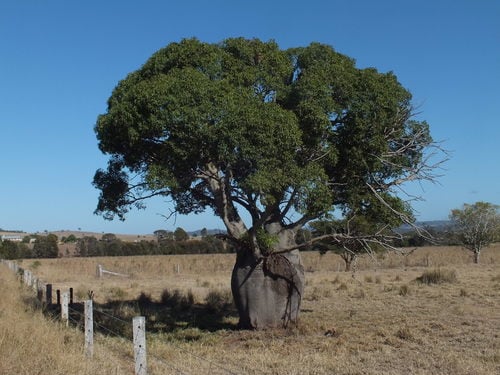
Brachychiton rupestris
Bottle tree, Narrow-leaved bottle tree, Queensland Bottle Tree, Barrel tree