Theobroma subincanum
Mart.
Greyish chocolate tree
iNaturalist· cc-by-nc
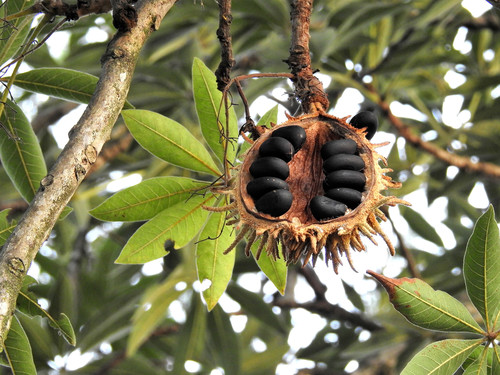
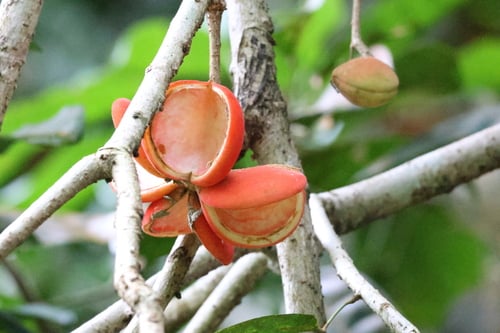
(c) Hervé GALLIFFET, some rights reserved (CC BY-NC), uploaded by Hervé GALLIFFET
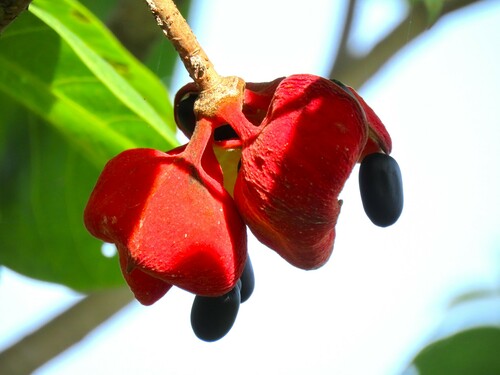
iNaturalist· cc-by-nc-sa
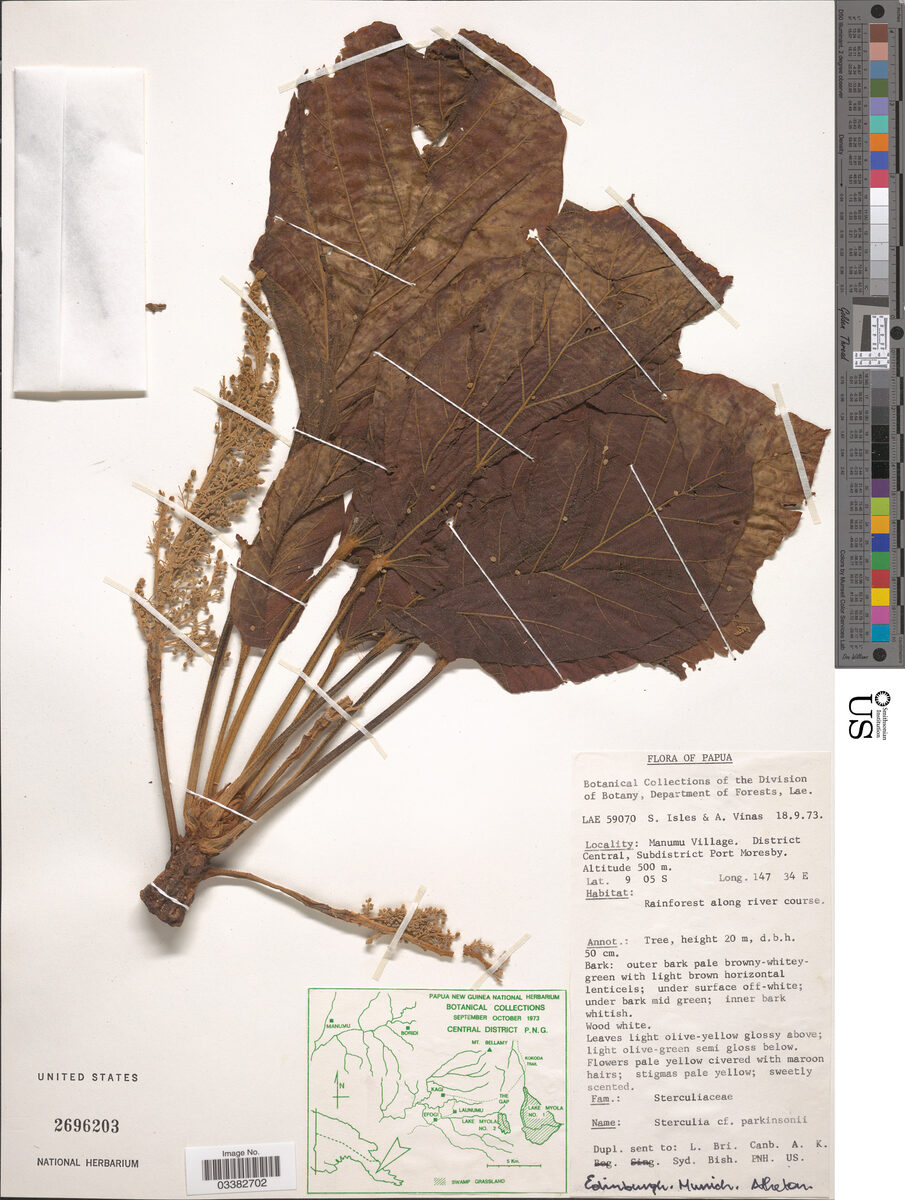
(c) Smithsonian Institution, National Museum of Natural History, Department of Botany, some rights reserved (CC BY-NC-SA)
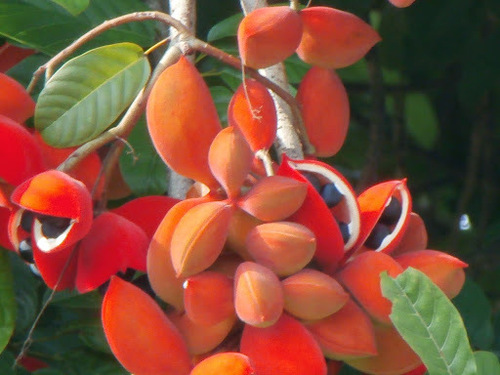
iNaturalist· cc-by-nc-sa
(c) Smithsonian Institution, National Museum of Natural History, Department of Botany, some rights reserved (CC BY-NC-SA)
Description
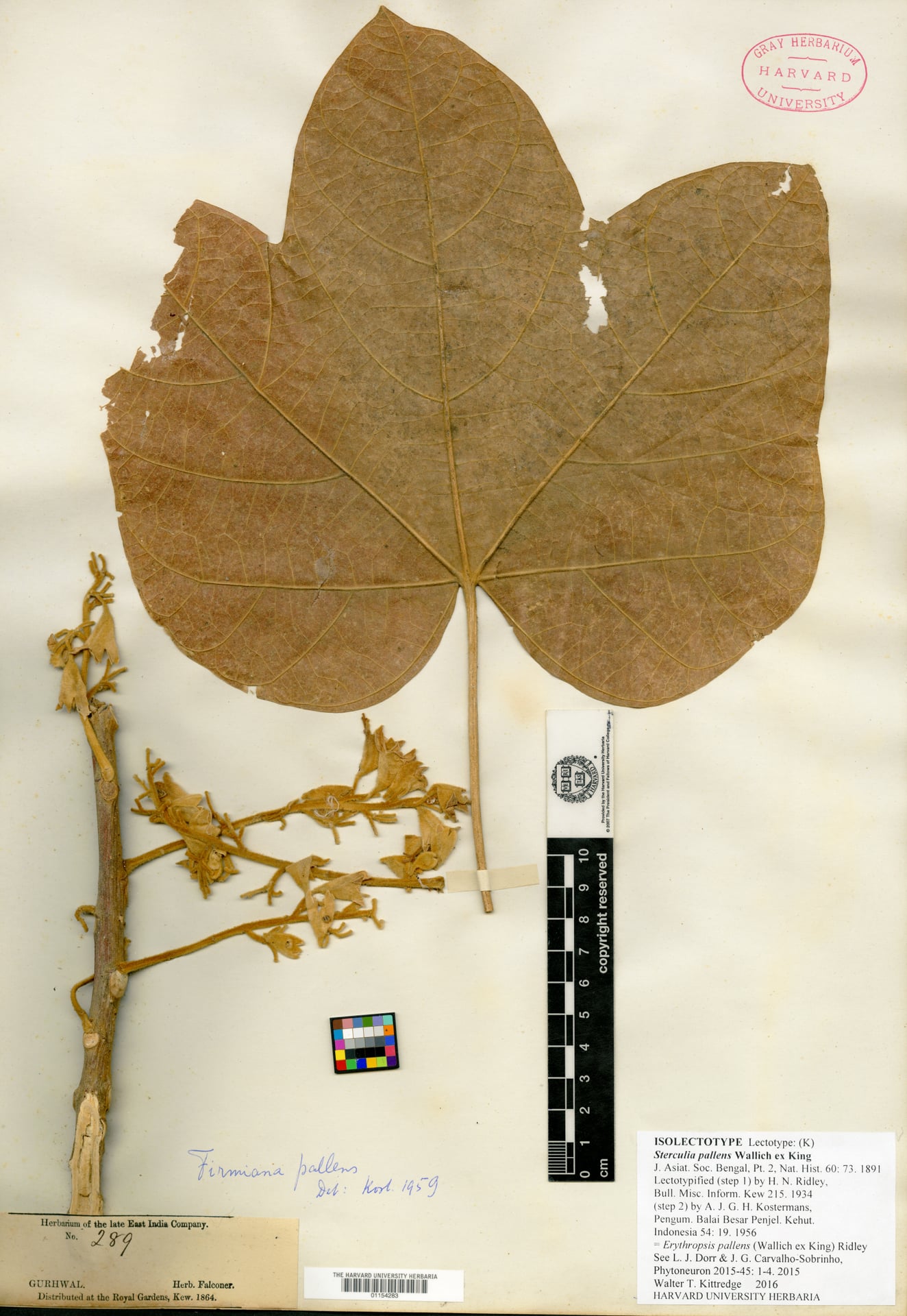
An evergreen tree. It grows 10-15 m high. The trunk is 25-30 cm across. The leaves are leathery and oblong or oval. They are 22-28 cm long by 10 cm wide. The flowers occur in groups of 1-3 and can be in the axils of leaves or along the branches. The fruit is oval and 7-10 cm long by 5-6 cm across. The outside is hard. There are about 15 seeds.
Edible Uses
The fruit are eaten raw, with the layer around the seeds being the edible portion. The fruit is also used for juices, and a drink is made from the seeds.
Traditional Uses
The fruit are eaten raw. It is the layer around the seeds that is eaten. They are also used for juices. A drink is made from the seeds.
This uses section is brief — help expand it
Medicinal Uses
A decoction of the crushed bark is used to expel stomach worms and to treat stomach ache and pains in the liver and upper chest. The rasped inner bark, mixed with water, is used to soothe ant bites and is rubbed onto testicles that are swollen due to a hernia or other cause. Although no specific reports of medicinal use have been seen for this plant, the seed is a source of cacao powder and butter. These products have the following medicinal uses:- Cacao powder and butter, which are obtained from the seed, are nutritive. The butter is also applied externally as an emollient. Cacao powder is taken internally in the treatment of angina and high blood pressure. Cacao butter is an excellent emollient, being applied to the skin to soothe and soften it. It is used traditionally to treat chapped skin and burns, and is also rubbed into bruises. Research has shown that it can help to counter the bacteria responsible for boils and septicaemia.
Distribution
A tropical plant. It grows throughout the Amazon region. It usually grows in highland forests along the banks of rivers. It can be on floodplains. It can grow up to 1,100 m above sea level.
Where It Grows
Amazon, Bolivia, Brazil*, Colombia, Ecuador*, Guiana, Guianas, Guyana, Peru, South America, Suriname, Venezuela,
Cultivation
Plants are grown from seed. Seeds are collected from ripe fruit. The pulp is partly decomposed then the seeds removed under running water. Seeds need to be planted fresh and are best in part shade. Seedlings emerge in 20-30 days.
Propagation
Seed - it has a very short viability, requiring high humidity and optimum temperatures to remain viable. There is no dormancy, the seed often germinating whilst still inside the pod. The seed is best sown as soon as it is ripe, in a semi-shaded position in individual containers. Germination rates are usually quite low, with the seed sprouting in 20 - 30 days.
Other Uses
An oil, known as cacao butter, which is solid at room temperature, is obtained from the seed. In addition to being used locally as a food and medicine, cacao butter is important in the cosmetics and pharmaceutical industries. The wood is coarse-textured, straight-grained, heavy, hard to cut, with average resistance to wood-eating organisms. It is sometimes used in light construction and cabinet making and general construction.
Production
Plants grow slowly. The fruit ripen in the rainy season.
Other Information
Fruit are enjoyed and sold in local markets. It is cultivated.
Notes
Also put in the family Byttneriaceae and the Sterculiaceae.
Synonyms
Also Known As
Cacaohuillo, Cacao silvestre, Cacau de monte, Chocolatillo, Cupui, Hanpi, Kila, Kushillu hanpi, Me chocotu ni, Me sino ni, Sacha cacao, Tepenka, Tepenkawe, Waiporounahi, Wakam, Wakamp
References (18)
- Duchelle, A. E., 2007, Observations on Natural Resource use and Conservation by the Shuar In Ecuador's Cordillera del Condor. Ethnobotany Research & Applications 5:005-023
- Etkin, N. L. (Ed.), 1994, Eating on the Wild Side, Univ. of Arizona. p 141
- Gilmore, M. P., et al, 2013, The socio-cultural importance of Mauritia flexuosa palm swamps (aguajales) and implications for multi-use management in two Maijuna communities of the Peruvian Amazon. Journal of Ethnobiology and Ethnomedicine 2013, 9:29
- Grandtner, M. M. & Chevrette, J., 2013, Dictionary of Trees, Volume 2: South America: Nomenclature, Taxonomy and Ecology. Academic Press p 663
- Hermandez Bermejo, J.E., and Leon, J. (Eds.), 1994, Neglected Crops. 1492 from a different perspective. FAO Plant Production and Protection Series No 26. FAO, Rome. p 206
Show all 18 references Hide references
- Kermath, B. M., et al, 2014, Food Plants in the Americas: A survey of the domesticated, cultivated and wild plants used for Human food in North, Central and South America and the Caribbean. On line draft. p 865
- Kuhnlein, H. V., et al, 2009, Indigenous Peoples' food systems. FAO Rome p 107
- Lopez-Diago, D. & Garcia, N., 2021, Wild edible fruits of Colombia. Biota ColomBiana 22 (2) p 41
- Lorenzi, H., Bacher, L., Lacerda, M. & Sartori, S., 2006, Brazilian Fruits & Cultivated Exotics. Sao Paulo, Instituto Plantarum de Estuados da Flora Ltda. p 169
- Lorenzi, H., 2009, Brazilian Trees. A Guide to the Identification and Cultivation of Brazilian Native Trees. Instituto Plantarum de Estuados da Flora Ltda. Vol. 3 p 202
- Paz, F. S., et al, 2021, Edible Fruit Plant Species in the Amazon Forest Rely Mostly on Bees and Beetles as Pollinators. Journal of Economic Entomology, XX(XX), 2021, 1–13
- Roa, J. A. G. & Boada, D. S. G., 2018, Fundación para el Fortalecimiento de la Fruticultura y Plantas Alimenticias no Convencionales en Colombia.
- Smith, N., et al, 2007, Amazon River Fruits. Flavors for Conservation. Missouri Botanical Gardens Press. p 166
- Torre, de la, L., et al, 2008, Enciclopedia de las Plantas Útiles del Ecuador. Herbario QCA. Pontificia Universidad Católica del Ecuador. p 600
- van Roosmalen, M.G.M., 1985, Fruits of the Guianan Flora. Utrecht Univ. & Wageningen Univ. p 422
- Vasquez, R. and Gentry, A. H., 1989, Use and Misuse of Forest-harvested Fruits in the Iquitos Area. Conservation Biology 3(4): 350f
- Vasquez, Roberto Ch. & Coimbra, German S., 1996, Frutas Silvestres Comestibles de Santa Cruz. p 245
- www.proyanomami.org