Vigna unguiculata subsp. sesquipedalis
(L.) Verdc.
Yard long bean, Snake bean
gbif· cc-by-nc
nurulf
gbif· cc-by-nc
azlinaminuddin
gbif· cc-by-nc
ninaazman
Description
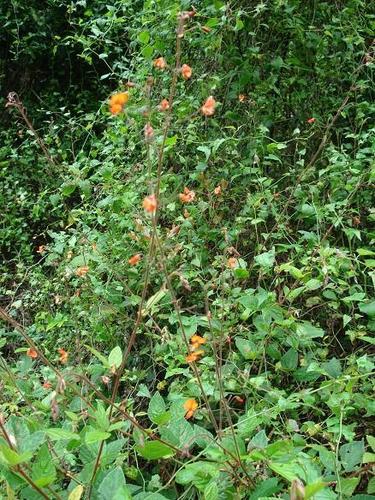
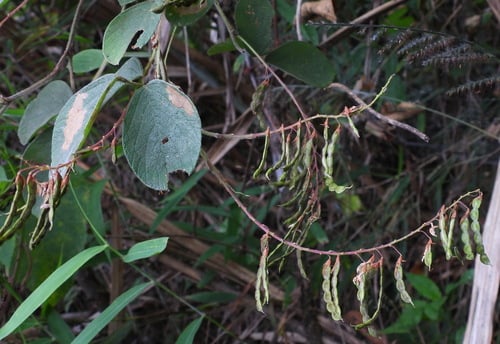
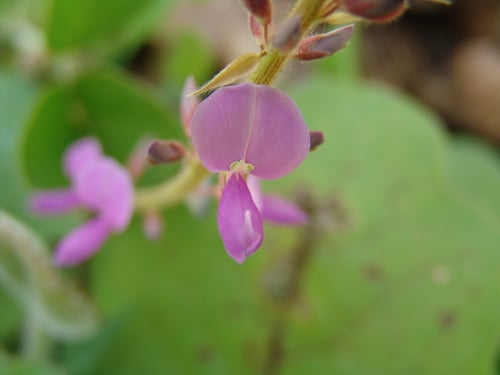
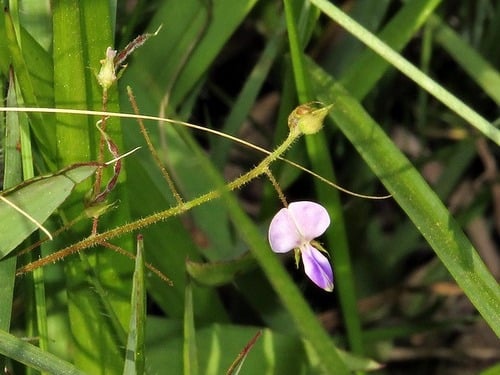
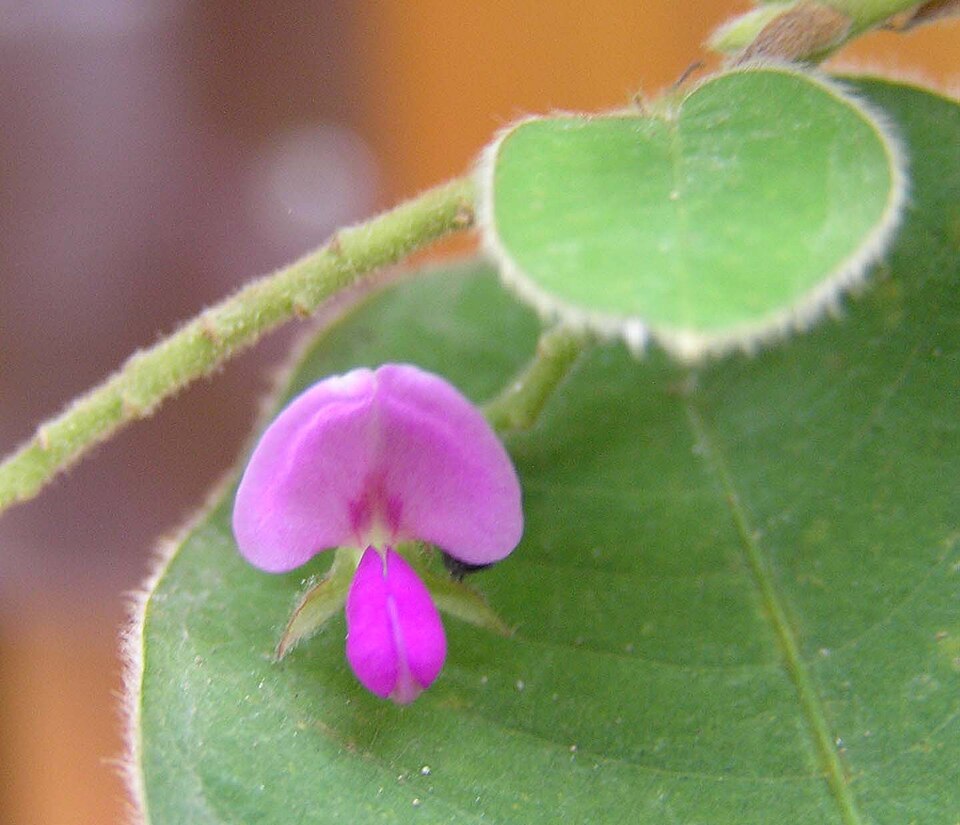
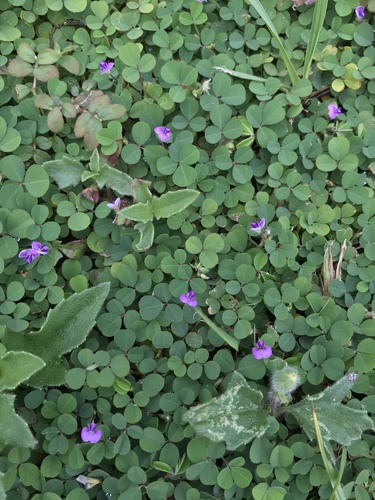
A climbing bean with long pods. The vines can be 3 m long. They normally twine around sticks. Dwarf kinds also occur. Leaves have 3 leaflets. The leaflets are oval and side leaflets are at an angle. Leaflets can be 2-16 cm long by 1-12 cm wide. The centre leaflet can have lobes near the base and the side leaflets can have lobes on the outer edge. The leaf stalks can be 2-13 cm long. The flowering stalks are in the axils of leaves. There can be few or several flowers. The flowers can be white, yellow or blue. Flowers are 1-3 cm long by 1-3 cm wide. Pods are long (up to 90 cm) and flexible. The seeds can vary between white to dark brown. They are oblong or kidney shaped. Seeds are 4-12 mm long by 2-6 mm wide. There are many named cultivated varieties.
Edible Uses
The young pods and leaves are steamed, stir-fried, or used in other dishes. The ripe seeds can be cooked or sprouted and eaten. It is high in folates.
Traditional Uses
Both the young pods and leaves are eaten. They can be steamed, stir-fried and used in other dishes. The ripe seeds can also be eaten cooked. The seeds can be sprouted and eaten.
Medicinal Uses
No medicinal uses mentioned in available data.
Distribution
A tropical plant. Plants grow in coastal areas in the tropics from sea level up to about 300 m in equatorial regions. In PNG it has been recorded up to 1,800 m above sea level. Seeds germinate in moist soil over 22°C. For growth, day temperatures between 25-35°C and night temperatures not below 15°C are required. It suits wet areas and cannot tolerate drought. Plants are day length neutral. They perform best under full sunlight but can tolerate some shade. It has a high water requirement for the full grown crop (6-8 mm per day). It can tolerate a wide range of soils with pH of 5.5-7.5. Seeds show no dormancy. It suits plant hardiness zones 10-11.
Where It Grows
Africa, Asia, Australia, Bougainville, Cambodia, Central Africa, China, Congo, Cook Islands, Cuba, East Africa, East Timor, Fiji, FSM, Guam, Guinea, Guinée, Guyana, Hawaii, India, Indochina, Indonesia, Japan, Kenya, Kiribati, Malaysia, Marquesas, Nauru, Pacific, Pakistan, Papua New Guinea, PNG, Philippines, Pohnpei, Rotuma, SE Asia, Singapore, Solomon Islands, South America, Sri Lanka, Suriname, Taiwan, Thailand, Timor-Leste, Tonga, Turkey, Türkiye, Tuvalu, USA, Vanuatu, Vietnam, West Africa, West Indies, West Timor,
Cultivation
Plants are grown from seed. Seeds germinate quickly (2-3 days) and plants grow rapidly. Flowering occurs after 5 weeks and harvesting of young pods can start 2 weeks later. Plants die after about 3-4 months. A spacing of 60 cm is suitable. Plants need sticks to climb up. Sticks about 2-2.5 m long are suitable. Often 5 or 6 seeds are sown around the one stick. Plants are often topped when growing too vigorously. It only grows as an annual bean so seeds need to be replanted each year. The pods need to be harvested every 2 or 3 days. Diseases get worse if the bean does not have sticks to climb. The damage by bean pod borer is less if snake beans are grown inter-cropped with maize.
Other Information
It is a commercially cultivated vegetable. The most common and important bean in coastal areas of Papua New Guinea.
Notes
There are about 150 Vigna species. They are mostly in the tropics. It is high in folates.
Synonyms
Also Known As
Asparagus bean, Bini balavu, Chang dou, Cheung kong tau, Denkane koa, Dolique asperge, Dow gauk, Fagiolo asparago, Fore-tali, Frijol grande, Habichuela china, Judia asparrago, Juuroku-sasage, Kacang panjang, Kouseband, Lobia, Makaraal, Pihns, Sanndaek treng, Sasage, Sitaw, Spargelbohne, Te bin, Thua chin, Tseng dou
References (49)
- Ambasta, S.P. (Ed.), 2000, The Useful Plants of India. CSIR India. p 678
- Barrau, J., 1976, Subsistence Agriculture in Melanesia. Bernice P. Bishop Museu, Bulletin 219 Honolulu Hawaii. Kraus reprint. p 52
- Bianchini, F., Corbetta, F., and Pistoia, M., 1975, Fruits of the Earth. Cassell. p 36
- Bodner, C. C. and Gereau, R. E., 1988, A Contribution to Bontoc Ethnobotany. Economic Botany, 43(2): 307-369
- Cheifetz, A., (ed), 1999, 500 popular vegetables, herbs, fruits and nuts for Australian Gardeners. Random House p 106
Show all 49 references Hide references
- Chin, H. F., 1999, Malaysian Vegetables in Colour. Tropical Press. p 28 (As Vigna sesquipedalis)
- Creasy, R., 2000, The Edible Asian Garden. Periplus p 26
- P. Davis, Flora of Turkey 3:266. 1970
- Facciola, S., 1998, Cornucopia 2: a Source Book of Edible Plants. Kampong Publications, p 113
- FAO, 1988, Traditional Food Plants, FAO Food and Nutrition Paper 42. FAO Rome p 524
- French, B.R., 1986, Food Plants of Papua New Guinea, A Compendium. Asia Pacific Science Foundation p 36
- French, B.R., 2010, Food Plants of Solomon Islands. A Compendium. Food Plants International Inc. p 48
- Hedrick, U.P., 1919, (Ed.), Sturtevant's edible plants of the world. p 281 (As Dolichos sesquipedalis)
- Hide, R., et al, 1979, A checklist of some plants in the territory of the Sinasina Nimai (Simbai Province, Papua New Guinea), with notes on their uses. Department Anthropology, University of Aukland
- Hu, Shiu-ying, 2005, Food Plants of China. The Chinese University Press. p 488 (As Vigna sinensis var. sesquipedalis)
- Japanese International Research Centre for Agricultural Science www.jircas.affrc.go.jp/project/value_addition/Vegetables
- Jardin, C., 1970, List of Foods Used In Africa, FAO Nutrition Information Document Series No 2.p 31, 110
- Kays, S. J., and Dias, J. C. S., 1995, Common Names of Commercially Cultivated Vegetables of the World in 15 languages. Economic Botany, Vol. 49, No. 2, pp. 115-152
- Kermath, B. M., et al, 2014, Food Plants in the Americas: A survey of the domesticated, cultivated and wild plants used for Human food in North, Central and South America and the Caribbean. On line draft. p 912
- Kiple, K.F. & Ornelas, K.C., (eds), 2000, The Cambridge World History of Food. CUP p 1764
- Kuo, W. H. J., (Ed.) Taiwan's Ethnobotanical Database (1900-2000), http://tk.agron.ntu.edu.tw/ethnobot/DB1.htm
- Larkcom, J., 1991, Oriental Vegetables, John Murray, London, p 62
- Lazarides, M. & Hince, B., 1993, Handbook of Economic Plants of Australia, CSIRO. p 247
- Macmillan, H.F. (Revised Barlow, H.S., et al) 1991, Tropical Planting and Gardening. Sixth edition. Malayan Nature Society. Kuala Lumpur. p 331
- Norrington, L., & Campbell, C., 2001, Tropical Food Gardens. Bloomings Books. p 35
- Oomen, H.A.P.C., & Grubben, G.J.H., 1978, Tropical Leaf Vegetables in Human Nutrition, Communication 69, Department of Agricultural research, RTI Amsterdam, p 101
- Omawale, 1973, Guyana's edible plants. Guyana University, Georgetown p 83
- Owen, S., 1993, Indonesian Food and Cookery, INDIRA reprints. p 65
- Peekel, P.G., 1984, (Translation E.E.Henty), Flora of the Bismarck Archipelago for Naturalists, Division of Botany, Lae, PNG. p 259, 260
- Phon, P., 2000, Plants used in Cambodia. © Pauline Dy Phon, Phnom Penh, Cambodia. p 627
- Purseglove, J.W., 1968, Tropical Crops Dicotyledons, Longmans. p 322
- Schneider, E., 2001, Vegetables from Amaranth to Zucchini: The essential reference. HarperCollins. p 718
- Self, M., 1999, Phoenix Seeds Catalogue p 3
- Smith, K., 1998. Growing Uncommon Fruits and Vegetables. New Holland. p 6
- Solomon, C., 2001, Encyclopedia of Asian Food. New Holland. p 208, 212
- Sprent, J. I., et al, 2009, African legumes: a vital but under-utilized resource. Journal of Experimental Botany. Vol. 61 No. 5 pp. 1257-1265
- Staples, G.W. and Herbst, D.R., 2005, A tropical Garden Flora. Bishop Museum Press, Honolulu, Hawaii. p 329
- Steel, W.M., 1979, Cowpeas, in Simmonds N.W.,(ed), Crop Plant Evolution. Longmans. London. p 183
- Terra, G.J.A., 1973, Tropical Vegetables. Communication 54e Royal Tropical Institute, Amsterdam, p 80
- Thaman, R. R., 1987, Plants of Kiribati: A listing and analysis of vernacular names. Atoll Research Bulletin No. 296
- Thaman, R. R, 2016, The flora of Tuvalu. Atoll Research Bulletin No. 611. Smithsonian Institute p 93
- Tindall, H.D., & Williams, J.T., 1977, Tropical Vegetables and their Genetic Resources, International Board for Plant Genetic Resources, Rome, p 73
- Tindall, H.D., 1983, Vegetables in the Tropics, Macmillan p 296
- USDA, ARS, National Genetic Resources Program. Germplasm Resources Information Network - (GRIN). [Online Database] National Germplasm Resources Laboratory, Beltsville, Maryland. Available: www.ars-grin.gov/cgi-bin/npgs/html/econ.pl (10 April 2000)
- Verdcourt, B., 1979, Manual of New Guinea Legumes. Botany Bulletin No 11, Division of Botany, Lae, Papua New Guinea. p 526
- Walter, A. & Lebot, V., 2007, Gardens of Oceania. ACIAR Monograph No. 122. p 219
- Wiersema, J. H. & Leon, B., 2013, World Economic Plants. A Standard Reference CRC Press. 2nd Ed. p 721
- Williams, C.N., Chew, W.Y., and Rajaratnam, J.A., 1989, Tree and Field Crops of the Wetter Regions of the Tropics. Longman, p 185
- Woodward, P., 2000, Asian Herbs and Vegetables. Hyland House. p 132