Cavendishia tarapotana var. gilgiana
(Meisner) Benth. & Hook., (Hoerold) Leyton
Espelma
gbif· cc-by
The New York Botanical Garden
gbif· cc-by
The New York Botanical Garden
gbif· cc-by-nc-sa
MBG
Description
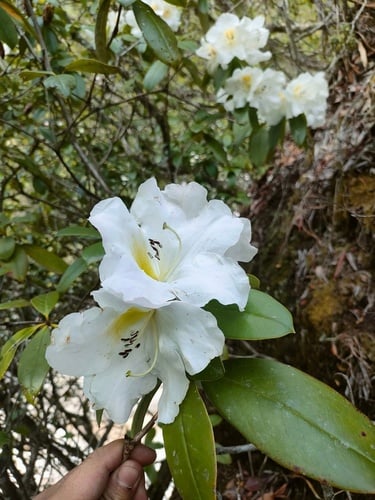
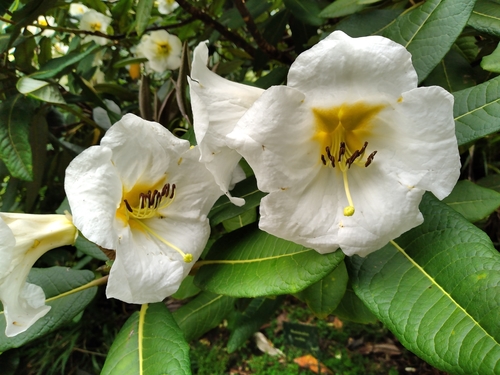
A shrub. It grows in soil and also attaches to other plants. The branches can be 5-9 m long and can be climbing. The leaves are oval and 9-15 cm long by 3-8 cm wide. They are rounded at the base and taper to a short tip. The flowering shoots can have 5-6 flowers. They are white with a red band at the constricted throat. The fruit is a berry 13 mm across.
Edible Uses
The berries are edible.
Distribution
It is a tropical plant. It grows in mountain rainforest between 1,100-1,900 m above sea level.
Where It Grows
Andes, Colombia, Ecuador, Peru, South America,
Synonyms
Cavendishia gilgiana Hoerold
Also Known As
Uva
References (4)
- Grandtner, M. M. & Chevrette, J., 2013, Dictionary of Trees, Volume 2: South America: Nomenclature, Taxonomy and Ecology. Academic Press p 111
- Kermath, B. M., et al, 2014, Food Plants in the Americas: A survey of the domesticated, cultivated and wild plants used for Human food in North, Central and South America and the Caribbean. On line draft. p 200
- Luteyn, J. L., 1983, Ericaceae: Part I. Cavendishia: Flora Neotropica, Vol. 35, Ericaceae: Part I. Cavendishia. pp. 1-289
- NYBG