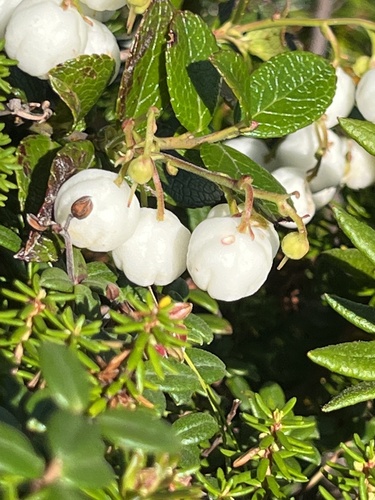
Arctostaphylos nevadensis
A. Gray
Pine-mat manzanita, Dwarf manzanita
iNaturalist· cc-by-nc
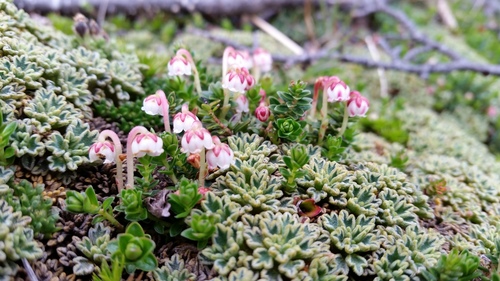
(c) Thayne Tuason, some rights reserved (CC BY-NC)
iNaturalist· cc-by-nc
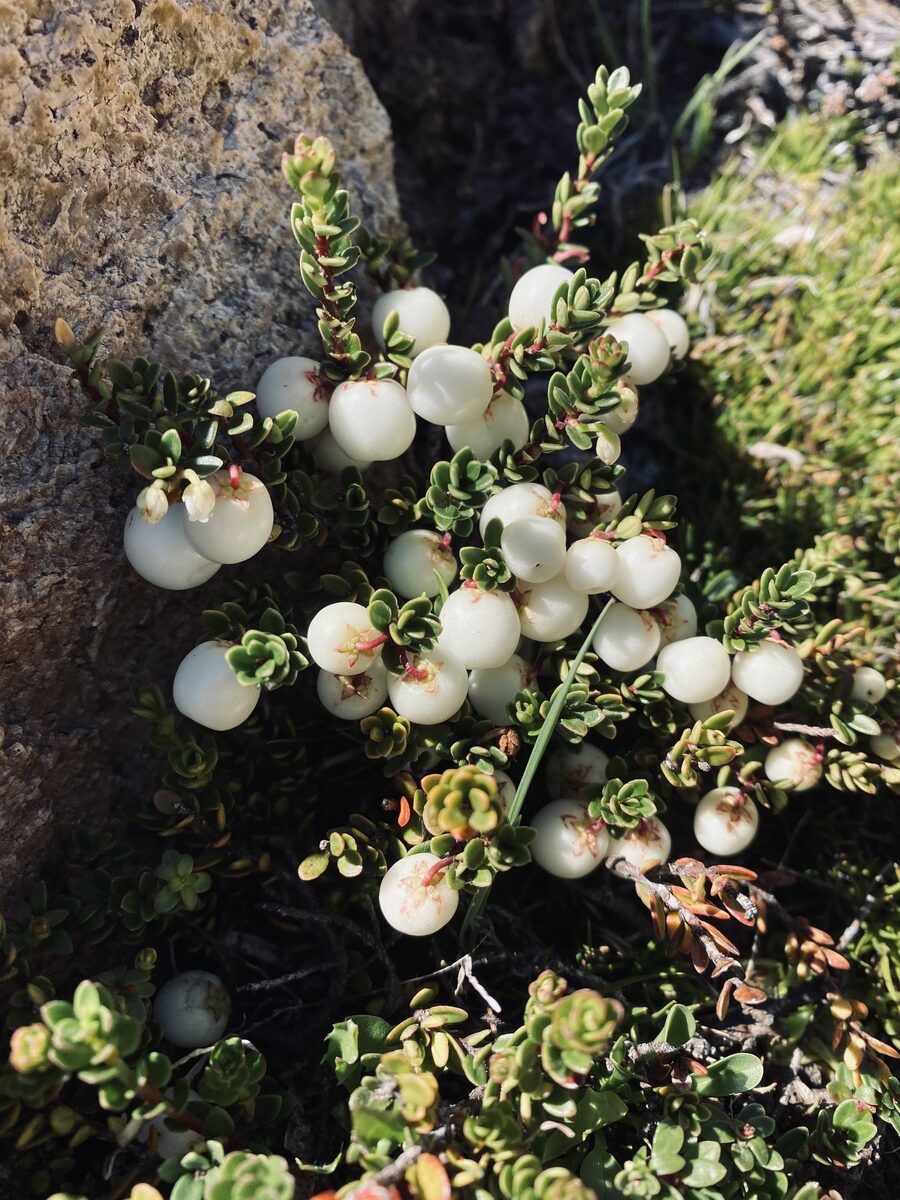
(c) faerthen, some rights reserved (CC BY-NC), uploaded by faerthen
iNaturalist· cc-by-sa
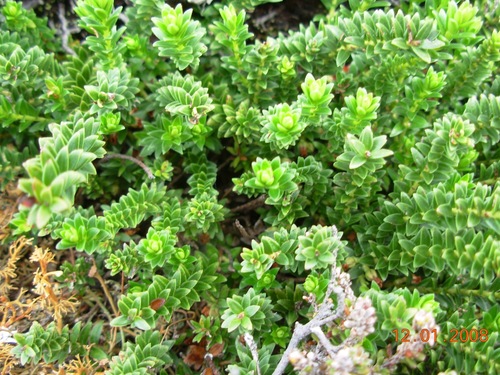
(c) Laura Camp, some rights reserved (CC BY-SA)
Summary
Source: WikipediaArctostaphylos nevadensis, with the common name pinemat manzanita, is a species of manzanita native to western North America.
Description
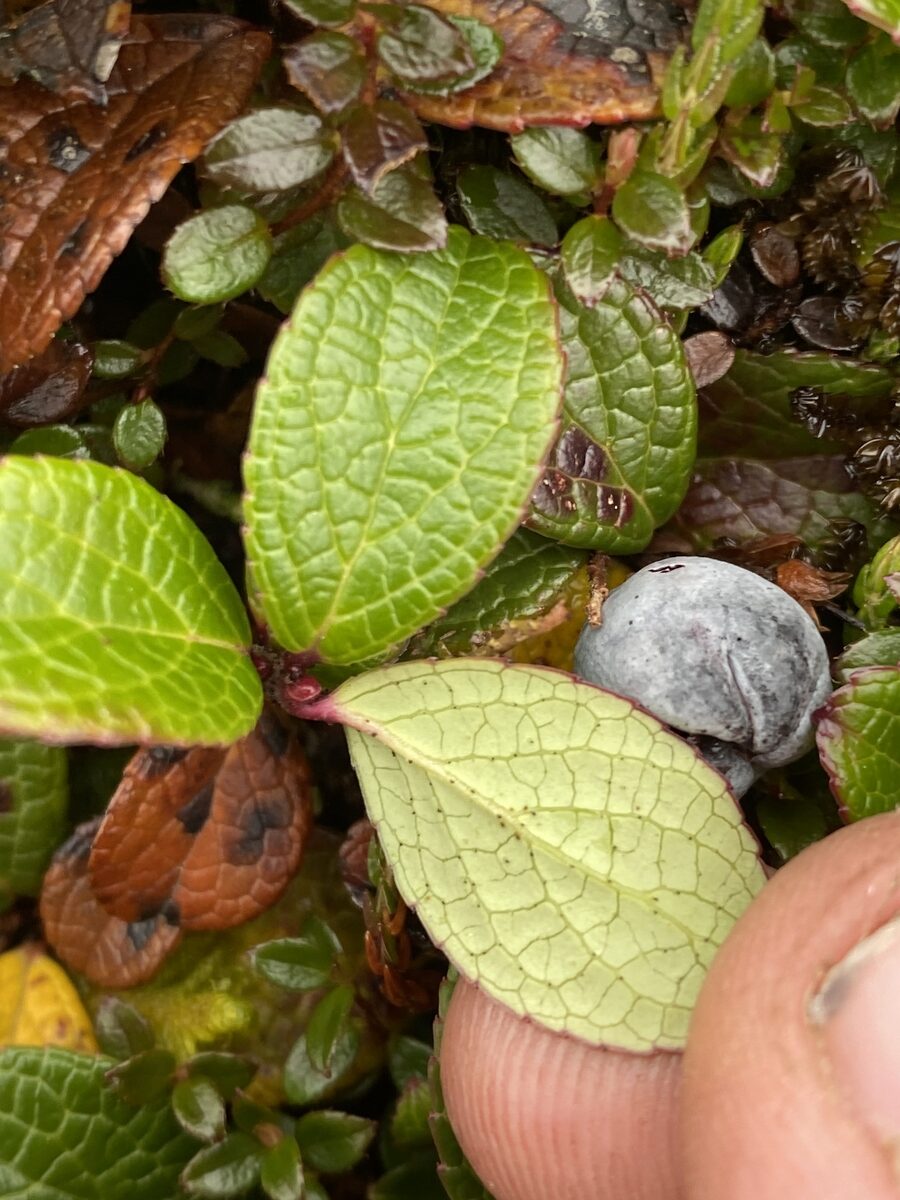
A low mat-forming shrub. It grows 20 cm high. The branches are spreading. They spread 2-3 m wide. They often form roots at the nodes. The leaves are bright green and narrowly sword shaped. They have sharp tips. The flowers are pinkish-white. The fruit are rounded and bright red.
Edible Uses
Edible Parts: Fruit Seed Edible Uses: Seed - ground into a powder and added to soups etc. The seed is very small and would be difficult to separate from the fruit. It would be easier to dry the whole fruit, grind this into a powder and use it in soups etc. Fruit. The fruit can be eaten fresh or dried and stored for later use. It can also be pulverised and made into a drink.
Traditional Uses
The fruit are eaten and used for drinks.
This uses section is brief — help expand it
Medicinal Uses
Astringent Skin The leaves are used in the treatment of diarrhoea. The whole plant is used as an antidote for poisoning by poison oak, Toxicodendron diversiloba. It was probably applied externally to the skin.
Distribution
It is a temperate plant. Hobart Botanical Gardens.
Where It Grows
Australia, North America, Tasmania, USA,
Cultivation
Requires a deep moist well-drained light or medium lime-free loam in sun or semi-shade but plants produce less fruit when grown in the shade. Prefers a position in full sun. Grows well in shade. Plants at Kew were growing very well in a shady position on a NE slope in 1990. Grows well in a sandy seashore garden. This species is closely related to A. uva-ursi. Plants resent root disturbance and should be placed in their final positions as soon as possible.
Propagation
Seed - best sown in a greenhouse as soon as it is ripe. Pre-soak dried seed in boiling water for 10 - 20 seconds or burn some straw on top of them and then stratify at 2 - 5°c for 2 months. The seed usually germinates in 2 - 3 months at 15°c. When large enough to handle, prick the seedlings out into individual pots and grow them on in a cold frame or greenhouse for at least their first winter. Plant out in late spring or early summer. Cuttings of side shoots of the current season's growth, 5 - 8cm with a heel, August to December in a frame. Takes one year. Division in early spring. Take care because the plant resents root disturbance. Pot the divisions up and keep them in a lightly shaded position in a cold frame or greenhouse until they are growing away actively. Layering in spring.
Other Uses
Dye A yellowish-brown dye is obtained from the leaves, it does not require a mordant. A good ground-cover plant for steep sandy banks. A carpeting plant, growing quite rapidly and rooting as it spreads. Special Uses Ground cover
Notes
There are about 50 Arctostaphylos species.
Synonyms
References (6)
- Beckstrom-Sternberg, Stephen M., and James A. Duke. "The Foodplant Database." http://probe.nalusda.gov:8300/cgi-bin/browse/foodplantdb.(ACEDB version 4.0 - data version July 1994)
- Lyle, S., 2006, Discovering fruit and nuts. Land Links. p 77
- Plants for a Future database, The Field, Penpol, Lostwithiel, Cornwall, PL22 0NG, UK. http://www.scs.leeds.ac.uk/pfaf/
- Syn. fl. N. Amer. 2(1):27. 1878
- Tozer, F., 2007, The Uses of Wild Plants. Green Man Publishing. p 34
Show all 6 references Hide references
- Turner, N., et al, 2011, "Up on the Mountain": Ethnobotanical Important of Montane Sites in Pacific Coastal North America. Journal of Ethnobiology 31(1): 4-43