Arctostaphylos columbiana
Piper
Hairy manzanita, Columbian manzanita
iNaturalist· cc-by
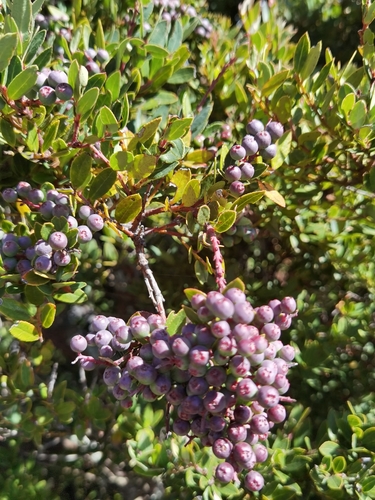
(c) 66dodge, some rights reserved (CC BY), uploaded by 66dodge
iNaturalist· cc-by-nc
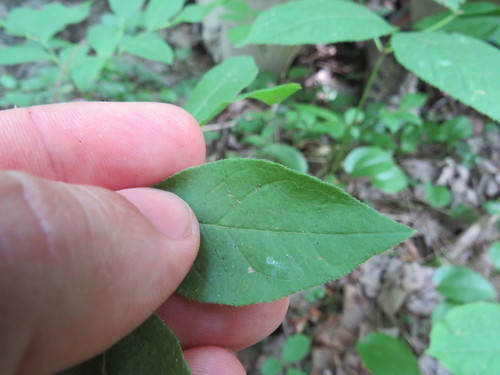
(c) Scott Gilmore, some rights reserved (CC BY-NC), uploaded by Scott Gilmore
iNaturalist· cc-by-nc
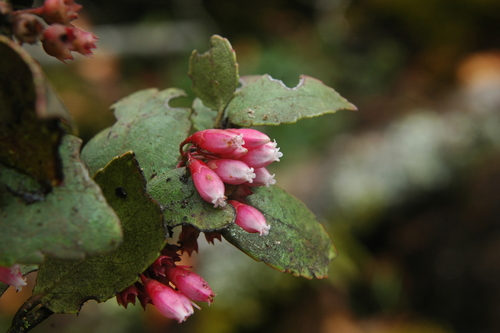
(c) Hope C Stanton, some rights reserved (CC BY-NC), uploaded by Hope C Stanton
Summary
Source: WikipediaArctostaphylos columbiana is a species of manzanita known by the common name hairy manzanita. It is native to the coast of western North America from northern California to southwestern British Columbia. This large manzanita is a shrub or small tree, usually 1–5 meters tall. It is erect with hairy branches. The leaves are oval-shaped and are usually 2-6 centimeters long and 2-3 wide, pale bluish green, fuzzy on both surfaces, occasionally glandular. The small, white, urn-shaped flowers are borne in bunched inflorescences. The fruit is a red drupe about a centimeter in diameter. The seed requires either fire or consumption by animals in order for germination to occur. This manzanita grows in open, rocky areas. It is sometimes grown as a garden ornamental. Hybrids with Arctostaphylos uva-ursi (named Arctostaphylos x media) commonly occur where the two parent species grow in proximity.
Description
A small tree. It grows 6 m high and spreads 3.5 m wide. The bark is peeling and purplish-brown. The twigs are white and have bristles. The leaves are oval and 5 cm long. The flowers are white to pink and in nodding clusters. The fruit are small, bright red berries.
Edible Uses
Edible Parts: Fruit Edible Uses: Fruit - raw or cooked. The fruit is best harvested when slightly under-ripe since the fully mature pulp is mealy. The fruit is about 8mm in diameter.
Traditional Uses
The fruit are eaten fresh. They are also cooked or made into jelly. They can be used for a cider-like drink.
This uses section is brief — help expand it
Medicinal Uses
Astringent A decoction of the bark is used in the treatment of diarrhoea.
Distribution
It is a temperate plant. It is best in well-drained soil. It needs an open sunny position. It is resistant to drought and frost. It suits hardiness zones 7-9.
Where It Grows
Australia, Canada, North America*, USA,
Cultivation
Requires a deep moist well-drained light or medium lime-free loam in sun or semi-shade but plants produce less fruit when they are grown in the shade. Plants resent root disturbance and should be placed in their final positions as soon as possible. This species is very closely related to A. tomentosa, but with a more northerly range.
Propagation
Seed - best sown in a greenhouse as soon as it is ripe. Pre-soak dried seed in boiling water for 10 - 20 seconds or burn some straw on top of them and then stratify at 2 - 5°c for 2 months. The seed usually germinates in 2 - 3 months at 15°c. When large enough to handle, prick the seedlings out into individual pots and grow them on in a greenhouse or cold frame for at least their first winter, Plant out in late spring or early summer. Cuttings of side shoots of the current season's growth, 5 - 8cm with a heel, August to December in a frame. Takes one year. Division in early spring. Take care because the plant resents root disturbance. Pot the divisions up and keep them in a lightly shaded position in a cold frame or greenhouse until they are growing away actively. Layering in spring. Layering in spring.
Other Uses
Dye Fuel Wood A yellowish-brown dye is obtained from the leaves, it does not require a mordant. The wood burns with a bright light and so was used at dances and ceremonials by the native North American Indians. The wood is hard and is used for making tools and awl handles. Special Uses
Production
The fruit are softer when harvested slightly under-ripe.
Notes
There are about 50 Arctostaphylos species.
Synonyms
References (8)
- Bodkin, F., 1991, Encyclopedia Botanica. Cornstalk publishing, p 96
- Cundall, P., (ed.), 2004, Gardening Australia: flora: the gardener's bible. ABC Books. p 175
- Facciola, S., 1998, Cornucopia 2: a Source Book of Edible Plants. Kampong Publications, p 95
- Lord, E.E., & Willis, J.H., 1999, Shrubs and Trees for Australian gardens. Lothian. p 205
- Lyle, S., 2006, Discovering fruit and nuts. Land Links. p 76
Show all 8 references Hide references
- MacKinnon, A., et al, 2009, Edible & Medicinal Plants of Canada. Lone Pine. p 120
- Plants for a Future database, The Field, Penpol, Lostwithiel, Cornwall, PL22 0NG, UK. http://www.scs.leeds.ac.uk/pfaf/
- Tozer, F., 2007, The Uses of Wild Plants. Green Man Publishing. p 34