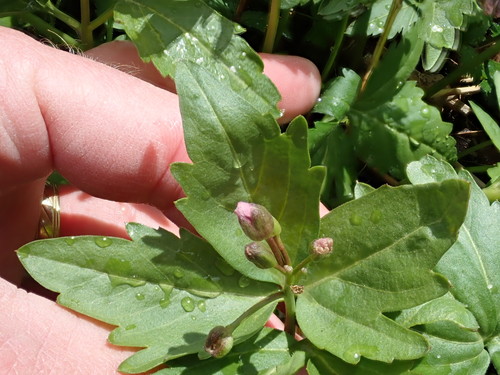
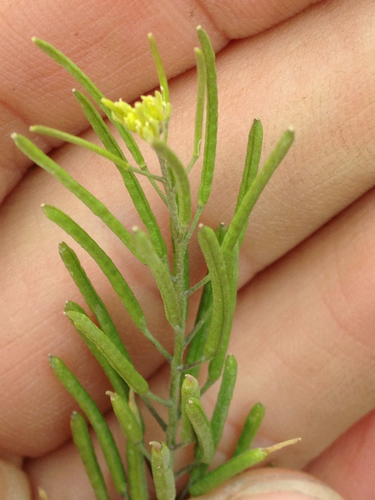
Enarthrocarpus strangulatus
Boiss.
Shilwih
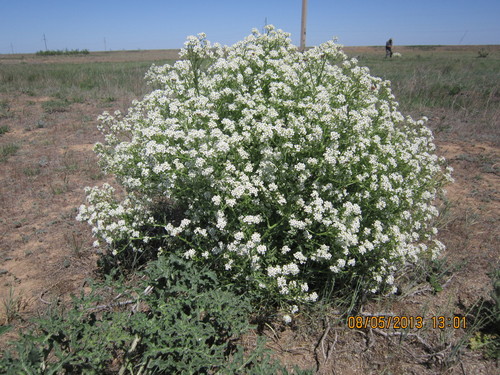
iNaturalist· cc-by-nc
(c) Abdulnaser Abdulkarim, some rights reserved (CC BY-NC)
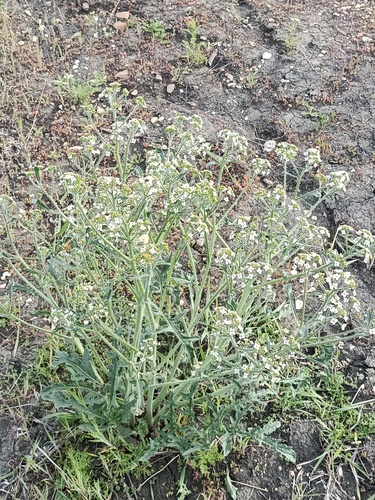
iNaturalist· cc-by
(c) yelena_antipova, some rights reserved (CC BY)
iNaturalist· cc-by
(c) yelena_antipova, some rights reserved (CC BY)
Description
An annual herb from the Mediterranean region belonging to the Brassicaceae family, capable of growing in arid conditions.
This description is brief — help expand it
Edible Uses
Both the leaves and stems are eaten, either cooked or raw.
Traditional Uses
The leaves are cooked and eaten. They are also eaten raw.
This uses section is brief — help expand it
Distribution
It is a Mediterranean plant. It can grow in arid places.
Where It Grows
Africa, Egypt, Israel, Libya, Mediterranean, Middle East, North Africa, Sinai, Syria,
Notes
There are about 6 Enarthrocarpus species.
References (3)
- Bailey, C. and Danin, A., 1981, Bedouin Plant Utilization in Sinai and the Negev. Economic Botany 35(2): 145-162
- Royal Botanic Gardens, Kew (1999). Survey of Economic Plants for Arid and Semi-Arid Lands (SEPASAL) database. Published on the Internet; http://www.rbgkew.org.uk/ceb/sepasal/internet [Accessed 15th April 2011]
- World Checklist of Useful Plant Species 2020. Royal Botanic Gardens, Kew