Trema micranthum
(L.) Blume
Jamaica nettletree
iNaturalist· cc-by-nc
(c) Martin Reith, some rights reserved (CC BY-NC)
iNaturalist· cc-by-nc
(c) Martin Reith, some rights reserved (CC BY-NC)
iNaturalist· cc-by-nc
(c) Martin Reith, some rights reserved (CC BY-NC)
Description
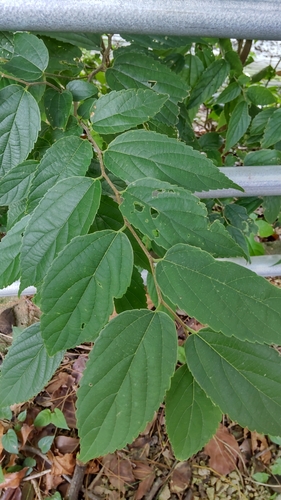
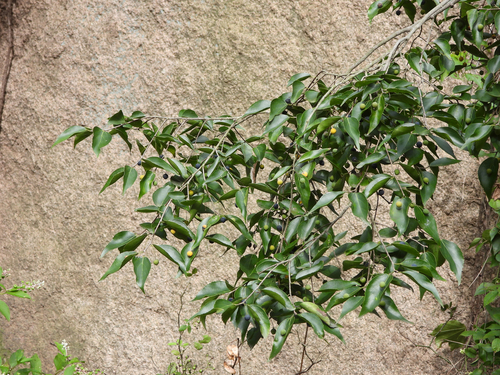
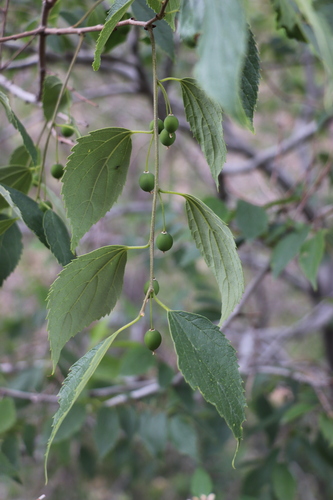
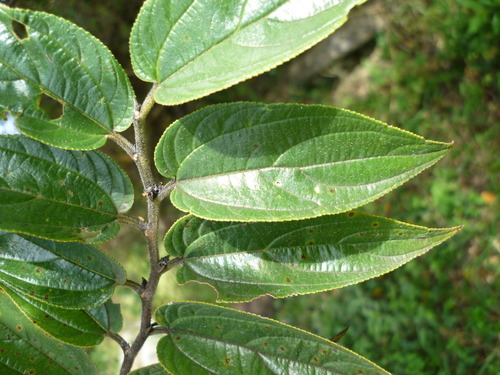
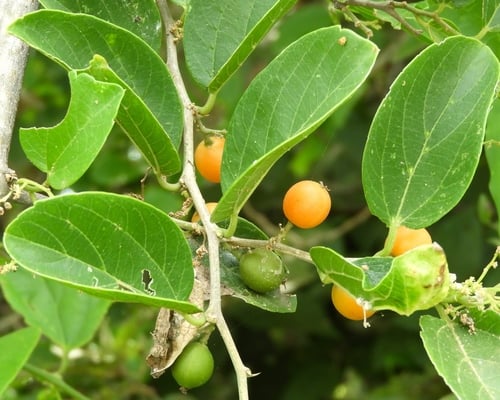
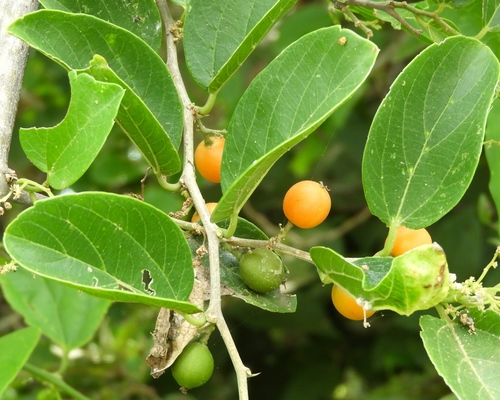
A shrub or small tree. The trunk is straight and usually only branches at the top. The crown is thin. The leaves are simple and alternate. They have teeth and have 3 prominent veins from the base. The flowers are very small and white. The fruit are berries.
Edible Uses
The fruit are eaten.
Distribution
It is a tropical plant. It grows in dry and wet places and also in lower mountain regions. In Argentina it grows between sea level to 2,500 m above sea level.
Where It Grows
Amazon, Andes, Argentina, Bolivia, Brazil, Central America*, Colombia, Costa Rica, Cuba, Dominican Republic, Ecuador, Guiana, Guianas, Guyana, Haiti, Mexico, North America, Panama, Paraguay, Puerto Rico, South America, Suriname, USA, Venezuela, West Indies,
Production
It grows very quickly.
Notes
Also put in the family Ulmaceae.
Synonyms
Also Known As
Atadijo, Candiuba, Capulin, Cerezo, Kaka, Kara baska, Kari bush, Lincha-ma, Mantili, Merabi, Mutamba, Niguito, Sapan, Shalipu, Sui seije, Togalapoli, Waska
References (9)
- Condit, R., et al, 2011, Trees of Panama and Costa Rica. Princeton Field Guides. p 112
- Kermath, B. M., et al, 2014, Food Plants in the Americas: A survey of the domesticated, cultivated and wild plants used for Human food in North, Central and South America and the Caribbean. On line draft. p 872
- Lopez-Diago, D. & Garcia, N., 2021, Wild edible fruits of Colombia. Biota ColomBiana 22 (2) p 34
- Piedra-Malagón, E. M. et al, 2022, Edible native plants of the Gulf of Mexico Province. Biodiversity Data Journal 10: e80565 p 16
- Plants of Haiti Smithsonian Institute http://botany.si.edu
Show all 9 references Hide references
- Roa, J. A. G. & Boada, D. S. G., 2018, Fundación para el Fortalecimiento de la Fruticultura y Plantas Alimenticias no Convencionales en Colombia.
- Torre, de la, L., et al, 2008, Enciclopedia de las Plantas Útiles del Ecuador. Herbario QCA. Pontificia Universidad Católica del Ecuador. p 272
- Van den Eynden, V., et al, 2003, Wild Foods from South Ecuador. Economic Botany 57(4): 576-603
- World Checklist of Useful Plant Species 2020. Royal Botanic Gardens, Kew