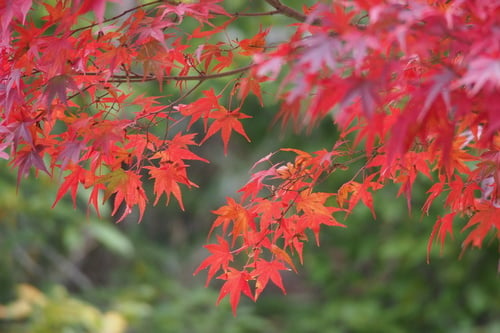
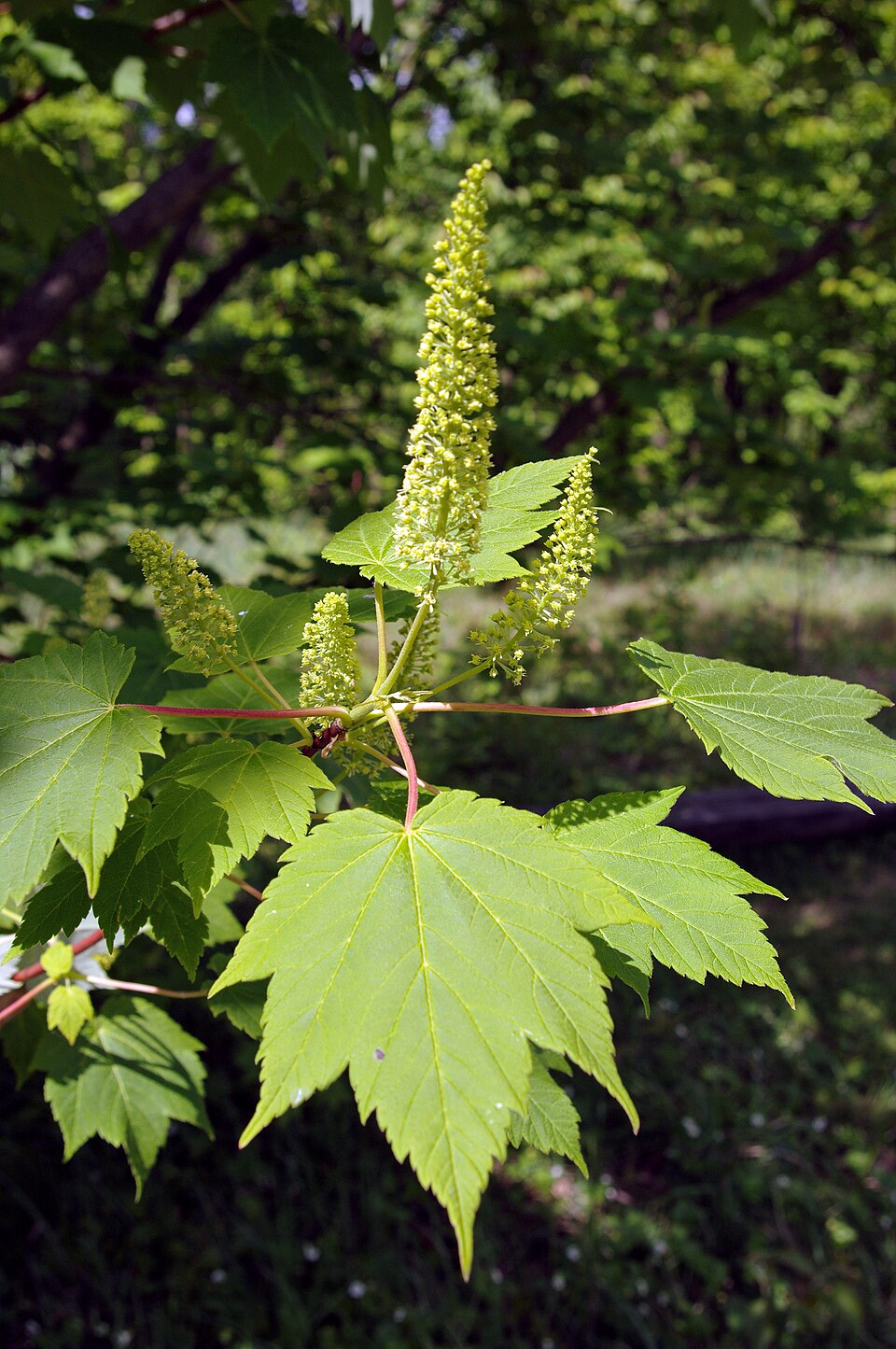
Acer cappadocicum var. indicum
Gleditsch, Rheder
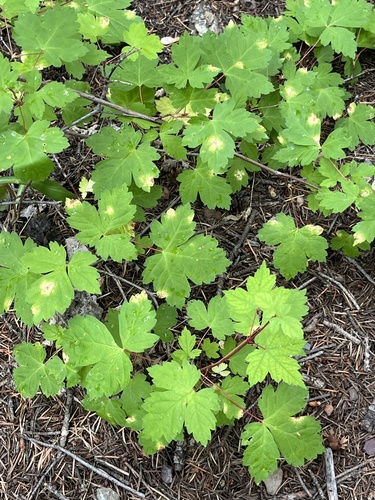
Five lobed maple
iNaturalist· cc-by-nc
(c) Suresh Ghimire, some rights reserved (CC BY-NC), uploaded by Suresh Ghimire
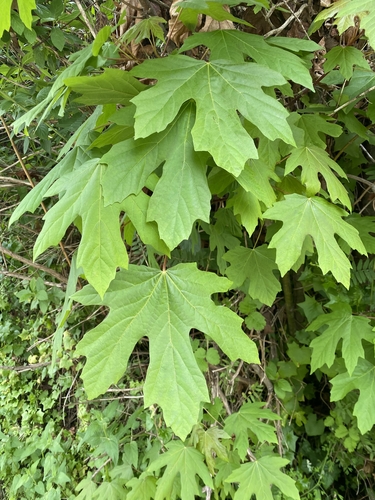
iNaturalist· cc-by-nc
(c) elenasuslova, some rights reserved (CC BY-NC)
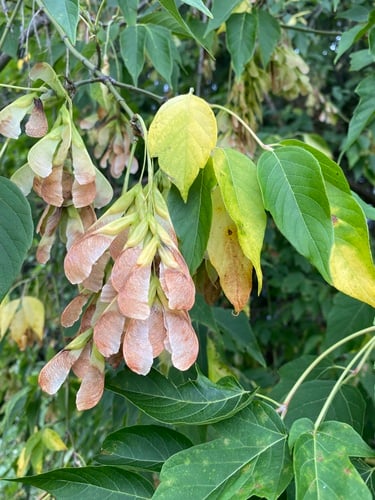
iNaturalist· cc-by
(c) jamie-aa, some rights reserved (CC BY), uploaded by jamie-aa
Summary
Source: WikipediaAcer cappadocicum, the Cappadocian maple, is a maple native to Asia, from central Turkey (ancient Cappadocia) east along the Caucasus, the Himalayas, to southwestern China.
Description
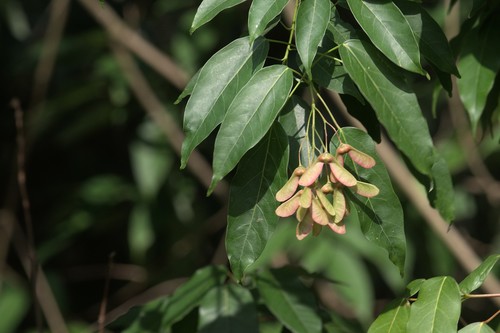
A shrub or small tree. It grows 5 m tall. There are prickles along the stem. The leaves are twice divided and there are 8-18 pairs of pinnae. There are up to 50 pairs of pinnules on each pinnae. The flowers are yellow. They are in large clusters at the ends of branches. The pods are flattened.
Edible Uses
The leaves are cooked and eaten, though traditionally used only in emergencies. The sap contains sugar and can be used as a sweetener or boiled down into syrup.
Traditional Uses
The sap contains sugar and can be used as a sweetener or concentrated into a syrup by boiling. The leaves are cooked and eaten.
This uses section is brief — help expand it
Distribution
It is a temperate plant. It needs a moderately sunny moist but well drained soil. It grows on hillsides, mountain valleys, forests, from sea level to 1800 m altitude in northern China. Temperate. It suits hardiness zones 5-8. Burnie Rhodo gardens (var. sinensis)
Where It Grows
Asia, Australia, China, Europe, Himalayas, India, Japan, Korea, Middle East, Mongolia, Russia, Sikkim, Tasmania, Tibet, Turkey, Türkiye,
Cultivation
Seed should be pre-soaked for 24 hours then kept cold at 0-8°C for 2-4 months to assist them to grown. Seed can be sown fresh if green seeds are used. Seed should be grown in a nursery then transplanted. Cuttings or layering can be used.
Production
It is fast growing.
Other Information
The leaves are used only in emergencies.
Notes
There are about 120-150 Acer species.
Synonyms
Also Known As
Bankimu, Cappadocicum maple, Dumitha, Gadkinu, Kainjli, Kanjar, Kapasey, Kilpattar, Painted maple, Pata, Potli, Se mu qi, Semu Qi, Tarkhana, Tikta, Wujiao Feng
References (11)
- Ambasta S.P. (Ed.), 2000, The Useful Plants of India. CSIR India. p 9
- Brickell, C. (Ed.), 1999, The Royal Horticultural Society A-Z Encyclopedia of Garden Plants. Convent Garden Books. p 65 (As Acer mono)
- Coombes, A.J., 2000, Trees. Dorling Kindersley Handbooks. p 86
- Cundall, P., (ed.), 2004, Gardening Australia: flora: the gardener's bible. ABC Books. p 83
- Etherington, K., & Imwold, D., (Eds), 2001, Botanica's Trees & Shrubs. The illustrated A-Z of over 8500 trees and shrubs. Random House, Australia. p 60
Show all 11 references Hide references
- MURRAY, (As Acer mono)
- Plants for a Future database, The Field, Penpol, Lostwithiel, Cornwall, PL22 0NG, UK. http://www.scs.leeds.ac.uk/pfaf/ (As Acer mono)
- READ, (As Acer mono)
- UPHOF (As Acer mono)
- Valder, P., 1999, The Garden Plants of China. Florilegium. p 260 (As Acer mono)
- Xu Ting-zhi; Aceraceae, Flora of China. (As Acer mono)