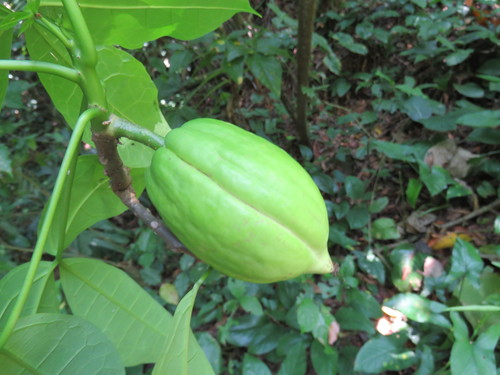
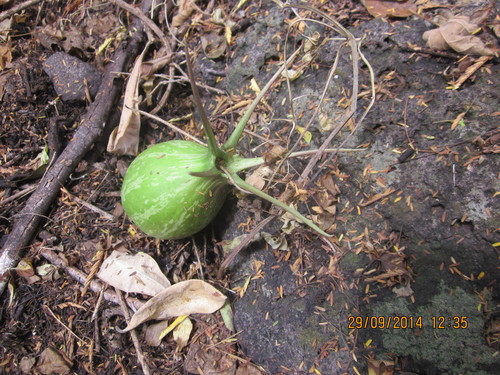
Jacaratia digitata
(Poepp. & Endl.) Solms
Chamburo, Numbi
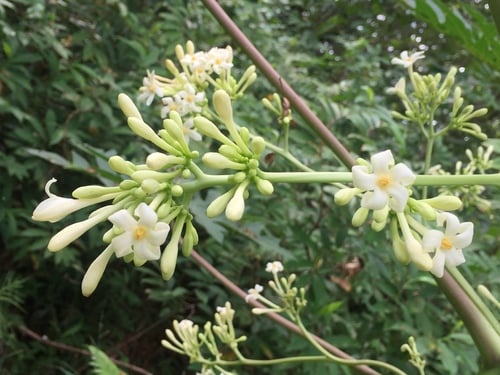
iNaturalist· cc-by-nc
(c) Kevin Fabian Constante Gonzalez, some rights reserved (CC BY-NC)
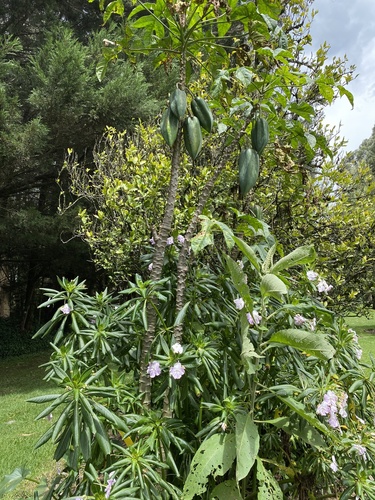
iNaturalist· cc-by-nc
(c) Paul Donahue, some rights reserved (CC BY-NC)
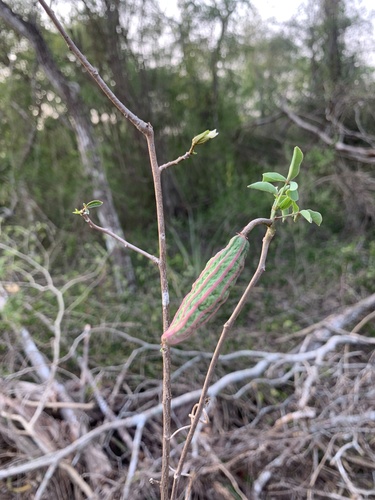
iNaturalist· cc-by-nc
(c) Paul Donahue, some rights reserved (CC BY-NC)
Description
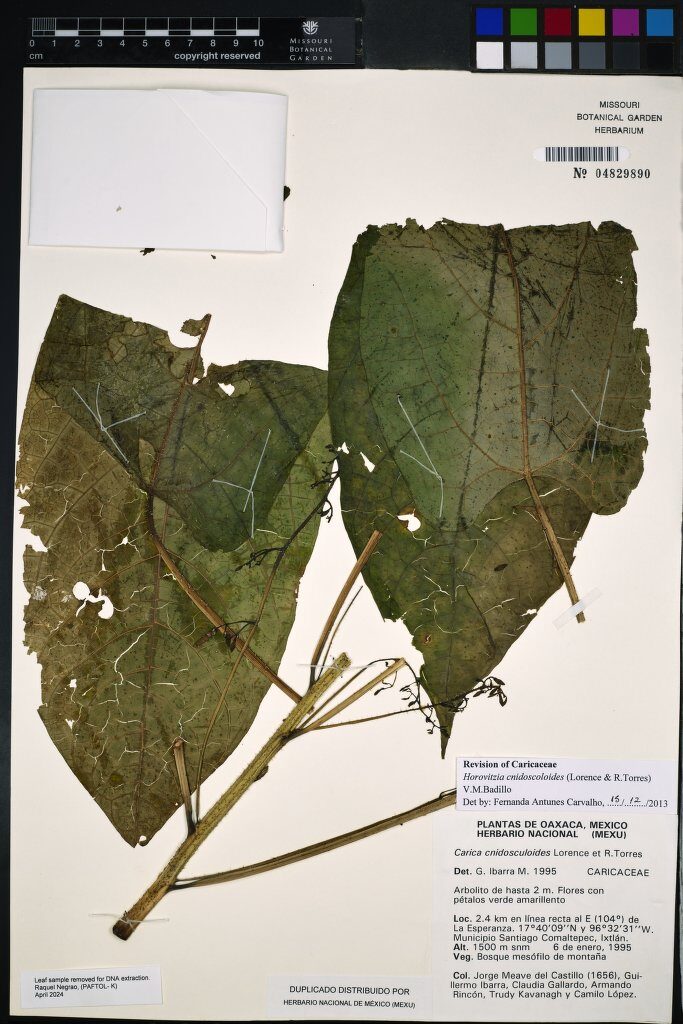
A tree. It grows 9-25 m tall. The trunk is 45 cm across. The trunk is thorny. It has watery white latex. The fruit hang down. They are oval and orange when ripe. They are 13 cm long. They are edible.
Edible Uses
The fruit are eaten raw.
Traditional Uses
The fruit are eaten raw.
This uses section is brief — help expand it
Distribution
It is a tropical plant. It grows in upland forest. It has been recorded at 200 m above sea level. It grows in forest that is occasionally flooded.
Where It Grows
Amazon, Bolivia, Brazil, Colombia, Ecuador, Peru, South America,
Synonyms
Also Known As
A'cho papaya, Cana bohi, Chamburo, Gargatea, Huakui, Huaquibi, Jacaratia, Kuakui, Mamui, Mapayo bere, Nemebe, Nemeka, Numpi, Palo suave, Papaillo, Papaya caspi, Papaya del monte, Papaya macho, Papayuelo, Peri jico, Sacha papaya, Shamburi
References (13)
- Badillo, V.M. 1993. Caricaceae. Segundo esquema. Revista de la Facultad de Agronomía de la Universidad Central de la Universidad Central de Venezuela. Alcance 43
- Daly, D. C., An Index of Common Names of Plants in Acre, Brazil. New York Botanical Garden Universidade Federal do Acre.
- Grandtner, M. M. & Chevrette, J., 2013, Dictionary of Trees, Volume 2: South America: Nomenclature, Taxonomy and Ecology. Academic Press p 334
- Hellmuth, N. M., 2013, Maya Ethnobotany. Complete Inventory of plants. Associacion FLAAR Mesoamerica. Thirteenth edition. p 28
- Kermath, B. M., et al, 2014, Food Plants in the Americas: A survey of the domesticated, cultivated and wild plants used for Human food in North, Central and South America and the Caribbean. On line draft. p 452
Show all 13 references Hide references
- Lopez-Diago, D. & Garcia, N., 2021, Wild edible fruits of Colombia. Biota ColomBiana 22 (2) p 34
- NYBG herbarium "edible"
- Philips, O., 1992, The potential for harvesting fruits in tropical rainforests: new data from Amazonian Peru. Biodiversity and Conservation 2, 18-38
- Roa, J. A. G. & Boada, D. S. G., 2018, Fundación para el Fortalecimiento de la Fruticultura y Plantas Alimenticias no Convencionales en Colombia.
- Torre, de la, L., et al, 2008, Enciclopedia de las Plantas Útiles del Ecuador. Herbario QCA. Pontificia Universidad Católica del Ecuador. p 275
- Van den Eynden, V., E. Cueva and O. Cabrera. 1999. Plantas silvestres comestibles del sur del Ecuador – Wild edible plants of southern Ecuador. Ediciones Abya-Yala, Quito, Ecuador.
- Van den Eynden, V., et al, 2003, Wild Foods from South Ecuador. Economic Botany 57(4): 576-603
- Zambrana, P, et al, 2017, Traditional knowledge hiding in plain sight – twenty-first century ethnobotany of the Chácobo in Beni, Bolivia. Journal of Ethnobiology and Ethnomedicine (2017) 13:57