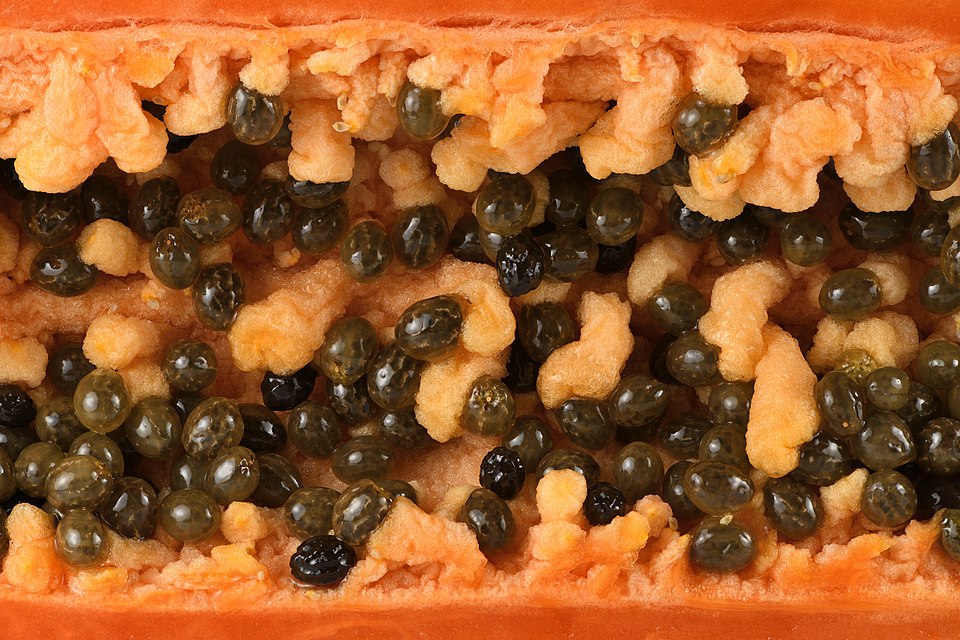
Vasconcellea goudotiana
Triana & Planch.
Papayuelo, Goudout's papaya
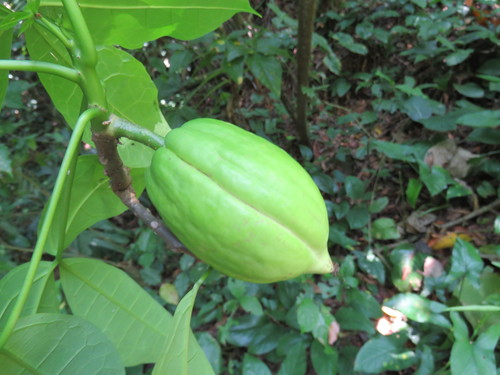
iNaturalist· cc-by-nc
(с) HERBARIO TULV INCIVA, некоторые права защищены (CC BY-NC)
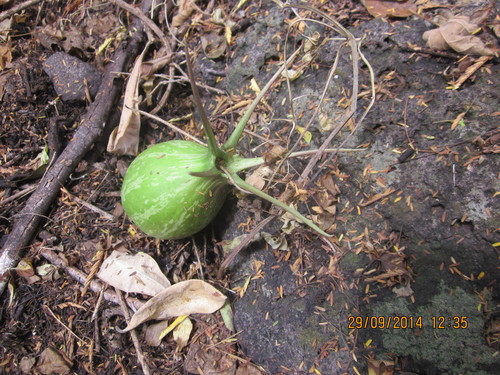
iNaturalist· cc-by-nc
(с) Jorge L. Peña, некоторые права защищены (CC BY-NC), загрузил Jorge L. Peña
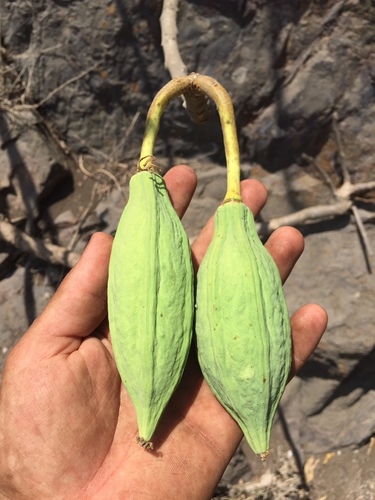
iNaturalist· cc-by-nc
(с) Sebas Arango, некоторые права защищены (CC BY-NC), загрузил Sebas Arango
Summary
Source: WikipediaVasconcellea goudotiana (also known as papayuelo) is a species of flowering plant in the family Caricaceae. It is endemic to Colombia. The plant has a chromosome count of 2n = 18. It was previously placed in genus Carica.
Description
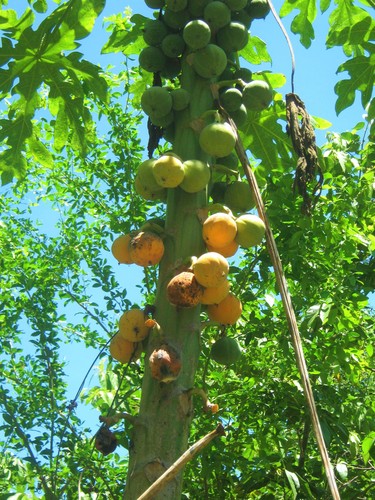
A small single stemmed tree. It grows 3-8 m tall. It loses its leaves during the year. The leaves have purple veins. The fruit are 5 angled and purple, orange or red. Some trees have bitter fruit.
Edible Uses
Fruit - raw. The flesh has the flavour of a mildly acidic apple, with the pulp around the seeds being milder and more pleasant. The flavour of the fruit can vary wildly, with the best forms being quite sweet with an apple-like flavour, whilst others can be astringent and barely edible, even when cooked. The fruit can be up to 20cm long and weigh up to 200g.
Traditional Uses
The fruit can be eaten raw. They can also be eaten with sugar as a dessert. They are also used for drinks.
This uses section is brief — help expand it
Known Hazards
Some trees produce bitter fruit.
Distribution
A tropical plant. In the Andes it grows between 1,500-2,300 m above sea level. It suits hardiness zones 10-12.
Where It Grows
Andes, Asia, Australia, Central America, Colombia*, Ecuador, Pacific, Panama*, Philippines, SE Asia, South America, Tropical America,
Cultivation
Plants are grown by seeds.
Propagation
Seed - sow in individual containers or in a nursery seedbed in light shade. Germination can be slow and difficult, taking about 30 days. Seedlings can be planted out when 4 - 6 months old.
Notes
There are at least 22-40 species of Carica.
Synonyms
Also Known As
Chilacuan, Papayote, Papayuela, Sylvan papaya, Tapaculo
References (22)
- Badillo, V.M. 2000. Carica L. vs. Vasconcella St.-Hil. (Caricaceae) con la rehabilitación de este último. Ernstia, 10 (2): 74-79.
- Badillo, V.M. 2001. Nota correctiva Vasconcellea St. Hill. Y no Vasconcella (Caricaceae). Ernstia, 11(1): 75-76.
- Castillo, R. O., 1995, Plant Genetic Resources in the Andes: Impact, Conservation, and Management. Crop Science 35:355-360 (As Carica goudoutiana)
- Coronel, R.E., 1982, Fruit Collections in the Philippines. IBPGR Newsletter p 6
- Facciola, S., 1998, Cornucopia 2: a Source Book of Edible Plants. Kampong Publications, p 73 (As Carica goudoutiana)
Show all 22 references Hide references
- Grandtner, M. M., 2008, World Dictionary of Trees. Wood and Forest Science Department. Laval University, Quebec, Qc Canada. (Internet database http://www.WDT.QC.ca)
- Grandtner, M. M. & Chevrette, J., 2013, Dictionary of Trees, Volume 2: South America: Nomenclature, Taxonomy and Ecology. Academic Press p 685
- Hibbert, M., 2002, The Aussie Plant Finder 2002, Florilegium. p 60
- Kermath, B. M., et al, 2014, Food Plants in the Americas: A survey of the domesticated, cultivated and wild plants used for Human food in North, Central and South America and the Caribbean. On line draft. p 901
- Kew Plants of the World Online
- Lyle, S., 2006, Discovering fruit and nuts. Land Links. p 105 (As Carica goudoutiana)
- Martin, F. W., et al, 1987, Perennial Edible Fruits of the Tropics. USDA Handbook 642 p 90
- Miller, 1982, Caricaceae. J. Arnold Arboretum Volume 63(1): 433 (As Carica goudotiana)
- National Research Council. 1989. Lost crops of the Incas: little-known plants of the Andes with promise for worldwide cultivation. National Academy Press, Washington DC, U.S.A.
- C. F. P. Martius, Fl. bras. 13(3):183, t. 51. 1889
- Recher, P, 2001, Fruit Spirit Botanical Gardens Plant Index. www.nrg.com.au/~recher/ seedlist.html p 1 (As Carica goudoutiana)
- Reis, S. V. and Lipp, F. L., 1982, New Plant Sources for Drugs and Foods from the New York Botanical Garden herbarium. Harvard. p 199 (As Carica goudotiana)
- Roa, J. A. G. & Boada, D. S. G., 2018, Fundación para el Fortalecimiento de la Fruticultura y Plantas Alimenticias no Convencionales en Colombia.
- Smith, N., Mori, S.A., et al, 2004, Flowering Plants of the Neotropics. Princeton. p 86
- Storey, W. B., 1979, Pineapple, in Simmonds N.W.,(ed), Crop Plant Evolution. Longmans. London. p 21
- van Wyk, B., 2005, Food Plants of the World. An illustrated guide. Timber press. p 118
- www.tradewindsfruit.com