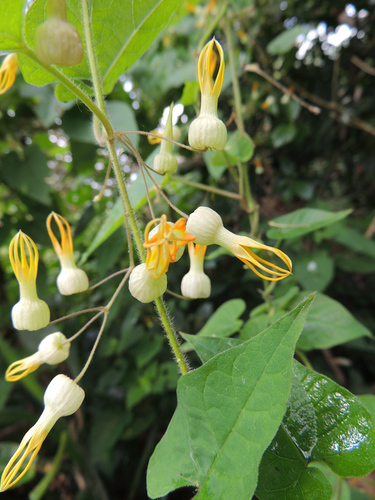
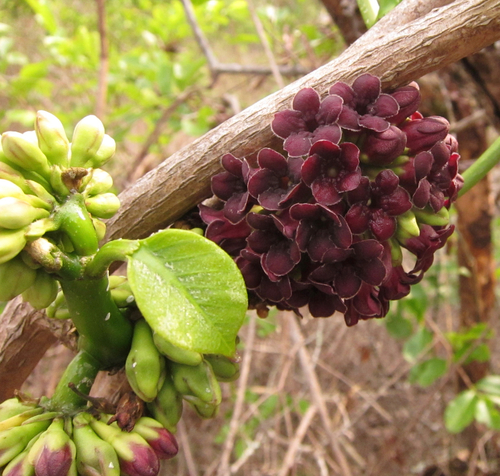
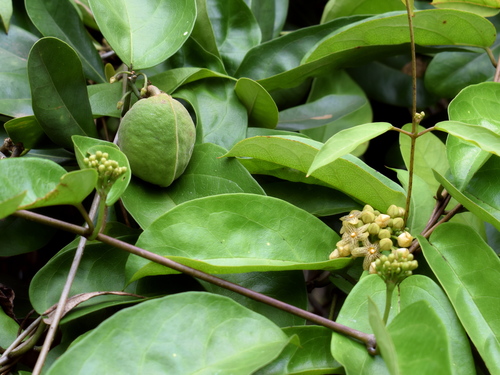
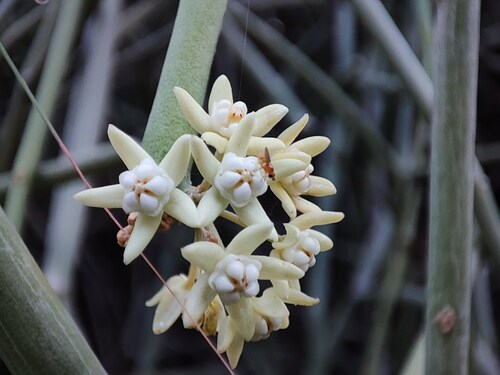
Tabernaemontana sananho
Ruiz & Pavon
Kunakip
iNaturalist· cc-by-nc
(c) humbertomendozacifuentes, some rights reserved (CC BY-NC), uploaded by humbertomendozacifuentes
iNaturalist· cc-by-nc
(c) humbertomendozacifuentes, some rights reserved (CC BY-NC)
Summary
Source: WikipediaTabernaemontana sananho is a tropical tree species in the family Apocynaceae known as lobo sanango. Lobo sanango grows in the Amazon Basin of northern South America.
Description
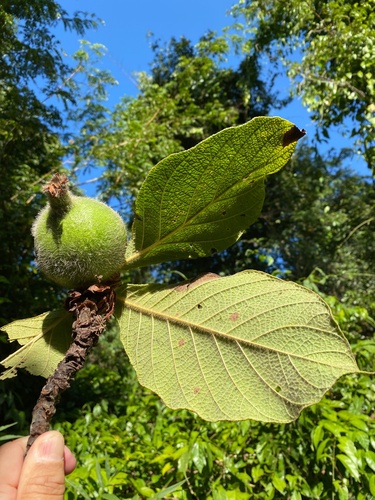
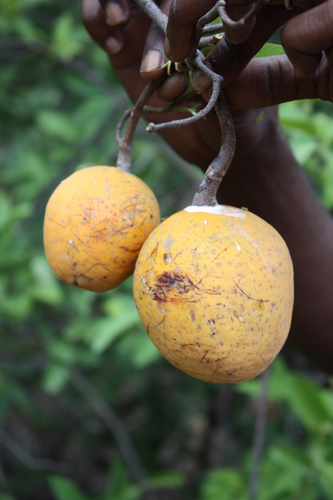
A tree. It can grow 20 m tall. The fruit are 4-5 cm long by 3-4 cm wide. They are yellow. They are produced in clusters. The skin is thick and has 3 angled ridges. There are about 20 dark reddish brown seeds. The pulp is very sweet. The pulp is underneath the layer of pointed seeds. The fruit stalk has a white latex.
Edible Uses
The fruit pulp is eaten raw, though consumption is only occasional.
Traditional Uses
The fruit pulp is eaten raw.
This uses section is brief — help expand it
Medicinal Uses
The bark is utilized.
Distribution
It is a tropical plant. It grows in the understorey in the forest. It grows in floodplains and uplands. It grows up to 2,000 m above sea level.
Where It Grows
Amazon, Andes, Bolivia, Brazil, Colombia, Ecuador, Guiana, Guianas, Guyana, Peru, South America, Suriname, Venezuela,
Other Uses
A latex exudes copiously from the cut bark. It is used medicinally. The creamy yellow wood has dark chocolate brown, grayish or pale purplish streaks. The grain is interwoven, the wood is light in weight and rather soft. It is somewhat fibrous, easy to cut; but subject to stain.
Production
The tree starts producing fruit when about 1.5 m tall. Fruit are ripe towards the end of the rainy season.
Other Information
The fruit pulp is only occasionally eaten.
Synonyms
Also Known As
Arbol de la vaca, Bai su'u, Bolsa de mono, Bolsa de perro, Caimo de montana, Chiri sanango, Kunapik, Kunapip, Lobo sanango, Sanango de bajo, Sanango de lobo, Sanango macho, Tahuampa sanango, Tsikta, Ucho sanango
References (13)
- Caballero-Serrano, V., et al, 2019, Traditional ecological knowledge and medicinal plant diversity in Ecuadorian Amazon home gardens. Global Ecology and Conservation 17 (2019) e00524 p 8
- Daly, D. C., An Index of Common Names of Plants in Acre, Brazil. New York Botanical Garden Universidade Federal do Acre.
- Etkin, N. L. (Ed.), 1994, Eating on the Wild Side, Univ. of Arizona. p 155 (As Bonafousia sananho)
- Friedman, J., et al, 1993, A Novel Method for Identification and Domestication of Indigenous Useful Plants in Amazonian Ecuador. In Janick, J. (Ed), New crops. Wiley.
- Grandtner, M. M. & Chevrette, J., 2013, Dictionary of Trees, Volume 2: South America: Nomenclature, Taxonomy and Ecology. Academic Press p 650
Show all 13 references Hide references
- Kermath, B. M., et al, 2014, Food Plants in the Americas: A survey of the domesticated, cultivated and wild plants used for Human food in North, Central and South America and the Caribbean. On line draft. p 849
- Lopez-Diago, D. & Garcia, N., 2021, Wild edible fruits of Colombia. Biota ColomBiana 22 (2) p 30
- NYBG Herbarium "edible"
- Notizbl. Bot. Gart. Berlin-Dahlem 14:166. 1938 (As Bonafousia sananho)
- Roa, J. A. G. & Boada, D. S. G., 2018, Fundación para el Fortalecimiento de la Fruticultura y Plantas Alimenticias no Convencionales en Colombia.
- Smith, N., et al, 2007, Amazon River Fruits. Flavors for Conservation. Missouri Botanical Gardens Press. p 36
- Torre, de la L., et al, 2008, Enciclopedia de las Plantas Útiles del Ecuador. Herbario QCA. Pontificia Universidad Católica del Ecuador. p 176
- Van den Eynden, V., et al, 2003, Wild Foods from South Ecuador. Economic Botany 57(4): 576-603