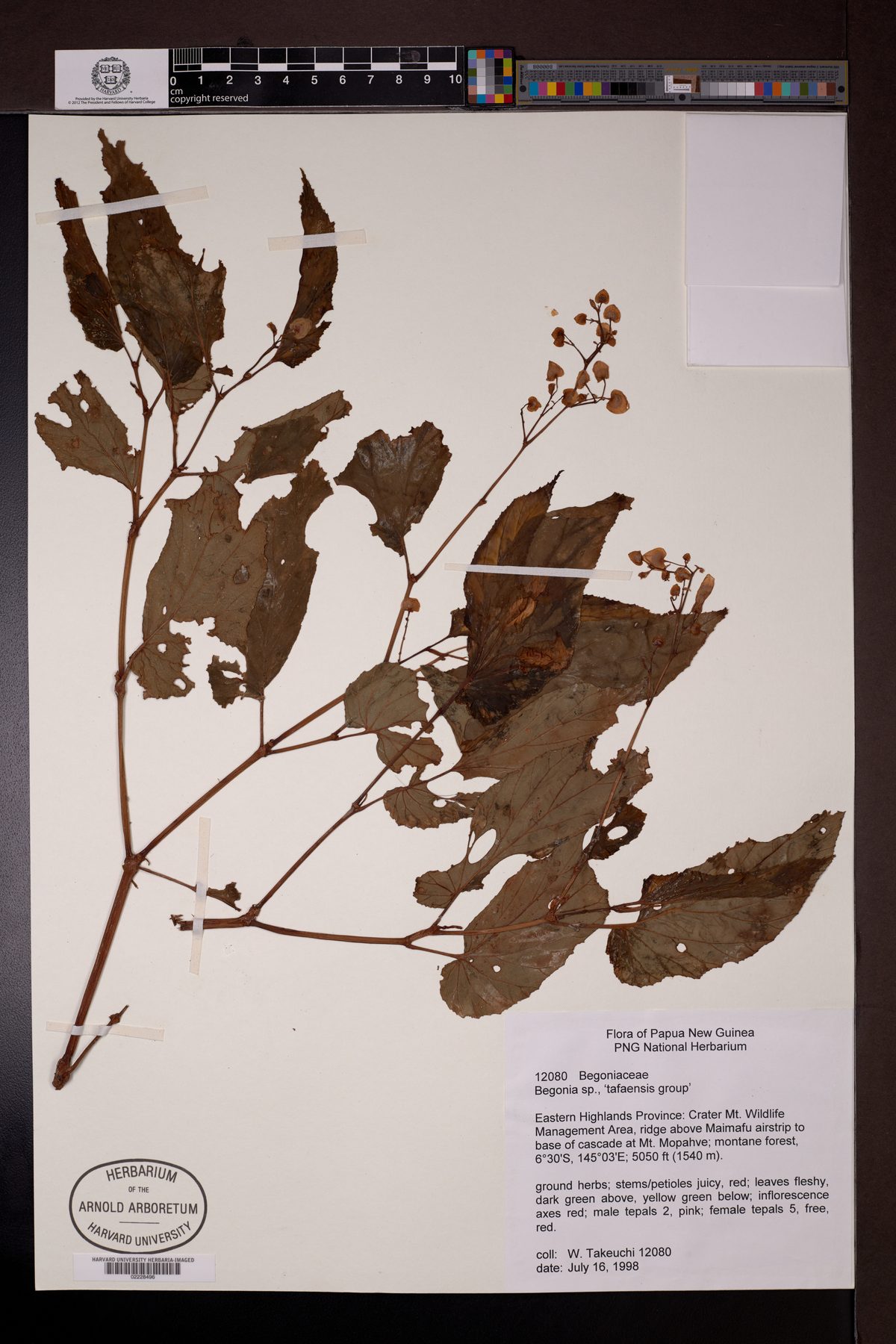
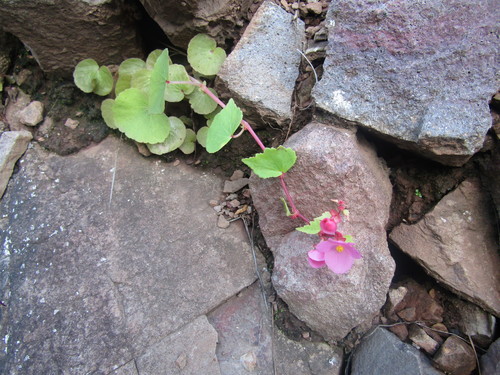
Begonia palmata
D. Don.
Bayia
iNaturalist· cc-by-nc
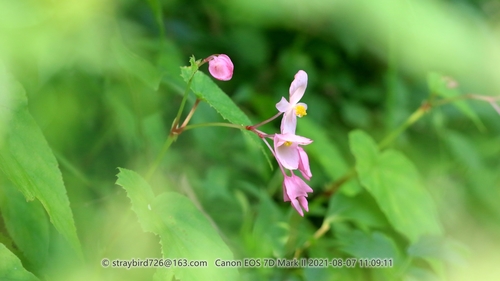
(c) Wangworn Sankamethawee, some rights reserved (CC BY-NC), uploaded by Wangworn Sankamethawee
iNaturalist· cc-by-nc
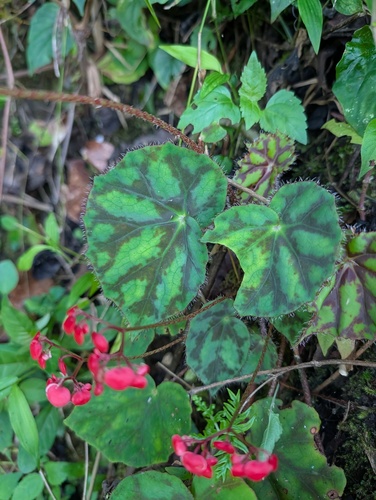
(c) 通通, some rights reserved (CC BY-NC)
iNaturalist· cc-by-nc
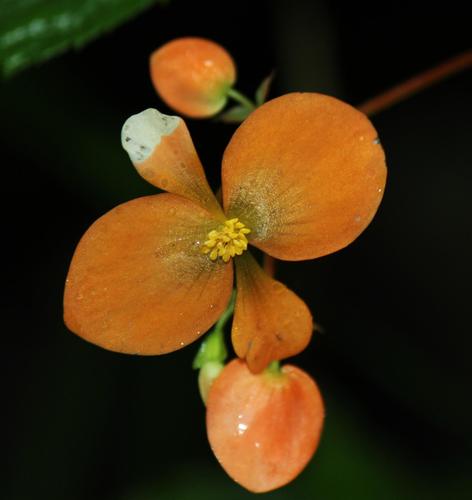
(c) 郭伯川, some rights reserved (CC BY-NC)
Summary
Source: WikipediaBegonia palmata is a species of plant in the genus Begonia of the family Begoniaceae. It is a small herb of height 20–90 cm tall. It is found in moist places, next to streams or under the shade. It is found in many parts of Asia, including eastern Himalayas.
Description
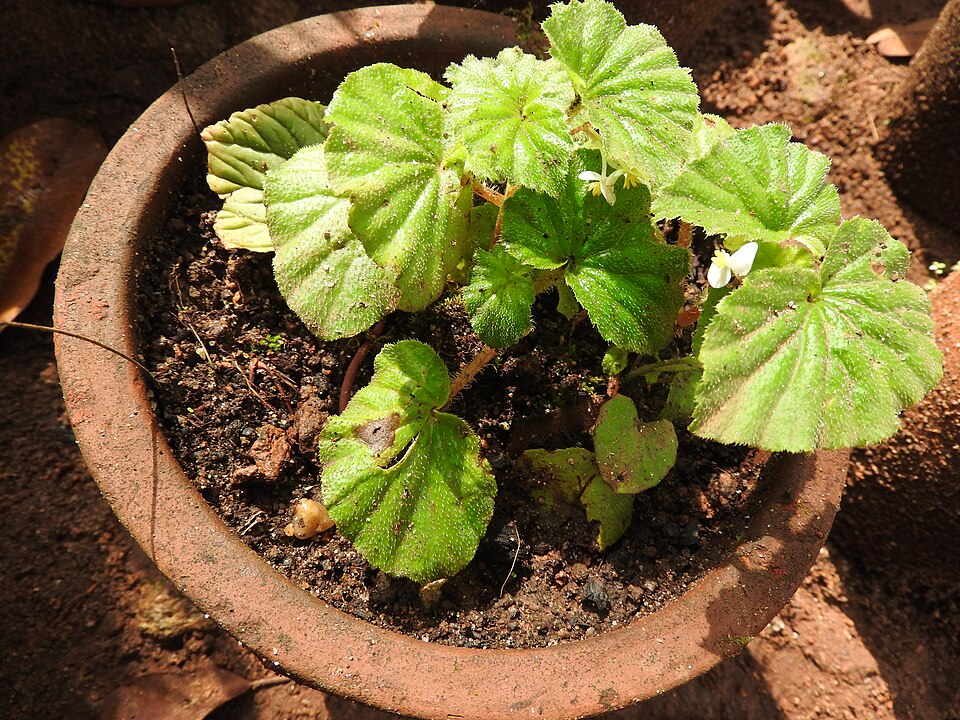
A herb. It grows 20-90 cm tall. It has rhizomes that are 2 cm across. The stems are erect. There are leaves at the base and on the stem. The leaf stalks are 1-4 cm long. The leaves are oval and unequal on opposite sides. They are12-33 cm long by 6-27 cm wide.
Edible Uses
Edible Parts: Leaves Edible Uses: Leaves - cooked.
Traditional Uses
The leaf stalk is used as a vegetable. It is also crushed and made into a paste for preparing chutney. The leaves are also used as a vegetable.
This uses section is brief — help expand it
Medicinal Uses
Antiphlogistic Astringent The roots are antiphlogistic and astringent. They stimulate blood circulation. A decoction is used in the treatment of haematemesis, amenorrhoea and traumatic stagnant blood collection.
Distribution
It is a subtropical plant. It grows in evergreen broad-leaved forests by streams and on rocks in moist places between 100-3,200 m above sea level. In Sichuan and Yunnan.
Where It Grows
Asia, Bangladesh, Bhutan, China, Himalayas, India, Indochina, Laos, Myanmar, Nepal, Northeastern India, SE Asia, Taiwan, Thailand, Vietnam,
Cultivation
Requires a well-drained soil. Plants do not require high light intensities. Prefers a pH between 6 and 7. Plants are probably not winter hardy outdoors in Britain, though they are worth trying in a sheltered woodland position in the milder areas of the country.
Propagation
Seed - surface sow in a greenhouse and keep the compost moist in a light position. The seed can be very slow to germinate, sometimes taking a year or more. When they are large enough to handle, prick the seedlings out into individual pots and grow them on in the greenhouse for at least their first winter. Plant them out into their permanent positions in late spring or early summer, after the last expected frosts. Division Basal cuttings from tubers in spring.
Other Uses
None known Special Uses
Other Information
Leaves are sold in local markets.
Notes
There are 900-1,000-1,500 Begonia species.
Synonyms
Also Known As
Bayia, Bikku yulu, Donpolapang, Khagayo, Magar kanche, Mping, Sekhupdon, Sisibaying, Sla-lajaw, Theidon, Thuhaiduong chan-vit
References (12)
- Angami, A., et al, 2006, Status and potential of wild edible plants of Arunachal Pradesh. Indian Journal of Traditional Knowledge 5(4) October 2006, pp 541-550
- Khakurel, D., et al, 2021, Foods from the wild: Local knowledge, use pattern and distribution in Western Nepal. PLOS ONE.
- Medhi, P. & Borthakur, S. K., 2012, Phytoresources from North Cachur Hills of Assam -3: Edible plants sold at Hflong market. Indian Journal or Natural Products and Resources. 3(1) pp 84-109
- Medhi, P. & Borthakur, S. K., 2013, Wild edible plants sold by the Zeme Nagas at the makeshift market of Mahur, Dima Hasao district of Assam. Pleione 7(1): 84 - 93. 2013.
- Medhi, P., Sarma, A and Borthakur, S. K., 2014, Wild edible plants from the Dima Hasao district of Assam, India. Pleione 8(1): 133-148
Show all 12 references Hide references
- Murtem, G. & Chaudhrey, P., 2016, An ethnobotanical note on wild edible plants of Upper Eastern Himalaya, India. Brazilian Journal of Biological Sciences, 2016, v. 3, no. 5, p. 63-81
- Plants for a Future database, The Field, Penpol, Lostwithiel, Cornwall, PL22 0NG, UK. http://www.scs.leeds.ac.uk/pfaf/
- Prodr. fl. nepal. 223. 1825
- Sawian, J. T., et al, 2007, Wild edible plants of Meghalaya, North-east India. Natural Product Radiance Vol. 6(5): p 413
- Srivastava, R. C., 2010, Traditional knowledge of Nyishi (Daffla) tribe of Arunachal Pradesh. Indian Journal of Traditional Knowledge. 9(1):26-37
- Taram, M., et al, 2018, Wild Food Plant Resources of Komkar Adi Tribe of Upper Siang District in Arunachal Pradesh, India. Bulletin of Arunachal Forest Research, Vol. 33(2), 27-35
- Thothathri, K., & Pal, G.D., 1987, Further Contribution to the Ethnobotany of Subansiri District, Aranchal Pradesh. J. Econ. Tax. Bot. Vol. 10 No. 1 pp 149-157