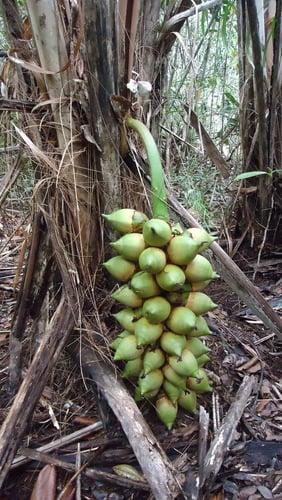
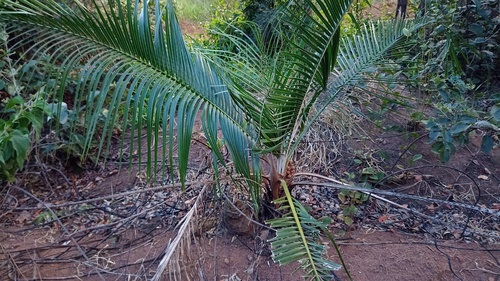
Dypsis fibrosa
(Wright) Beentje and Dransfield
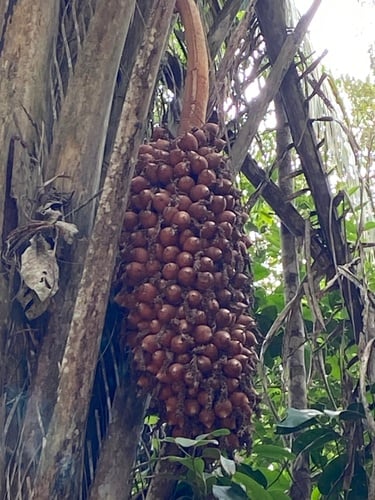
iNaturalist· cc-by-nd
(c) olivier.reilhes, some rights reserved (CC BY-ND)
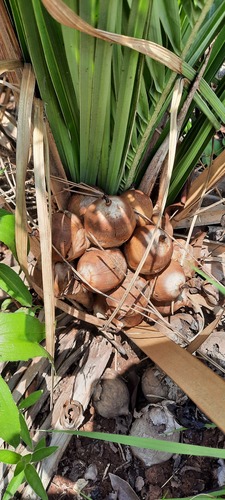
iNaturalist· cc-by-nc
(c) dennis-mada, some rights reserved (CC BY-NC)
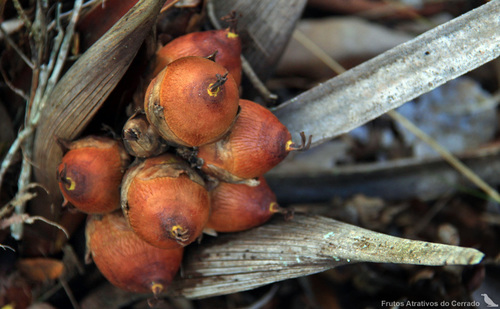
iNaturalist· cc-by-nc
(c) dennis-mada, some rights reserved (CC BY-NC)
Description
A tropical palm from the low and mid-altitude forests of Eastern Madagascar. The trunk is edible.
This description is brief — help expand it
Edible Uses
Leaves - cooked. The apical bud, known as a 'palm heart', is eaten as a vegetable. Eating this bud can lead to the death of the individual stem because it is unable to make more than three side-shoots.
Medicinal Uses
The plant (parts not specified but probably the bark and/or the fruits) is used in the treatment of headaches, jaundice and hepatitis; and also as an aid to lactation.
Distribution
It is a tropical plant. It grows in low and mid altitude forest in Eastern Madagascar.
Where It Grows
Africa, East Africa, Madagascar*,
Cultivation
Grows best in a sunny position in a moist but well-drained soil. One of only 2 plant species on which Cymbidiella falcigera (a rare orchid) grows (the other being Raffia farinosa ).
Other Uses
The leaves are used for thatching huts. The trunk is densely covered with good quality brownish fibres about 45cm long, formed from the inner sheaths and the edges of the petioles. Individual fibres are finer and more flexible than the fibres obtained from the Brazilian Piassaba (Leopoldinia spp., and Attalea spp.) and also slightly shorter ; in other respects the two fibres resemble each other closely.
Synonyms
References (2)
- Byg, A and Balslev, H., 2001, Traditional Knowledge of Dypsis fibrosa (Arecaceae) in Eastern Madagascar. Economic Botany, Vol. 55, No. 2, pp. 263-275
- World Checklist of Useful Plant Species 2020. Royal Botanic Gardens, Kew