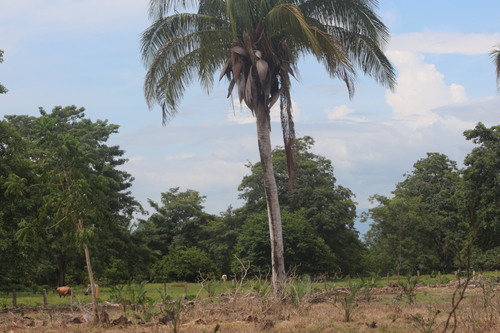
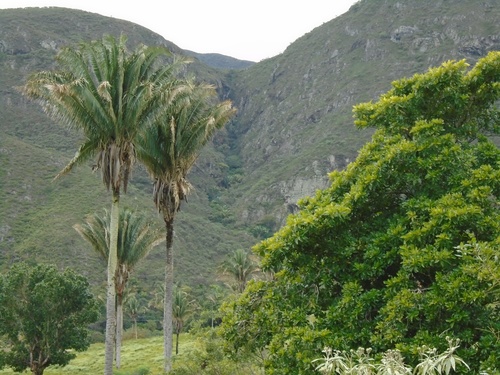
Attalea cuatrecasana
(Dugand) Henderson
Taparos, Corozo
gbif· cc-by-nc
Field Museum of Natural History - Botany Department | NSF/Mellon - GPI
gbif· cc-by-nc
Field Museum of Natural History - Botany Department | NSF/Mellon - GPI
gbif· cc-by-nc
Field Museum of Natural History - Botany Department | NSF/Mellon - GPI
Description
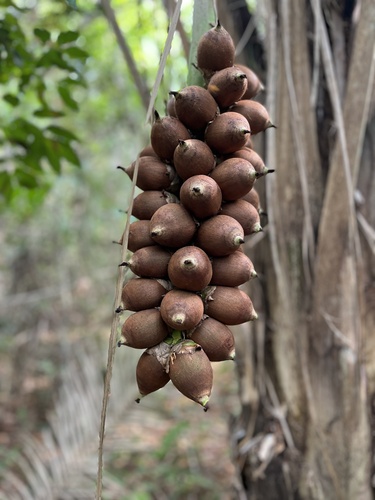
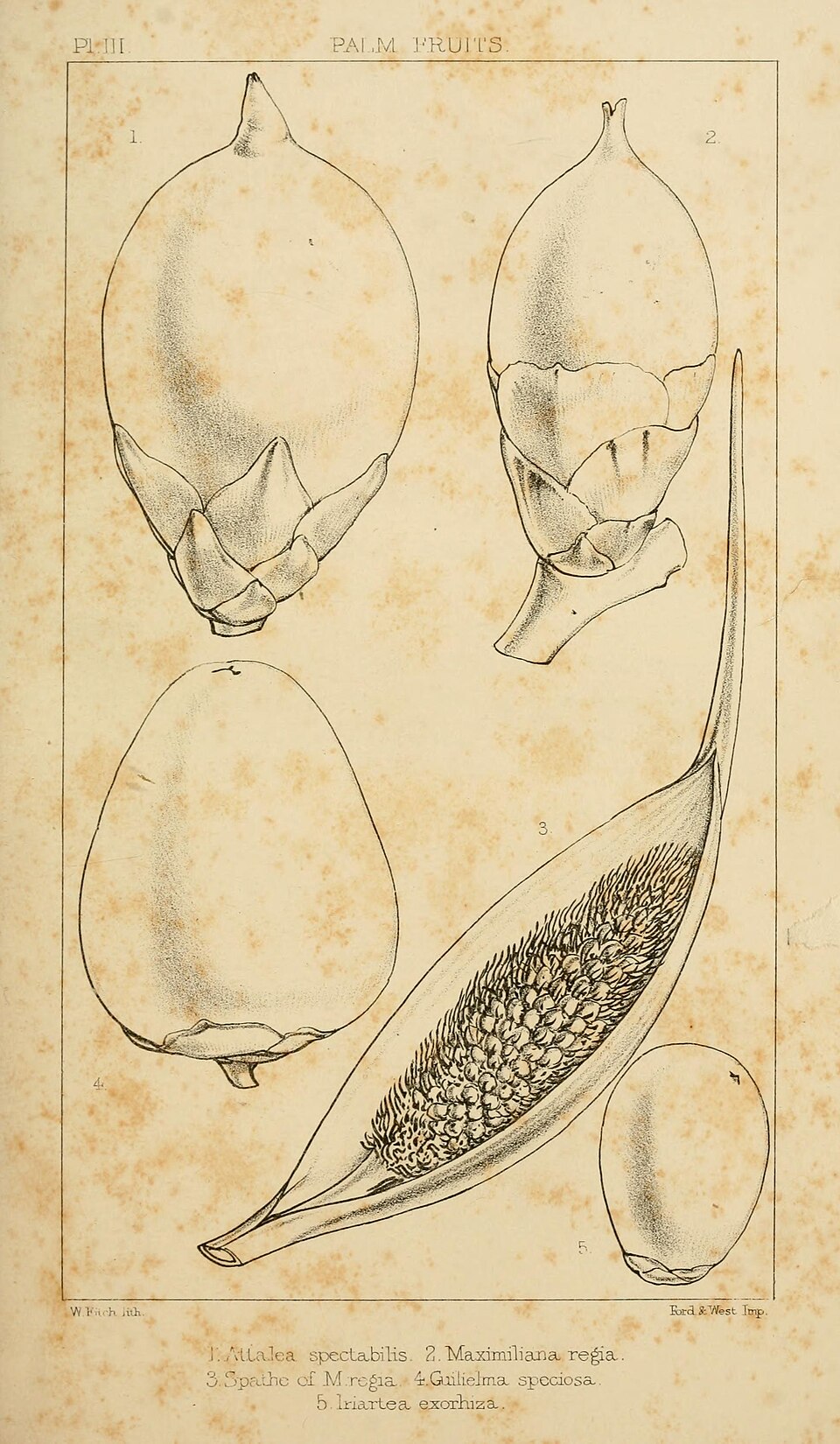
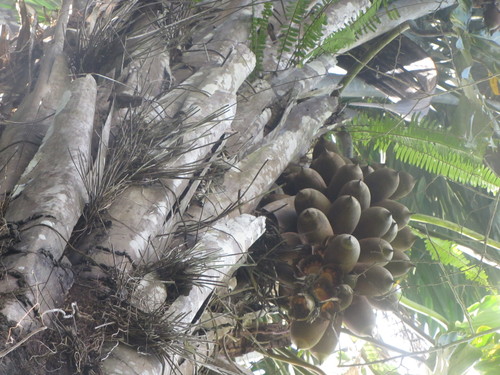
A palm. The stem is short and underground. There are 6-10 leaves. The leaflets are arranged regularly and in the same plane. The flowering stalk is borne among the leaves. The male flowers have flattened, in-curved petals. There are 20-24 tightly coiled and twisted stamens. The fruit have 1-3 seeds. The fruit are round. They are 11-14 cm long by 7.5-9.5 cm wide. The outer layer has fibres.
Edible Uses
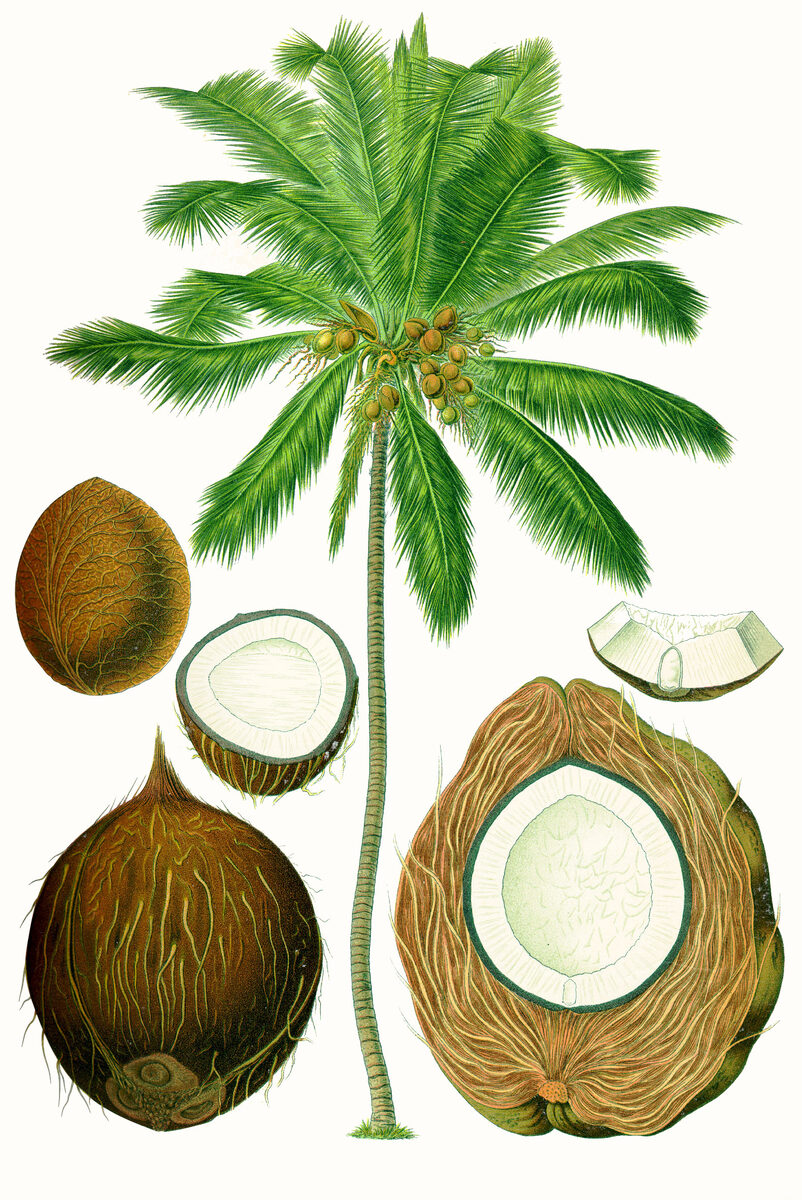
Seed - raw or cooked. A similar taste and texture to the coconut (Cocos nucifera). The fruits are up to 14cm. long by 10cm in diameter, they are the largest seeds in the palm family after the double coconut (Lodoicea maldivica) and the coconut (Cocos nucifera).
Distribution
A tropical plant. It grows in very wet lowland rainforest. It is at low elevations.
Where It Grows
Colombia, Ecuador, South America,
Cultivation
Prefers a lightly shaded position. Grows best in a moist but well drained soil.
Notes
There are between (22) 30-71 Attalea species. Some authorities divide them among Attalea, Orbignya, Scheela and Maximiliana.
Synonyms
References (6)
- Balick, M.J. and Beck, H.T., (Ed.), 1990, Useful palms of the World. A Synoptic Bibliography. Colombia p 223 (As Orbignya cuatrecasana)
- Henderson, A., Galeano, G and Bernal, R., 1995, Field Guide to the Palms of the Americas. Princeton. p 160
- Kew Plants of the World onLine
- Marcia, M. J., et al, 2011, Palm Uses in Northwestern South America: A Quantitative Review. Bot. Rev. (2011) 77:462-570
- Roa, J. A. G. & Boada, D. S. G., 2018, Fundación para el Fortalecimiento de la Fruticultura y Plantas Alimenticias no Convencionales en Colombia.
Show all 6 references Hide references
- Wickens, G.E., 1995, Edible Nuts. FAO Non-wood forest products. FAO, Rome. p169 (As Orbignya cuatrecasana)