Attalea dubia
(Mart.) Burret
Doubtful attalea
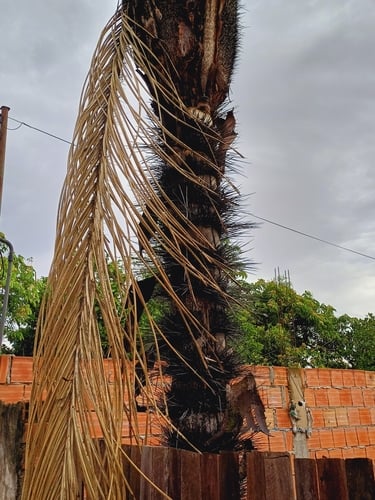
iNaturalist· cc-by-nc
(c) Geovane Siqueira, some rights reserved (CC BY-NC), uploaded by Geovane Siqueira
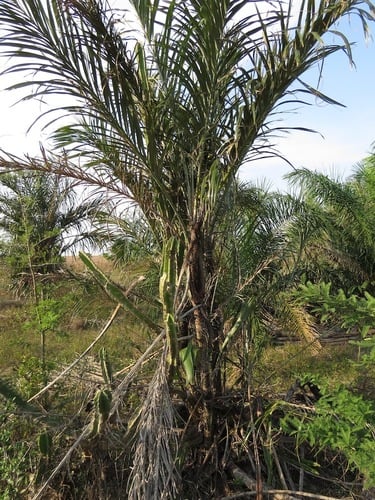
iNaturalist· cc-by-nc
(c) Yuri Tedéo, some rights reserved (CC BY-NC), uploaded by Yuri Tedéo
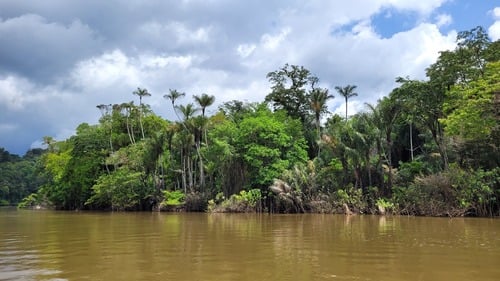
iNaturalist· cc-by
(c) Patrícia Mees, some rights reserved (CC BY), uploaded by Patrícia Mees
Summary
Source: WikipediaAttalea dubia, also known as the Indaiá plant, babassu palm, or bacuaçu palm is a flowering plant in the family Arecaceae, native to the Southern and Southeast Regions of Brazil.
Description
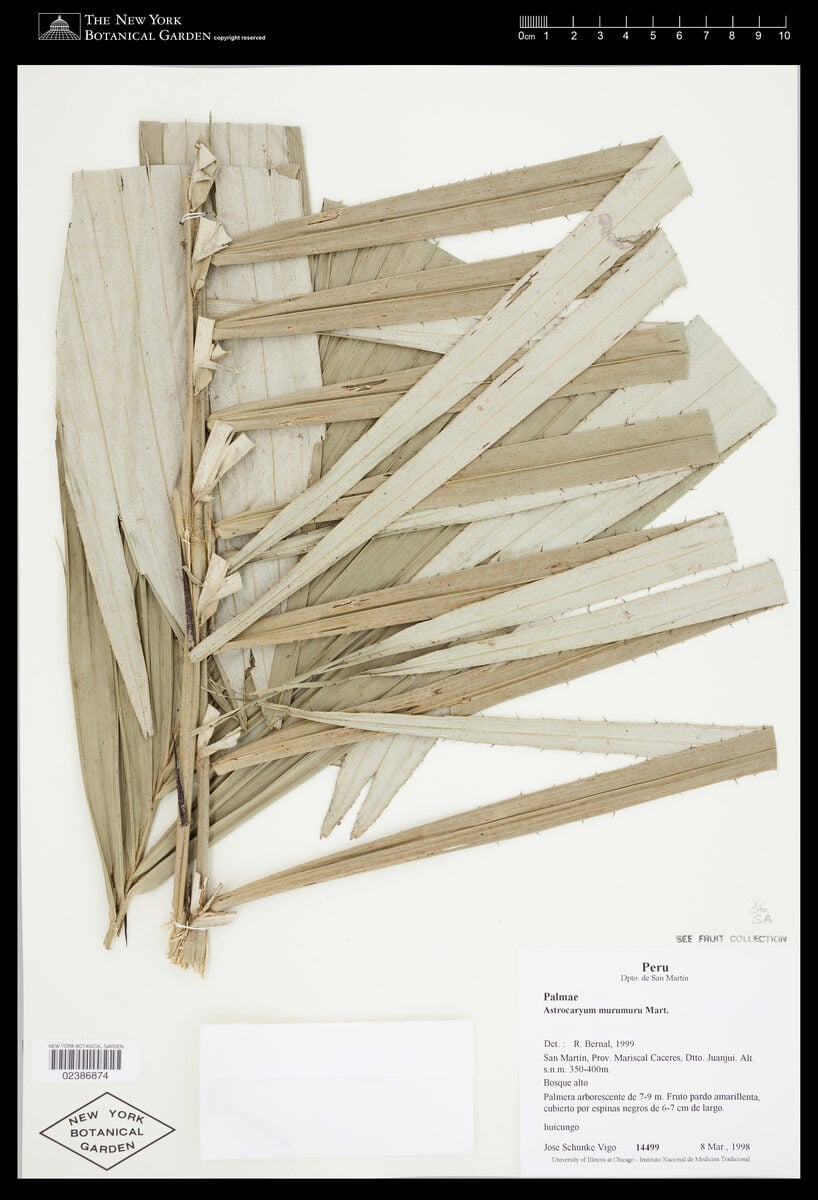
A tall palm. It grows 10-15 m high. The stem is erect and round. It has spines and the remnants of leaves. The trunk is 20-35 cm across. There are about 20-35 leaves. They are 2-3 m long. The leaflets are in irregular clusters and spread in different planes. The flowering stalk is borne amongst the leaves on a long stalk. The bunch is 1-1.5 m long. The fruit are oblong and yellow. They have 1-2 seeds and they are 5-7 cm long. The pulp is juicy and orange-yellow.
Edible Uses
The fruit from the tree is popular in the creation of medicines, beauty aids, and beverages. The palm core can be harvested but its extraction often results in death and is therefore not able to be cultivated due to its importance in the local ecosystem on fauna. The fruit is composed of numerous woody oblong fruits looking similar to small coconuts.
Traditional Uses
The fruit is eaten. The nut is eaten.
This uses section is brief — help expand it
Distribution
It is a tropical plant. It grows in Brazil of the slopes in forests near the Atlantic.
Where It Grows
Brazil*, South America,
Cultivation
Plants are grown from fruit. Seed cannot be stored for long. Fresh seed or fruit should be planted and they germinate in 4-6 months. Seedlings develop slowly.
Propagation
Seeds - slow and hard to germinate. Best sown as soon as it is ripe, when it needs no pre-treatment. Sow in nursery seedbeds, or in deep, individual containers, in a lightly shaded position. Germination can take 4 - 6 months - transplant seedbed sown plants into individual containers when they are 5 - 8cm tall. Seedlings grow away slowly. You often get two seedlings germinate from one seed.
Other Uses
The wood is moderately heavy, soft and not durable. It is used locally for the construction of rustic buildings.
Other Information
The fruit are sold in local markets.
Notes
Fruit are rich in Vitamin A.
Synonyms
Also Known As
Anaja, Camarinha, Inaia, Indaia, Indaia-guacu, Indaia-palm, Naia, Palmeira-indaia, Palmito-de-chao
References (3)
- Grandtner, M. M. & Chevrette, J., 2013, Dictionary of Trees, Volume 2: South America: Nomenclature, Taxonomy and Ecology. Academic Press p 52
- Lorenzi, H., 2002, Brazilian Trees. A Guide to the Identification and Cultivation of Brazilian Native Trees. Vol. 01 Nova Odessa, SP, Instituto Plantarum p 290
- Lorenzi, H., Bacher, L., Lacerda, M. & Sartori, S., 2006, Brazilian Fruits & Cultivated Exotics. Sao Paulo, Instituto Plantarum de Estuados da Flora Ltda. p 68