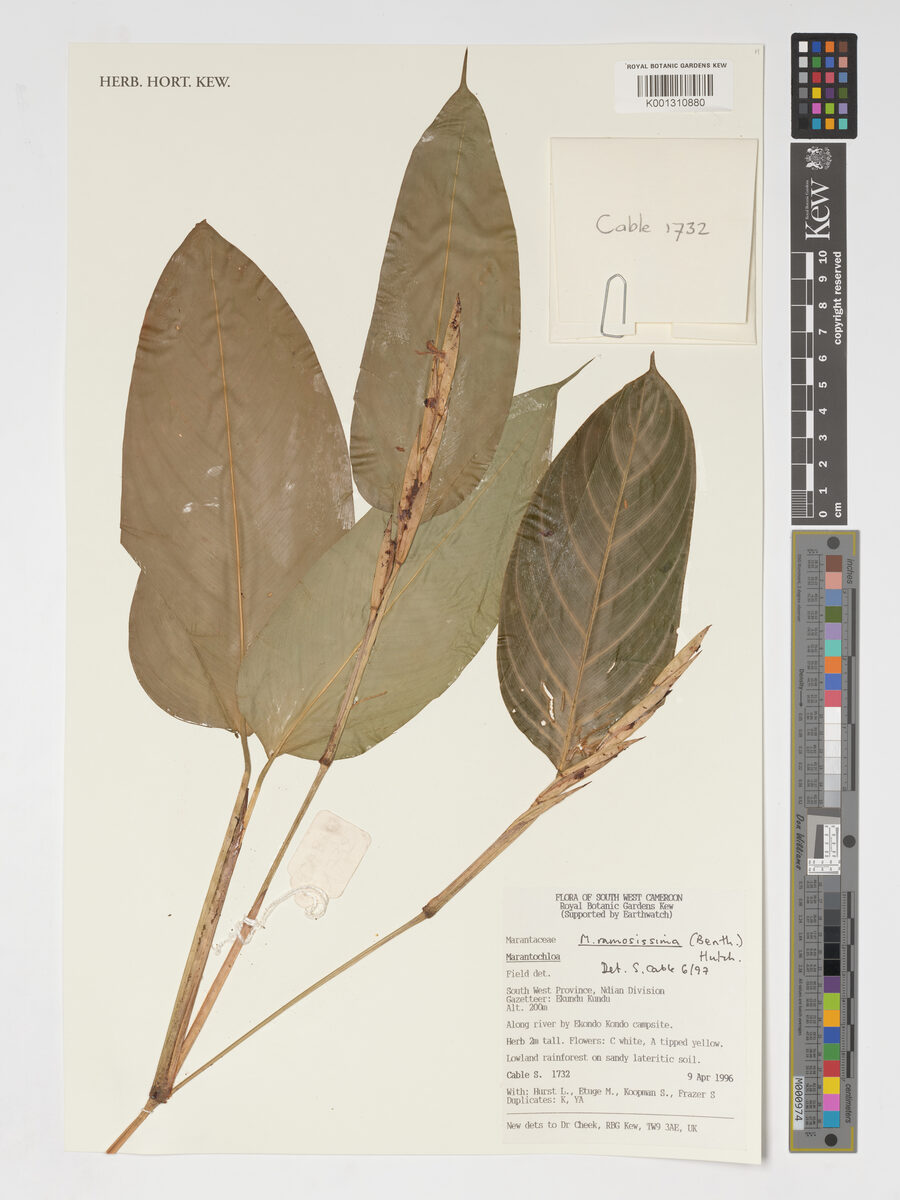
Calathea lutea
(Aubl.) G. Mey.
Cachibou, Cuban cigar
iNaturalist· cc-by-nc
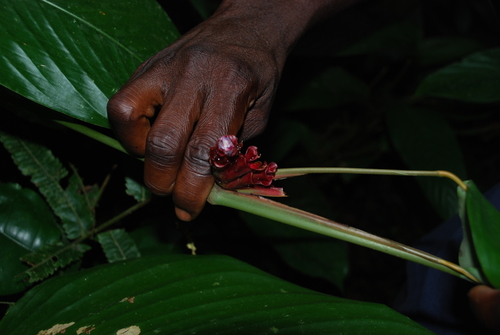
(c) Morten Ross, some rights reserved (CC BY-NC), uploaded by Morten Ross
iNaturalist· cc-by-nc
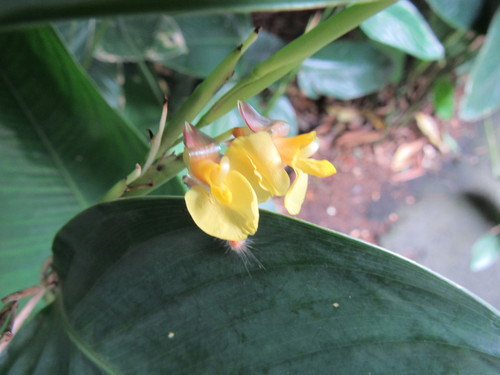
(c) Osa Conservation, some rights reserved (CC BY-NC)
Summary
Source: WikipediaCalathea lutea, called the bijao, cigar calathea, Cuban cigar, Mexican cigar plant, Habana cigar, and pampano, is a species of flowering plant in the family Marantaceae. It is native to southern Mexico, Central America, southern Caribbean islands, and tropical South America. A rhizomatous perennial reaching 3 m (10 ft), it is typically found in wet tropical areas. Its leaves are sold for use in local cuisines as food wrappers, and it is also used as an ornamental.
Description
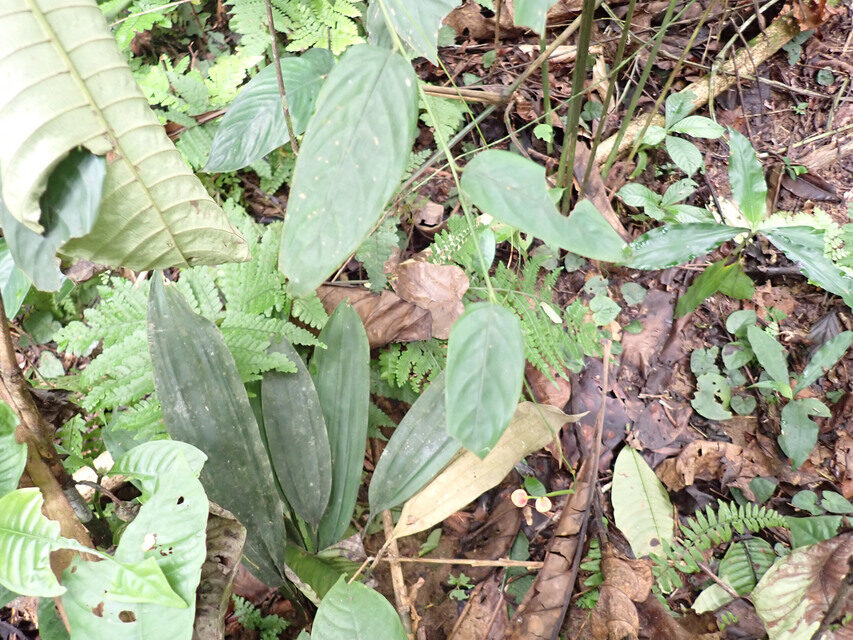
A large herb. It can be 5 m high. It grows in clumps. The leaves are large and paddle shaped. They are green. The flowers are yellow.
This description is brief — help expand it
Edible Uses
Young leaves are used as a spice, while older leaves are used to wrap food and add flavour.
Traditional Uses
The young leaves are used as a spice. The older leaves are used to wrap food and add flavour.
This uses section is brief — help expand it
Distribution
It is a tropical plant. It can grow in partly flooded or well drained sites. Brisbane Botanical gardens. In Townsville palmetum.
Where It Grows
Australia, Belize, Bolivia, Brazil, Central America, Colombia, Costa Rica, Ecuador, El Salvador, French Guiana, Guatemala, Guianas, Guyana, Honduras, Jamaica, Leeward. Is., Mexico, Nicaragua, North America, Panama, Peru, Puerto Rico, SE Asia, Singapore, South America, Suriname, Trinidad-Tobago, Venezuela,
Cultivation
It can be grown from seeds or pieces of the rhizomes. It can also be grown by division of the clump.
Propagation
Seed - Division Cuttings of basal shoots.
Other Uses
A wax is extracted from the leaves. The leaves are very tough and durable when dry. They used for thatching and to wrap items, to make waterproof baskets.
Notes
The leaves are used for wax. There are 260-300 Calathea species in tropical America.
Synonyms
Also Known As
Bakuwa, Berijo, Berijado, Bijao, Bijagua, Cashibou, Cauassu, Chakra panka, Fiba jaki, Hoja blanca, Hoya de te, Ja'opo, Krigo nue, Tho
References (8)
- Barfod, A. S. & Kvist, L. P., 1996, Comparative Ethnobotanical Studies of the Amerindian Groups in Coastal Ecuador. The Danish Academy of Sciences and Letters. p 81
- D'Ambrosio, U., & Puri, R. K., 2016, Foodways in transition: food plants, diet and local perceptions of change in a Costa Rican Ngäbe community. Journal of Ethnobiology and Ethnomedicine (2016) 12:3 p 26
- Ibarra-Manriquez, G., et al, 1997, Useful Plants of the Los Tuxtlas Rain Forest (Veracruz, Mexico): Considerations of their Market Potential. Economic Botany, Vol. 51, No. 4, pp. 362-376
- Kermath, B. M., et al, 2014, Food Plants in the Americas: A survey of the domesticated, cultivated and wild plants used for Human food in North, Central and South America and the Caribbean. On line draft. p 161
- Kew Plants of the World On line
Show all 8 references Hide references
- Piedra-Malagón, E. M., et al, 2022, Edible native plants of the Gulf of Mexico Province. Biodiversity Data Journal 10: e80565 p 24
- Schultes, R. E., 1989, Calathea lutea (Marantaceae), a Potential Domesticate and Source of High-Grade Wax. Economic Botany 43(4): 509-510
- Torre, de la, L., et al, 2008, Enciclopedia de las Plantas Útiles del Ecuador. Herbario QCA. Pontificia Universidad Católica del Ecuador. p 418