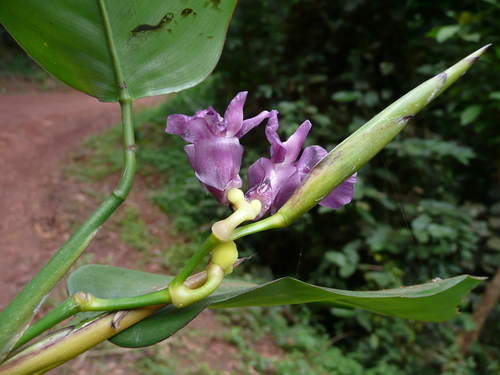
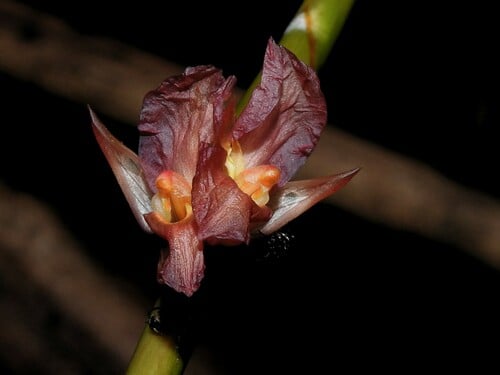
Donax canniformis
(Forst. f.) K. Schum.
Common donax
iNaturalist· cc-by-nc
(c) Langzi, some rights reserved (CC BY-NC)
iNaturalist· cc-by-nc
(c) Langzi, some rights reserved (CC BY-NC)
iNaturalist· cc-by-nc
(c) Langzi, some rights reserved (CC BY-NC)
Summary
Source: WikipediaDonax is a monotypic genus of flowering plants in the family Marantaceae. It contains only one recognized species, Donax canniformis (G.Forst.) K.Schum, widespread from the Andaman Islands, Myanmar (Burma), southern China, Southeast Asia, New Guinea, Melanesia and Micronesia.
Description
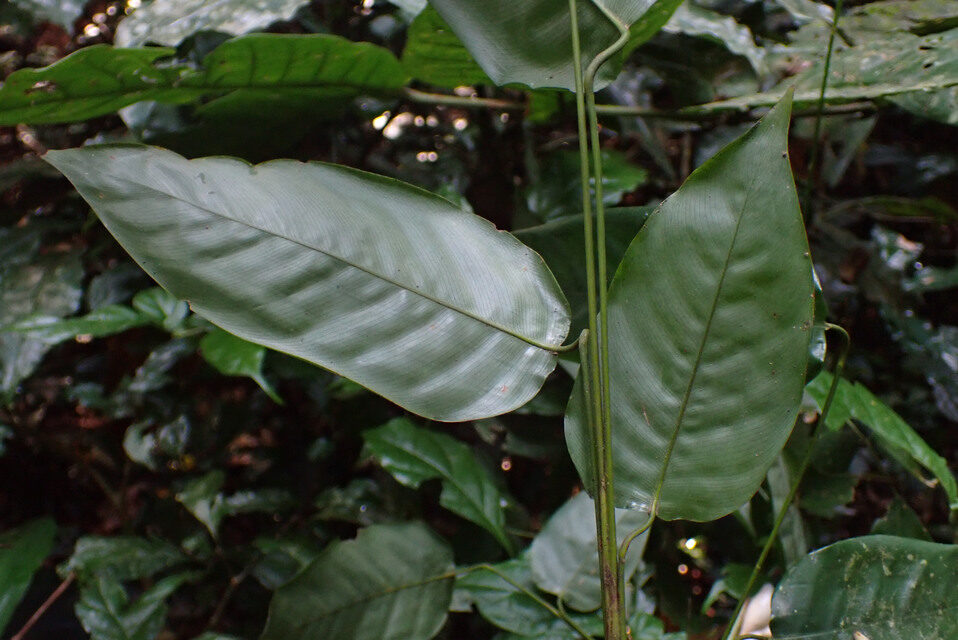
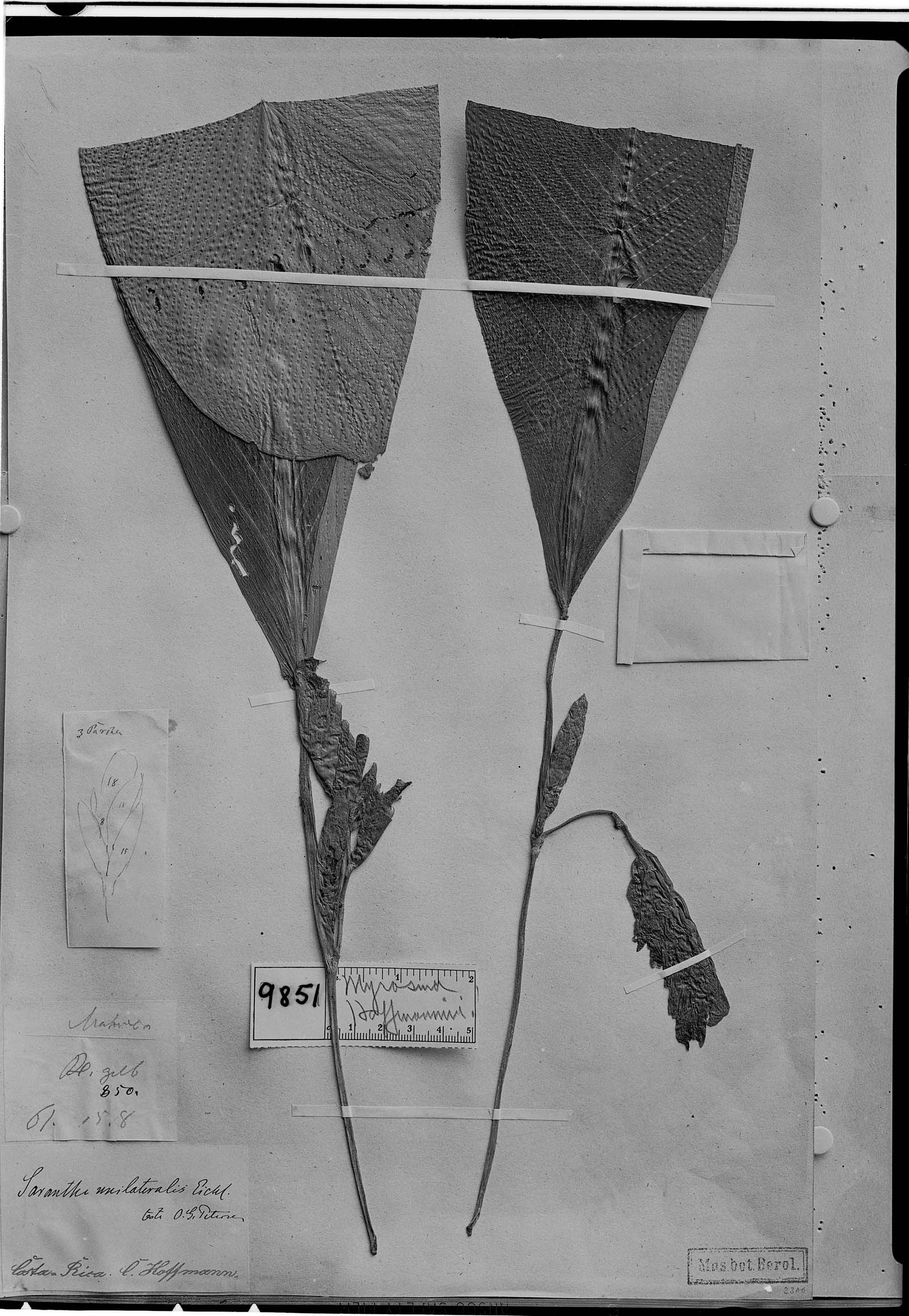
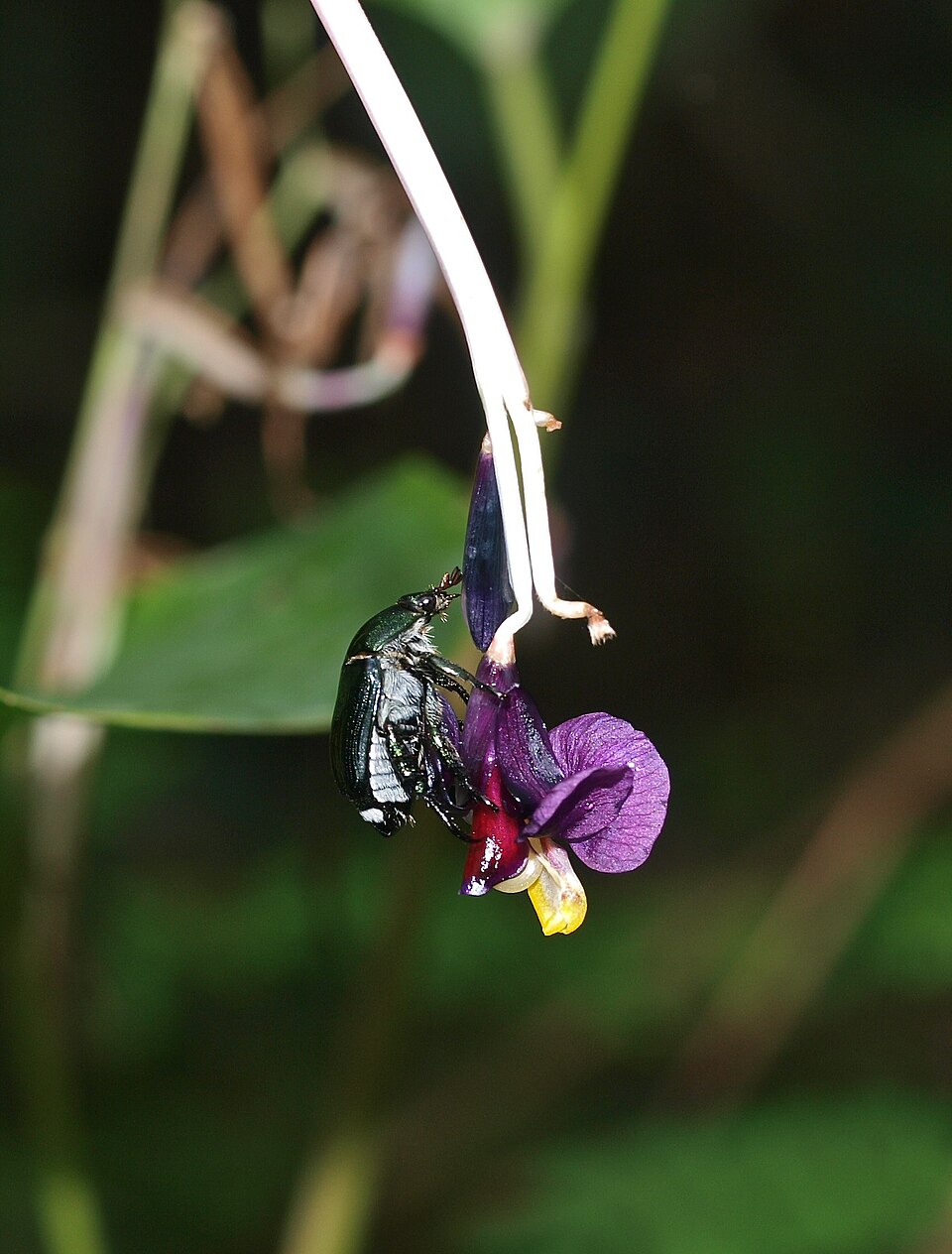
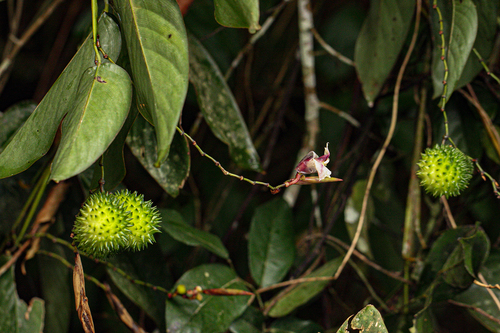
A half woody herb from 1 to 3 m high. It continues to grow from year to year. The bases of the branches are somewhat swollen. The stem is swollen near the nodes or joints. The stem branches 2 to 4 times. The base of the stem has cane like nodes. The leaves are usually rounded at the base and pointed at the tip. They are 15-30 cm long. The leaf bases are very long and wrap around the stem. This sheath can be 8-18 cm long. The flower spike develops in the axils of leaves. Sometimes it is unbranched can can be branched once or twice. It is 20-35 cm long. At each node of the flower stalk is an in-rolled sheath like bract. The flowers are white. The fruit are rounded and are about 1 cm across.
Edible Uses
The fleshy portion of the fruit is eaten raw.
Traditional Uses
The fleshy portion of the fruit is eaten raw.
This uses section is brief — help expand it
Distribution
A tropical plant. It grows in damp soil. They are common and widely distributed in Papua New Guinea and the Philippines. In China they grow in wet places in secondary forest. In Sabah it grows up to 800-1,000 m altitude.
Where It Grows
Andamans, Asia, Cambodia, China, Guam, India, Indochina, Indonesia, Laos, Malaysia, Pacific, Papua New Guinea, Philippines, PNG, SE Asia, Taiwan, Thailand, Vanuatu, Vietnam,
Cultivation
Plants can be grown from seeds.
Notes
There are about 3 Donax species.
Synonyms
Also Known As
Bamban, Kudita, Lal, Lias, Mewakal, Neene, Zhu ye jiao
References (10)
- Arora, K., Indigenous Forest Management in the Andaman and Nicobar Islands, India.
- Bot. Jahrb. Syst. 15:440. 1893 "cannaeformis"
- Cabalion, P. and Morat, P., 1983, Introduction le vegetation, la flore et aux noms vernaculaires de l'ile de Pentcoste (Vanuatu), In: Journal d'agriculture traditionnelle et de botanique appliquee JATBA Vol. 30, 3-4
- Clausager, K. & Bochsenius, F., 2003, The Marantaceae of Sabah, Northern Borneo. Kew Bulletin, Vol. 58, No. 3 (2003), pp. 647-678
- Hariyadi, B., 2008, The Entwined Tree: Traditional Natural Resource Management of Serampas, Jambi, Indonesia. Ph. D thesis. Univ. or Hawaii. p 402 (As Donax grandis)
Show all 10 references Hide references
- Kuo, W. H. J., (Ed.) Taiwan's Ethnobotanical Database (1900-2000), http://tk.agron.ntu.edu.tw/ethnobot/DB1.htm
- Monsalud, M.R., Tongacan, A.L., Lopez, F.R., & Lagrimas, M.Q., 1966, Edible Wild Plants in Philippine Forests. Philippine Journal of Science. p 492
- Peekel, P.G., 1984, (Translation E.E.Henty), Flora of the Bismarck Archipelago for Naturalists, Division of Botany, Lae, PNG. p 111, 110
- Sukarya, D. G., (Ed.) 2013, 3,500 Plant Species of the Botanic Gardens of Indonesia. LIPI p 1103
- Wu Delin, Kennedy, H., Marantaceae. Flora of China. p