Calathea latifolia
(Willd. ex Link) Klotzsch
iNaturalist· cc-by-nc
(c) Iniciativa Biota Orinoquia, some rights reserved (CC BY-NC)
iNaturalist· cc-by-nc
(c) Iniciativa Biota Orinoquia, some rights reserved (CC BY-NC)
iNaturalist· cc-by-nc
(c) Iniciativa Biota Orinoquia, some rights reserved (CC BY-NC)
Description
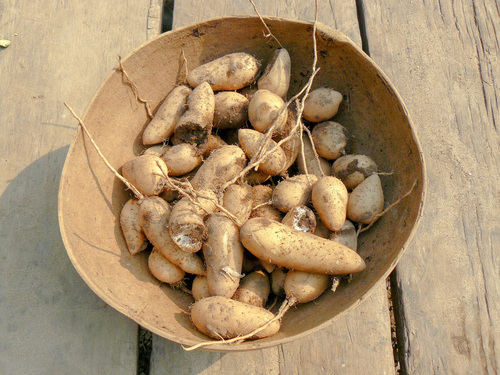
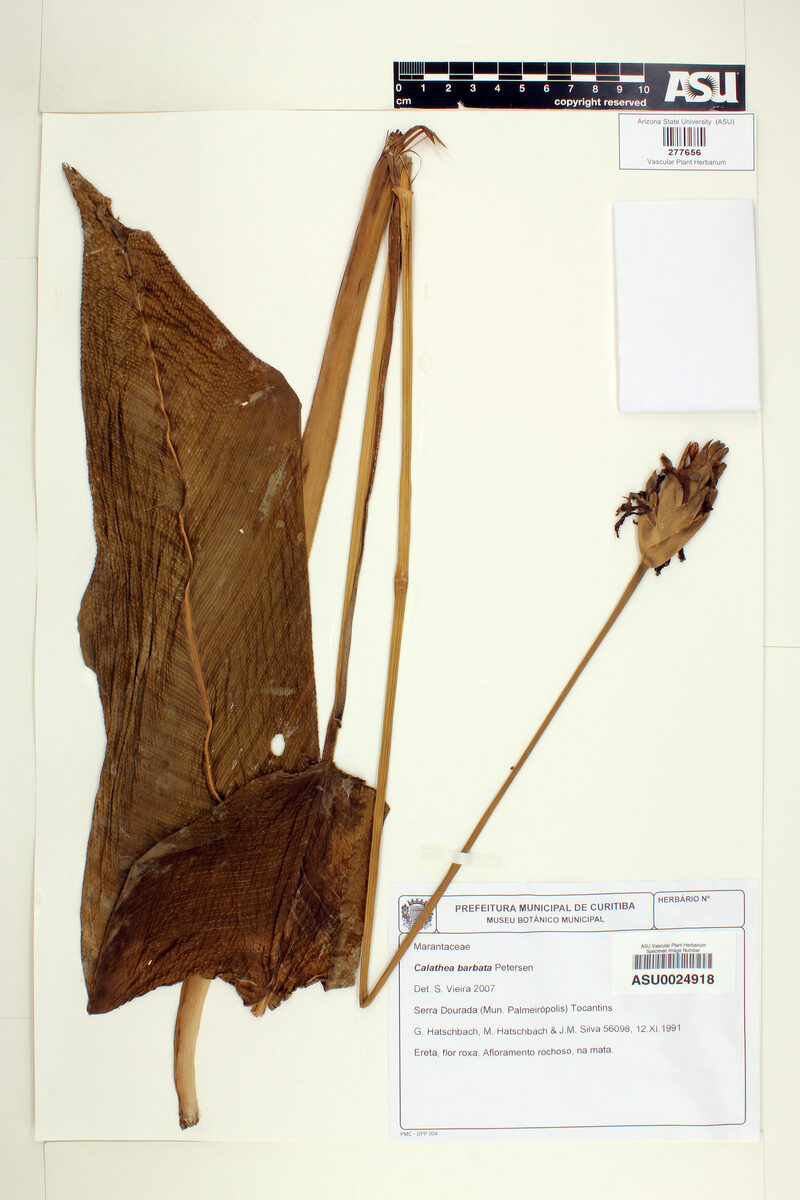
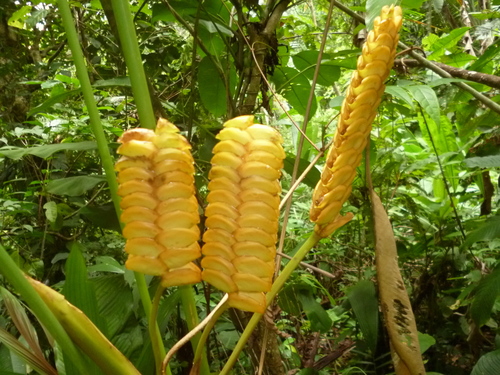
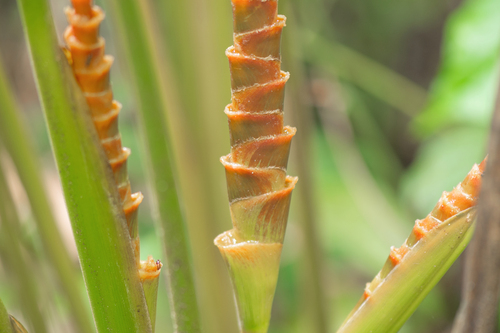
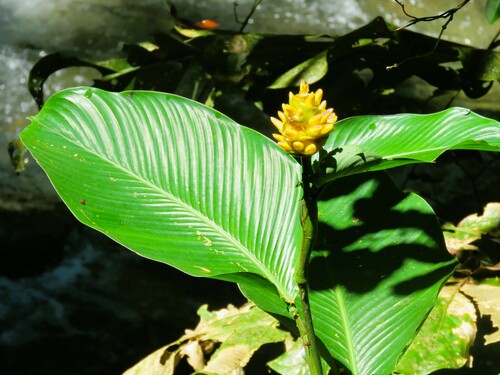
A herb without a stem. It grows 1-2 m tall. It produces large storage tubers. The leaf stalks are 7.5 cm long. The leaves are oblong to oval and taper to a short tip and are rounded at the base. They are 70 cm long and 30 cm wide. They have 2 colours with light purple strips near the midrib and edges. The leaf surface is pleated. The flower spikes occur singly and are 6-14 cm long by 3-6 cm wide. They are on a stalk 7-30 cm long. The bracts are kidney shaped and arranged in spirals. The fruit capsule is oval and 1 cm long. There are usually 3 triangle shaped seeds.
Edible Uses
The tubers and roots are eaten.
Distribution
It is a tropical plant. They usually grow in clearings in the forest.
Where It Grows
Central America, Colombia, Panama, Trinidad, Venezuela,
Synonyms
Also Known As
Bijao, Faldita morada, Sal
References (2)
- Flora of Barro Colorado Island.
- Lopez-Diago, D. & Garcia, N., 2021, Wild edible fruits of Colombia. Biota ColomBiana 22 (2) p 41