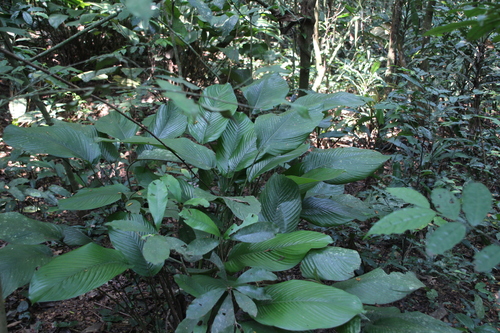
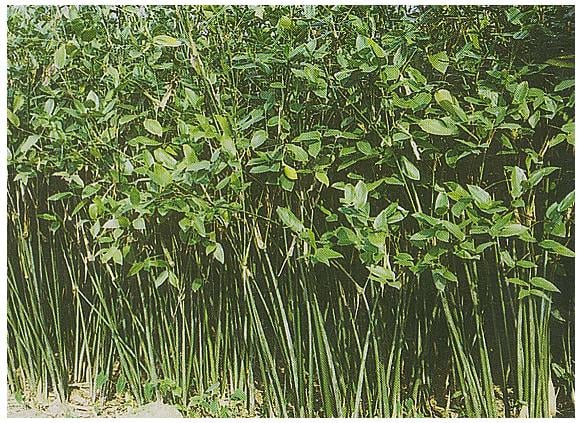
Calathea crotalifera
S. Watson
Rattlesnake plant, Krigo bugun
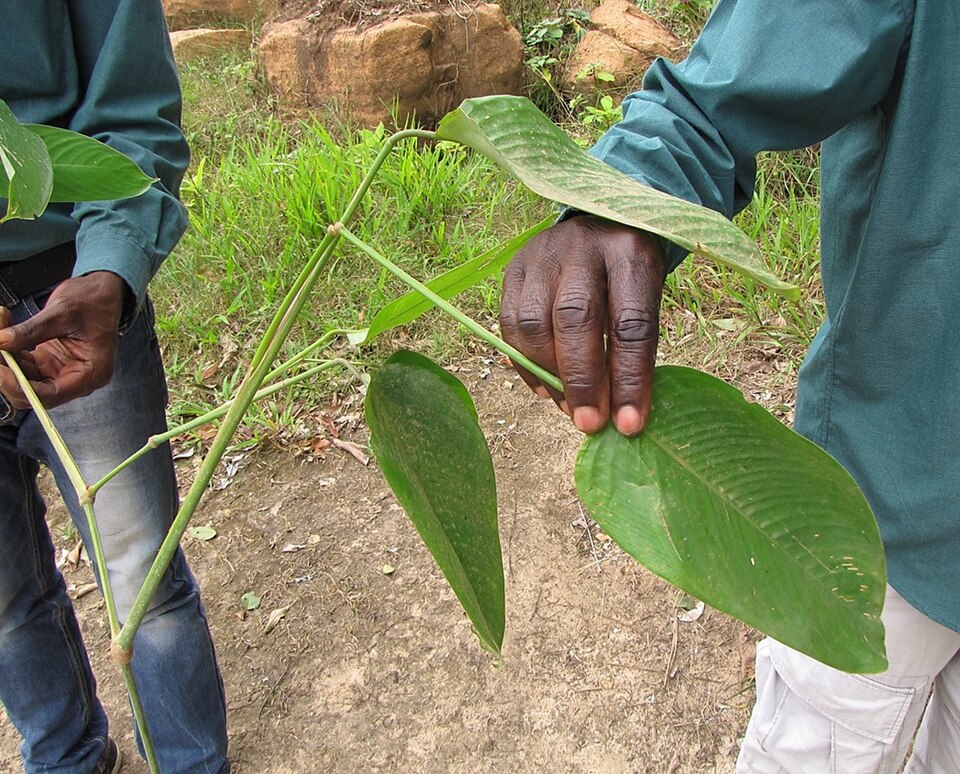
iNaturalist· cc-by-nc
(c) Hermes Vega, some rights reserved (CC BY-NC), uploaded by Hermes Vega
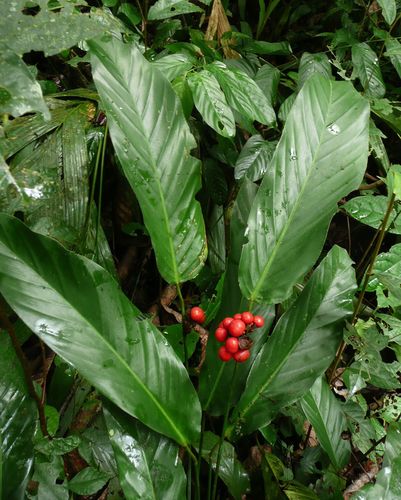
iNaturalist· cc-by-nc
(c) Jan Meerman, some rights reserved (CC BY-NC), uploaded by Jan Meerman
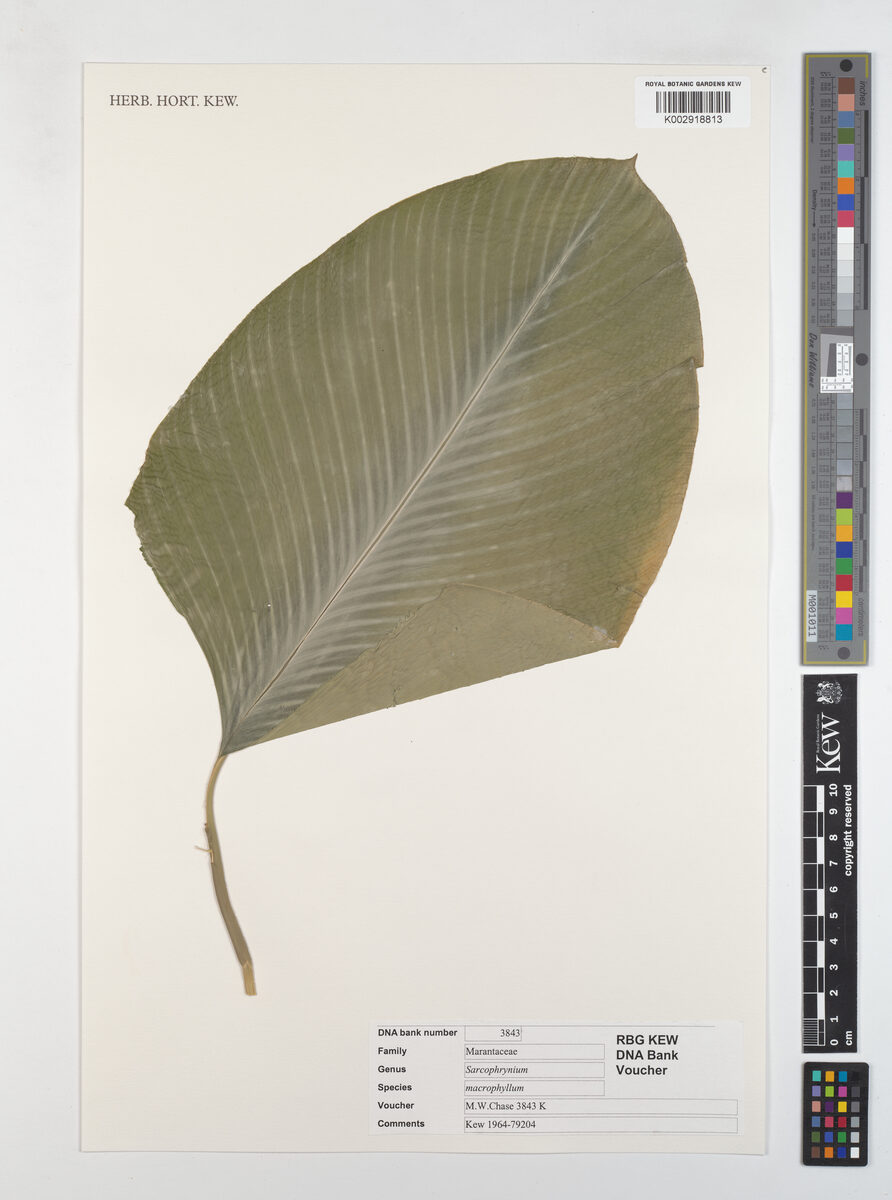
iNaturalist· cc-by-nc
(c) Jessie, some rights reserved (CC BY-NC), uploaded by Jessie
Summary
Source: WikipediaCalathea crotalifera, the rattlesnake plant, rattle shaker or cascabel, is a species of flowering plant in the family Marantaceae. It is native to central and southern Mexico, Central America, and tropical South America as far south as Ecuador, and it has been introduced to Hawai'i and Puerto Rico. A rhizomatous perennial, its banana-like leaves reaching to 3 m (10 ft), it is typically found in wet tropical areas. It has found use as an ornamental. The yellow (or sometimes pink) flowers are in spikes up to 40 cm (16 in) high with each flower subtended by a saucer-like yellow bract. These flowers, like Canna, have a single petaloid stamen bearing a single locule.
Description
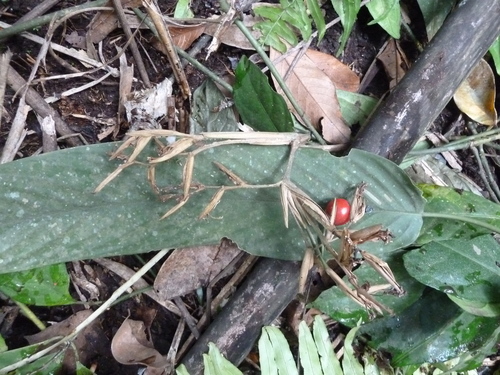
A herb. It grows 3 m tall. It has underground rhizomes. The leaves are large and dark green with a paler green along the midrib. They are greyish green underneath. The flowering shoots are upright and 25 cm long. These have stacked leathery flower bracts. They are yellow or orange and the flowers peek out at the edges. The actual flowers are tube shaped with 3 unequal petals. The fruit capsules are egg shaped with dark blue seeds in white flesh.
Edible Uses
The shoots are eaten.
Distribution
It is a tropical plant. It suits wet areas. Brisbane Botanical Gardens.
Where It Grows
Australia, Belize, Bolivia, Brazil, Central America, Costa Rica, Ecuador, Guatemala, Hawaii, Honduras, Mexico, Nicaragua, North America, Panama, Peru, Puerto Rico, South America, Venezuela,
Notes
There are 260-300 Calathea species in tropical America.
Synonyms
Also Known As
Bijagua, Cascabel, Platanilla, Rattle shaker, Rattlesnake plant
References (5)
- Castaneda, H., & Stepp, J. R., 2007, Ecosystems as Sources of Useful Plants for the Guaymi People of Costa Rica. Ethnobotany Journal. 5:249-257
- D'Ambrosio, U., & Puri, R. K., 2016, Foodways in transition: food plants, diet and local perceptions of change in a Costa Rican Ngäbe community. Journal of Ethnobiology and Ethnomedicine (2016) 12:3 p 26
- Kew Plants of the World On line
- Langlois, H. C., 2004, Ethnobotanical analysis of different successional stages as sources of wild edible plants for the Guaymi people in Costa Rica. M. Sc. thesis University of Florida.
- Torre, de la, L., et al, 2008, Enciclopedia de las Plantas Útiles del Ecuador. Herbario QCA. Pontificia Universidad Católica del Ecuador. p 417