Eucheuma cottonii
Weber-van Bosse
Areschougiaceae Edible: Fronds, Seaweed
wikimedia· cc0
Wikimedia Commons - Weber Bosse
Description
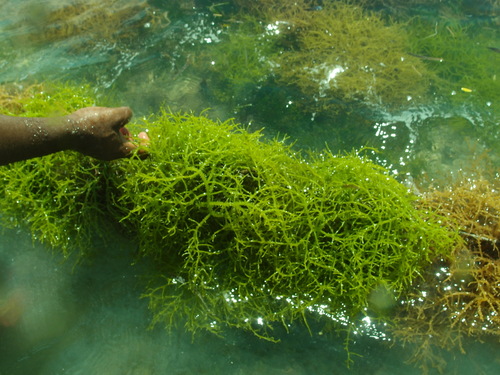
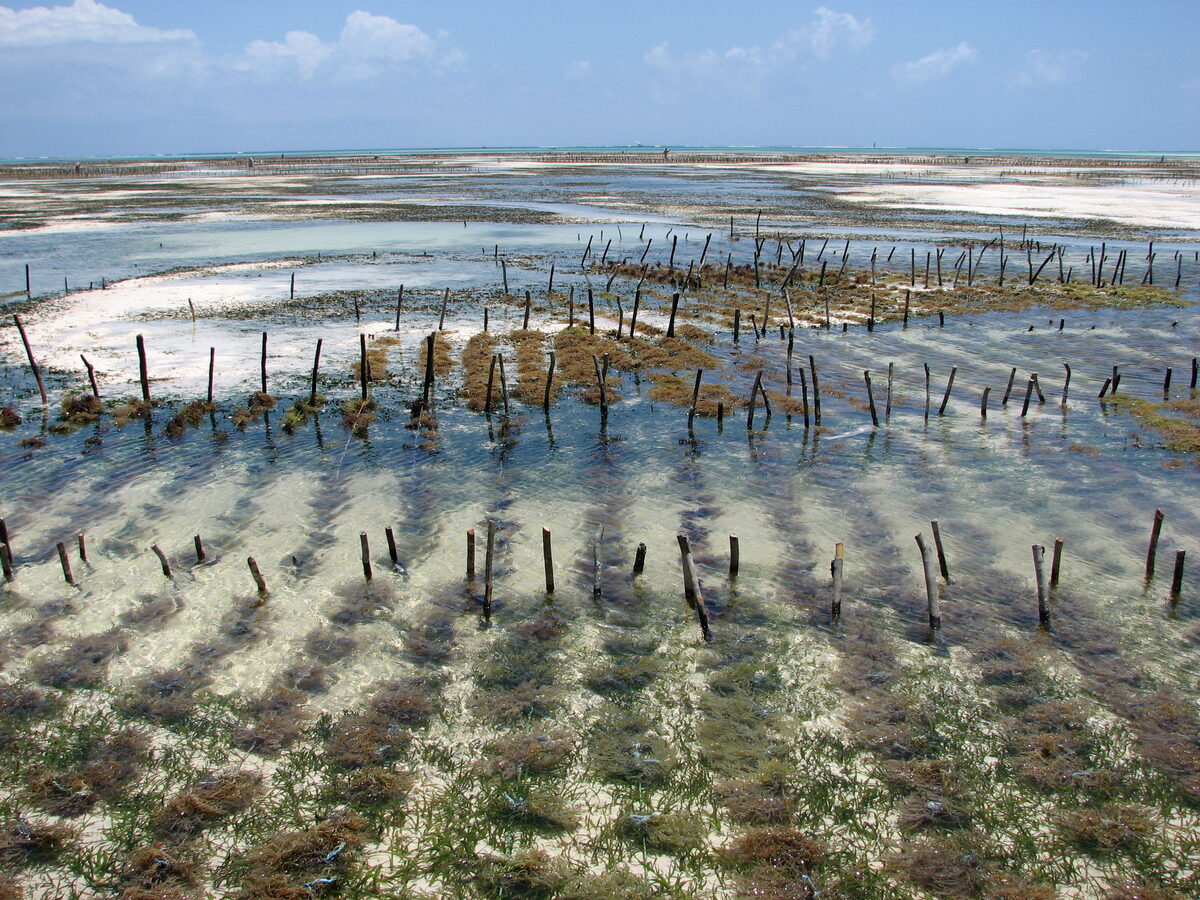
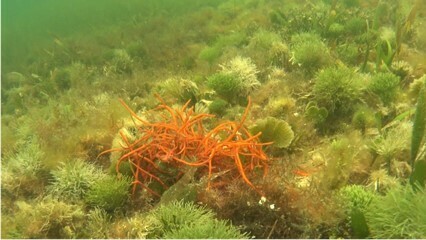
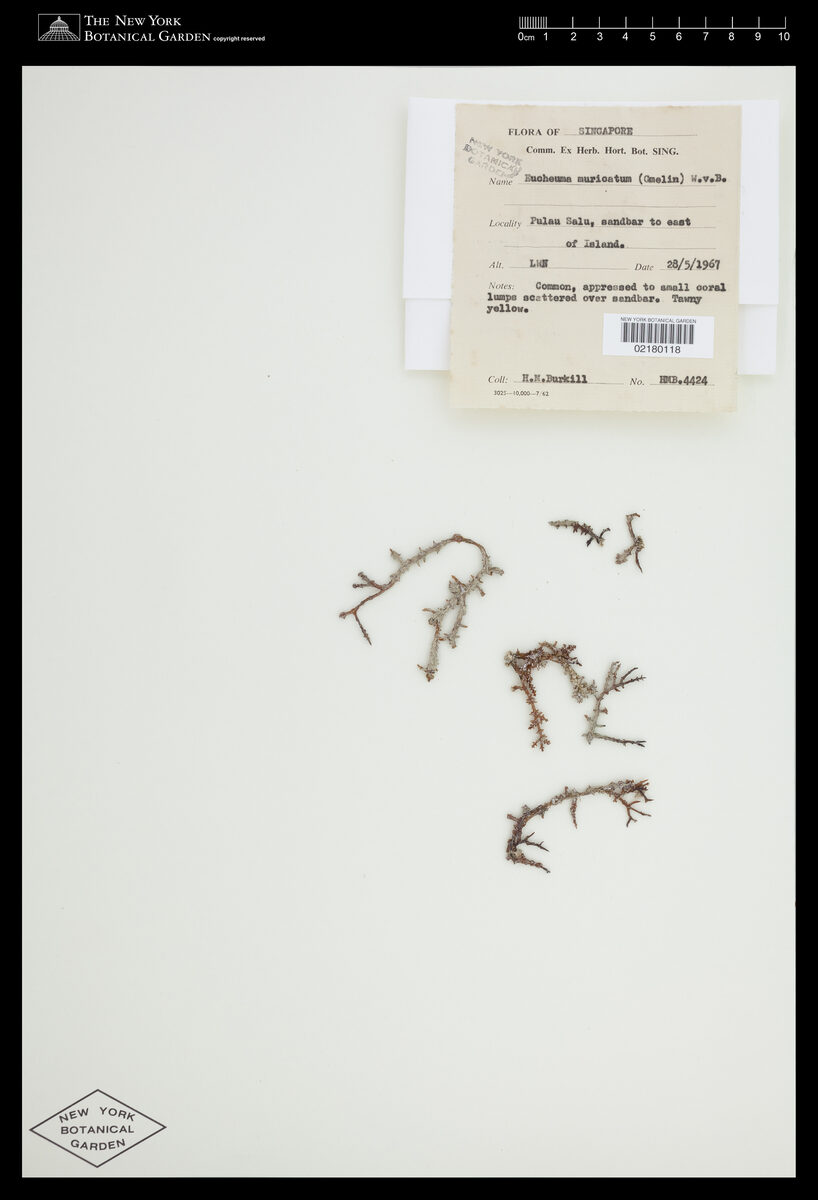
A red seaweed in the family Areschougiaceae found in tropical waters, cultivated as a food source and used as a famine food.
This description is brief — help expand it
Edible Uses
The fronds are washed in several changes of water and eaten raw; boiling will cause it to dissolve.
Traditional Uses
It is washed in several changes of water and then eaten raw. If it is boiled it will dissolve.
This uses section is brief — help expand it
Distribution
It is a tropical plant.
Where It Grows
Africa, Asia, China, East Africa, Fiji, Hawaii, India, Indonesia, Pacific, Philippines, SE Asia, Taiwan, Tonga,
Other Information
It is a famine food. It is cultivated.
Notes
Also put in the family Solieraceae.
Nutrition
| Part | Moisture | kJ | kcal | Protein | Vit A | Vit C | Iron | Zinc |
|---|---|---|---|---|---|---|---|---|
| Seaweed | — | — | 9.8 | — | — | — | — | — |
Also Known As
Lumi tei
References (5)
- Cherry, P., et al, 2019, Risks and benefits of consuming edible seaweeds. Nutrition ReviewsVR Vol. 77(5):307–329
- Jansen, A. A. J., et al, (Eds), 1990, Food and Nutrition in Fiji. Volume One. p 55
- Ratwanati, et al, 2019, Fruits of Enhalus acoroides as a source of nutrition for coastal communities. IOP Conf. Ser.: Earth Environ. Sci. 235 012073
- Sukenti, K., et al, 2016, Ethnobotanical study on local cuisine of the Sasak tribe in Lombok Island, Indonesia. Journal of Ethnic Foods. 3 (2016) 189-200 p 198
- Wang, Wei-Lung and Chiang, Young-Meng, 1994, Potential Economic Seaweeds of Hengchun Peninsula, Taiwan, Economic Botany, Vol. 48, No. 2, pp. 182-189