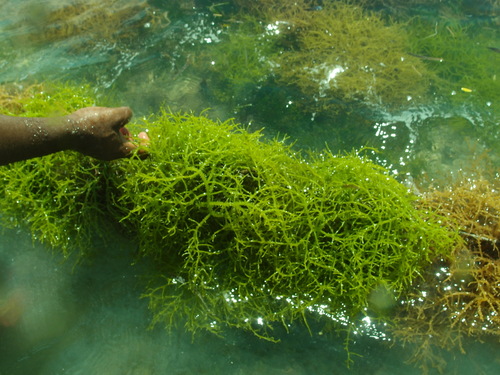
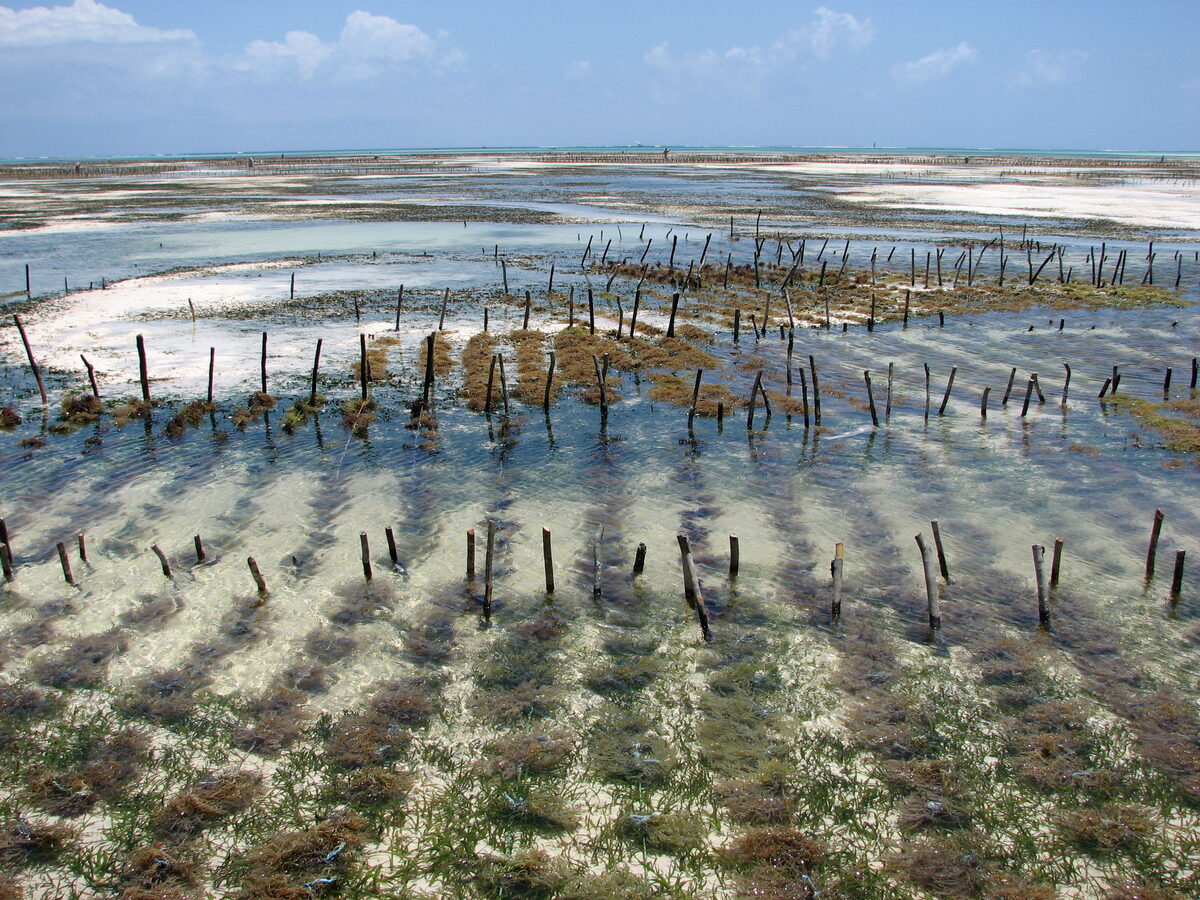
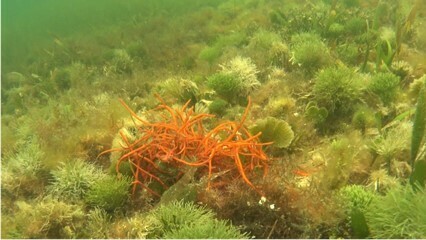
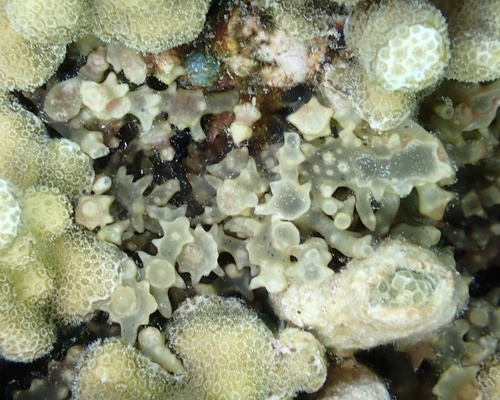
Eucheuma muricatum
(Gmelin) Weber van Bosse
Canot-canot
Areschougiaceae Edible: Algae, Frond, Seaweed
gbif· cc-by
The New York Botanical Garden
gbif· cc-by-nc
University of South Florida - Algae (USF-)
gbif· cc-by
The New York Botanical Garden
Description
A tropical seaweed in the family Areschougiaceae with edible fronds and algal portions.
This description is brief — help expand it
Edible Uses
The fronds and seaweed are used to make jelly and agar. It is eaten in salads and as a cooked vegetable.
Traditional Uses
It is used for jelly and agar. It is also eaten in salads and as a cooked vegetable.
This uses section is brief — help expand it
Distribution
A tropical plant.
Where It Grows
Asia, China, Indonesia, Malaysia, Pacific, Philippines, SE Asia,
References (7)
- http://www.seavegetables.com
- Kiple, K.F. & Ornelas, K.C., (eds), 2000, The Cambridge World History of Food. CUP p 237
- Subba Rao, G.N., 1965, Uses of seaweed directly as human food. Indo-Pacific Fisheries Council Regional Studies 2:1-32
- Velasquez, G.T., 1972, Studies and utilization of the Philippine marine algae. In Proceedings of the Seventh International Seaweed Symposium, ed. K Nisizawa, 62-5. New York.
- Xia, B., and Abbott, I.A., 1987, Edible seaweeds of China and their place in the Chinese diet. Economic Botany 41:341-53
Show all 7 references Hide references
- Zaneveld, J.S., 1955, Economic marine algae of tropical South and East Asia and their utilization. Indo-Pacific Special Publications, No 3 Bangkok.
- Zemke-White, W. L. & Ohno, M., 1999, World seaweed utilisation: An end-of-century summary. Journal of Applied Phycology 11: 369-376