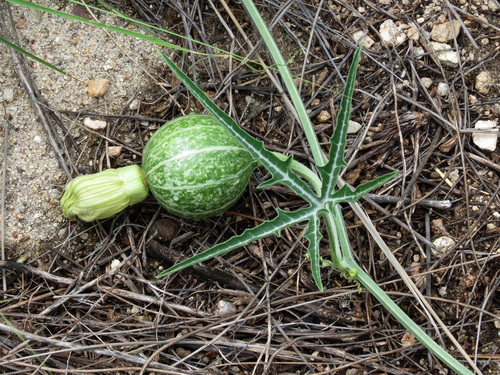
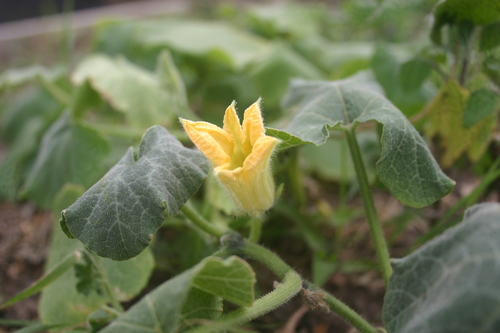
Cucurbita andreana
Naudin
Wild giant squash
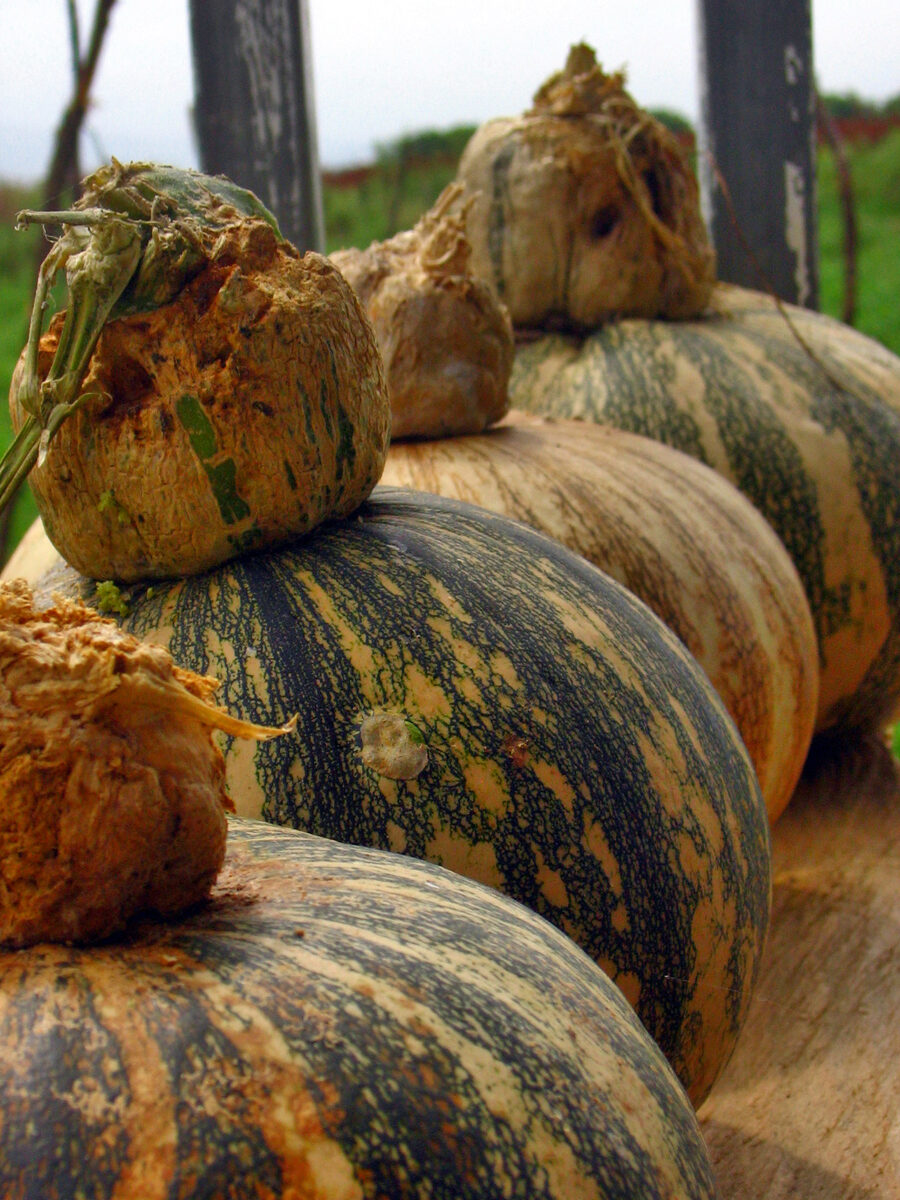
iNaturalist· cc-by-nc
(c) Lucas, some rights reserved (CC BY-NC), uploaded by Lucas
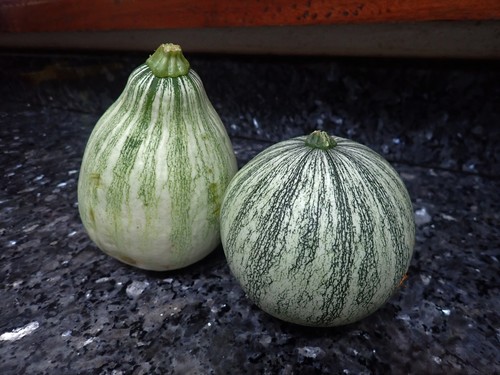
iNaturalist· cc-by-nc
(c) Fernando E. Cuello, some rights reserved (CC BY-NC)
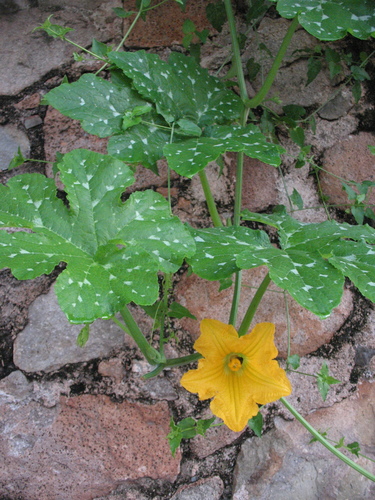
iNaturalist· cc-by-nc
(c) Andrea Talone Rìo, some rights reserved (CC BY-NC)
Description
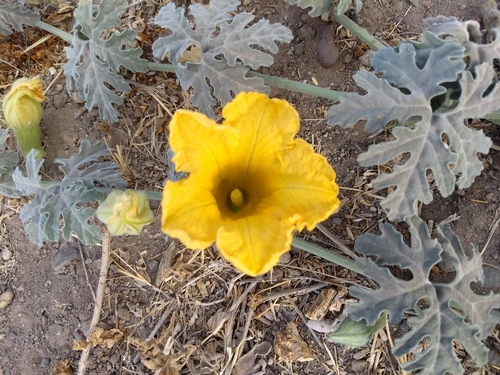
A pumpkin family vine. The vine grows each year. The flowers are bright orange to yellow. The fruit are dark green and oval. They are not edible.
This description is brief — help expand it
Edible Uses
Buttercup squash, a common cultivar, can be roasted, baked, and mashed into soups, among a variety of filler uses, much like pumpkin. It is extremely popular, especially as a soup, in Brazil, Colombia, and Africa. All giant pumpkins (over 300 pounds or 140 kilograms) are of this species, including the largest pumpkins ever documented, which have attained a size of 2,749.0 pounds (1,246.9 kg) as of 2023. The seed of C. maxima is used in treating parasites in animals.
Traditional Uses
Roots and fruit are bitter.
This uses section is brief — help expand it
Distribution
It is a tropical plant.
Where It Grows
Argentina, Bolivia, South America, Uruguay,
Notes
It can form hybrids with Cucurbita maxima. It has anticancer properties due to cucurbitacins.
Synonyms
References (2)
- Jayaprakasam, B. et al, 2003, Anticancer and antiinflammatory activities of cucurbitacins from Cucurbita andreana. Cancer Letters 189 (2003) 11–16
- Nee, M., 1990, The Domestication of Cucurbita (Cucurbitaceae). Economic Botany, Vol. 44, No. 3, Supplement: New Perspectives on the Origin and Evolution of New World Domesticated Plants. pp. 56-68