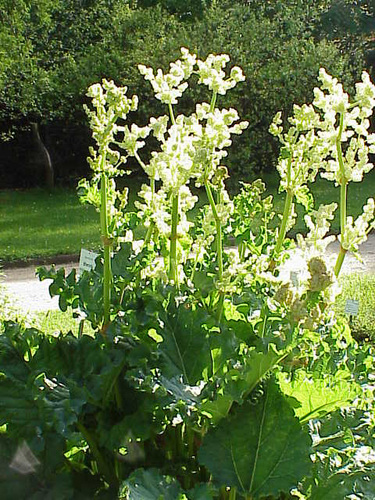
Persicaria chinensis var. ovalifolia
(L.) Hara, (Meisn.) Hara
Tuthiku
gbif· cc-by-nc
pflanzi_ek
gbif· cc-by-nc
pflanzi_ek
gbif· cc-by-nc
John P
Summary
Source: WikipediaPersicaria chinensis (synonym Polygonum chinense), commonly known as creeping smartweed or Chinese knotweed, is a plant species from the family Polygonaceae. It is widespread across China, Japan, the Indian Subcontinent, Indonesia, Malaysia, and Vietnam.
Description
A herb. The stems and branches are smooth. The leaves are broadly oval and 10-16 cm long by 6-8 cm wide. The flower stalks are hairy.
This description is brief — help expand it
Edible Uses
The young fruit are sweet and are eaten.
Traditional Uses
The young fruit are sweet and are eaten.
This uses section is brief — help expand it
Distribution
It is a tropical plant. In Vietnam it grows at 1,900 m above sea level. In Nepal it grows between 1,200-2,900 m above sea level. In Yunnan.
Where It Grows
Asia, China, Himalayas, India, Indochina, Japan, Malaysia, Myanmar, Nepal, Northeastern India, SE Asia, Thailand, Tibet, Vietnam,
Synonyms
Also Known As
Nghe malai, Tuthiku
References (4)
- Flora of China @ efloras.org Volume 5 (As Polygonum chinensis var. ovalifolia)
- Gangwar, A. K. & Ramakrishnan, P. S., 1990, Ethnobotanical Notes on Some Tribes of Arunachal Pradesh, Northeastern India. Economic Botany, Vol. 44, No. 1 pp. 94-105
- Srivastava, R. C., 2009, Traditional knowledge of Adi tribe of Arunachal Pradesh on plants. Indian Journal of Traditional Knowledge. 8(2): 146-153 (As Polygonum chinensis var. ovalifolia)
- Srivastava, R. C., 2010, Traditional knowledge of Nyishi (Daffla) tribe of Arunachal Pradesh. Indian Journal of Traditional Knowledge. 9(1):26-37 (As Polygonum chinensis var. ovalifolia)