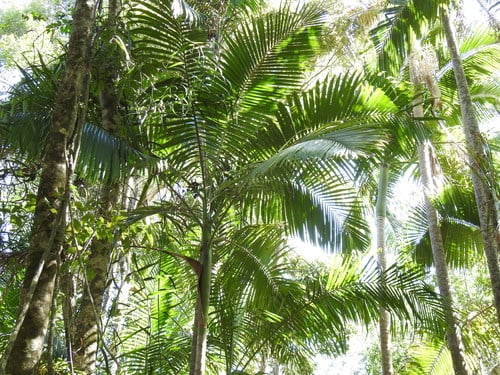
Calamus floribundus
Griff.
iNaturalist· cc-by-nc
(c) lordworm_cryptopsy, some rights reserved (CC BY-NC)
Description
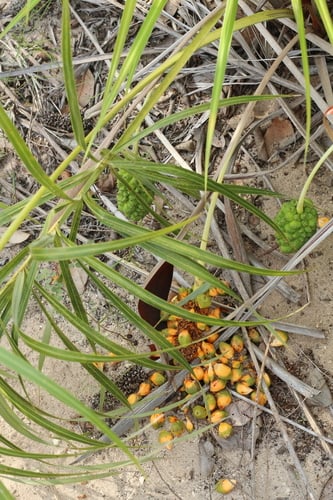
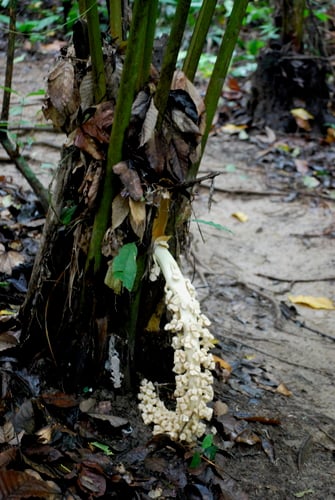
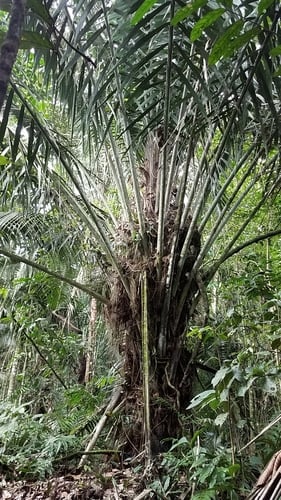
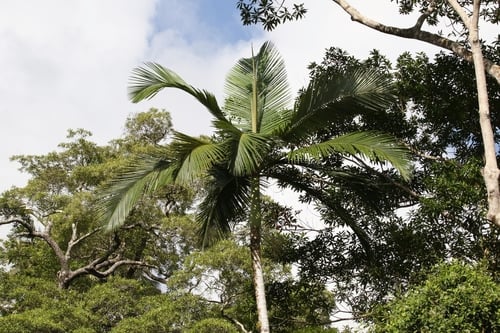
A climbing rattan or cane. The stems are in clusters. The leaf sheath is 3 cm across. It has long spines. The leaflets are sword shaped and 50 cm long by 3-4 cm wide. The fruit are round and 1 cm across.
Edible Uses
The ripe fruit are eaten raw. The shoots and pith are also edible.
Traditional Uses
The ripe fruit are eaten raw.
This uses section is brief — help expand it
Distribution
It is a subtropical plant. It grows in moist forests and lower hill valleys.
Where It Grows
Asia, Bangladesh, Himalayas, India, Myanmar, Northeastern India, SE Asia,
Notes
There are 375-400 Calamus species. There are 175 species in tropical Asia.
Synonyms
Calamus mishmeensis Griff.Palmijuncus floribundus (Griff.) KuntzePalmijuncus mishmeensis (Griff.) Kuntze
Also Known As
Easoo, Krashi, Lee, Okhrashi, Tanesco, Ting-ga, Tingpi, Ye-kyein
References (5)
- Gangwar, A. K. & Ramakrishnan, P. S., 1990, Ethnobotanical Notes on Some Tribes of Arunachal Pradesh, Northeastern India. Economic Botany, Vol. 44, No. 1 pp. 94-105
- Meitei, L. R., et al, 2022, An ethnobotanical study on the wild edible plants used by forest dwellers in Yangoupokpi Lokchao Wildlife Sanctuary, Manipur, India. Ethnobotany Research and Application 23:15
- Pfoze, N. L., et al, 2012, Assessment of Local Dependency on Selected Wild Edible Plants and fruits from Senapati district, Manipur, Northeast India. Ethnobotany Research & Applications 10:357-367
- Srivastava, R. C., 2010, Traditional knowledge of Nyishi (Daffla) tribe of Arunachal Pradesh. Indian Journal of Traditional Knowledge. 9(1):26-37
- Srivastava, R. C., et al, 2010, Indigenous biodiversity of Apatani plateau: Learning on biolcultural knowledge of Apani tribe of Qrunachal Pradesh for sustainable livelihoods. Indian Journal of Traditional Knowledge 9(3): 432-442