Jubaeopsis caffra
Becc.
Pondoland palm, Kaffir palm
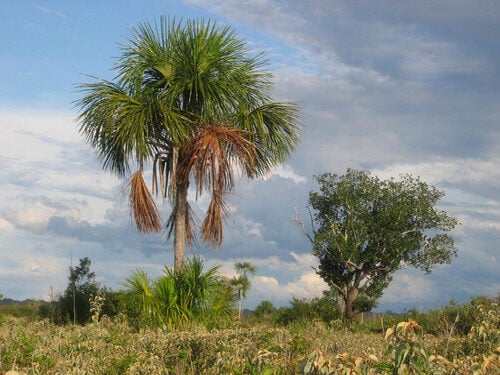
iNaturalist· cc-by-nc
(c) wendyhitchcock, some rights reserved (CC BY-NC)
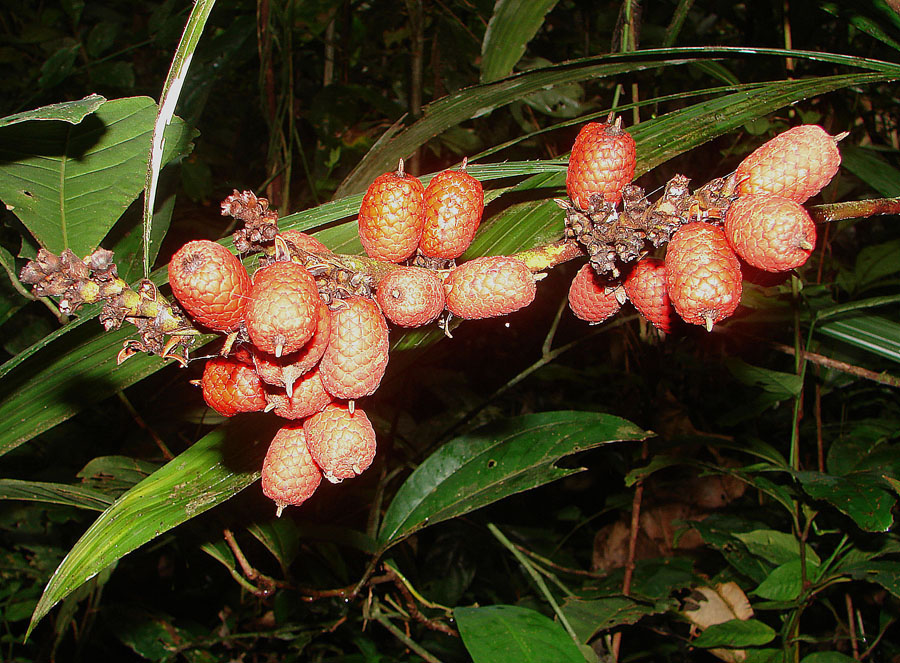
iNaturalist· cc-by-nc
(c) wendyhitchcock, some rights reserved (CC BY-NC)
iNaturalist· cc-by-nc
(c) Tobias Spanner, some rights reserved (CC BY-NC)
Description
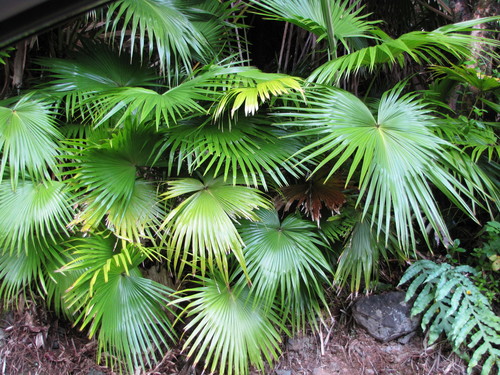
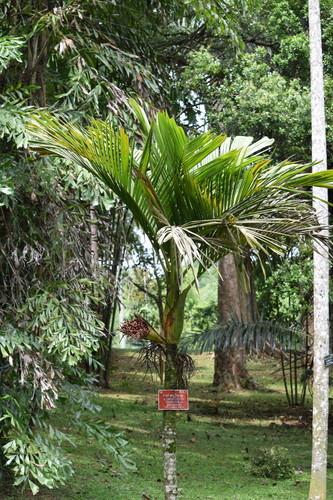
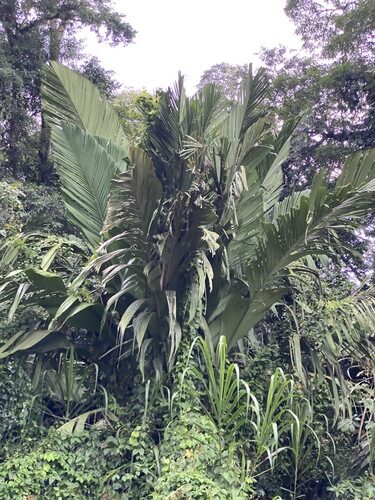
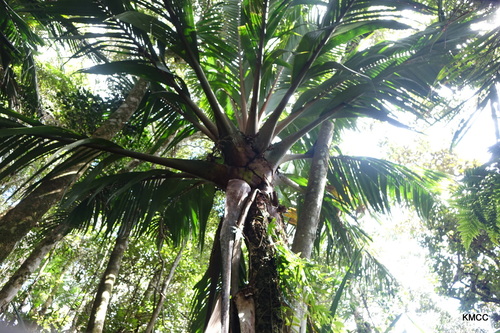
A palm up to 5-8 m tall. It always has several stems from the base. The trunks are short. The leaves are feather-shaped. They are 3-4 m long. They are stiff and dark green. There are no spines on the leaf stalk. There is a slight twist along the leaf stalk. Individual leaflets are stiff, very slender and with an unequal lobe at the tip. Male and female flowers are separate but on the same tree. The flowers are about 1 cm across. They occur in zigzag branched sprays. These occur amongst the leaves. The male flowers are on the upper part of the branches. The fruit are almost round and 3 cm long and 2 cm across. The milk and meat are eaten.
Edible Uses
The fruit are eaten when green for the sweet edible flesh inside the seeds, which provides both milk and meat.
Traditional Uses
The fruit are eaten when green. It is the sweet edible flesh inside the seeds.
This uses section is brief — help expand it
Distribution
It grows along river banks in Pondo land in South Africa. It grows naturally on rocky cliffs near rivers. It suits warm temperate and subtropical regions. It favours sandy soil where groundwater is available. It cannot tolerate frost. It grows between 100-150 m above sea level.
Where It Grows
Africa, Australia, North America, South Africa*, Southern Africa, USA,
Cultivation
It can be grown from seed. Seed are slow and erratic to germinate. Growing seed on the surface of propagating mix and covering them with sphagnum moss has helped germination. Young plants can tolerate exposure to sun. It can be grown vegetatively by making a vertical cut in the leaf crown.
Production
It is slow growing. Hand pollination is needed in USA.
Other Information
The fruit are eaten especially by children.
Notes
There is only one Jubaeopsis species.
Also Known As
Inkomba, Pondo coconut
References (10)
- Balick, M.J. and Beck, H.T., (Ed.), 1990, Useful palms of the World. A Synoptic Bibliography. Colombia p 100
- Blomberry, A. & Rodd, T., 1982, Palms. An informative practical guide. Angus & Robertson. p 110
- Gibbons, M., 2003, A pocket guide to Palms. Chartwell Books. p 125
- Haynes, J., & McLaughlin, J., 2000, Edible palms and Their Uses. University of Florida Fact sheet MCDE-00-50-1 p 7
- Palgrave, K.C., 1996, Trees of Southern Africa. Struik Publishers. p 71
Show all 10 references Hide references
- Johnson, D.V., 1998, Tropical palms. Non-wood Forest products 10. FAO Rome. p 106
- Jones, D.L., 1994, Palms throughout the World. Smithtonian Institution, Washington. p 56, 234
- Jones, D.L., 2000, Palms of Australia 3rd edition. Reed/New Holland. p 169
- Riffle, R.L. & Craft, P., 2003, An Encyclopedia of Cultivated Palms. Timber Press. p 359
- Webbia 4:173, fig. 4-5. 1913