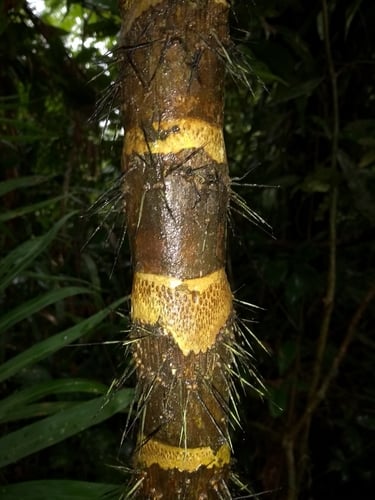
Kentia chaunostachys
(Burret) W, J, Baker & Loo
Palm cabbage
gbif· cc-by-sa
GBIF
gbif· cc-by-sa
GBIF
gbif· cc-by-sa
GBIF
Description
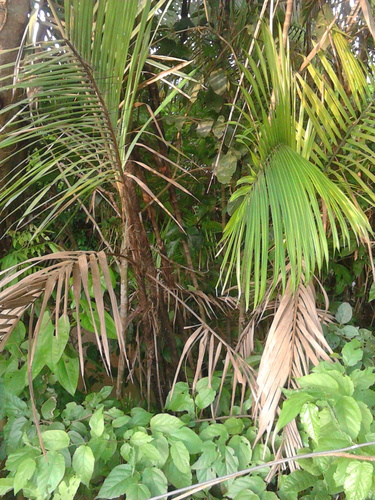
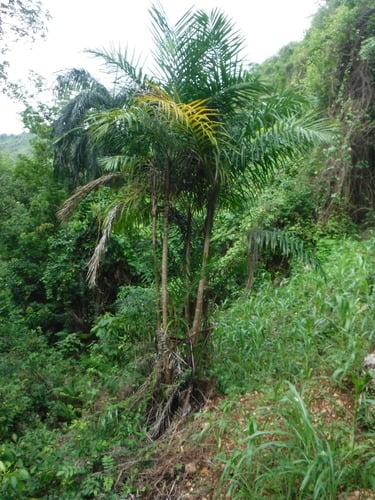
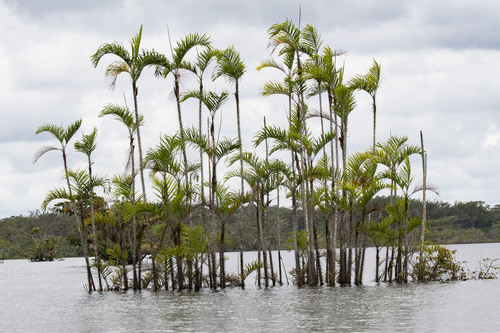
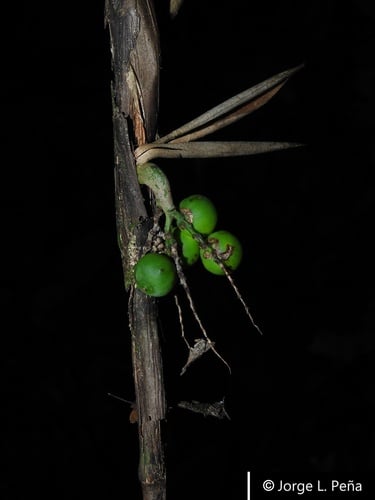
A solitary palm. It is tall. It grows 20 m high. The trunk is slender, ringed and grey. The trunk can be 20-39 cm across. It has a long crown-shaft. This can be 1-1.3 m long. The crown-shaft is covered with woolly brown hairs. The crown-shaft is slightly thicker than the trunk at its base and tapers upwards. The fronds arch over. The leaves are 2.6-3 m long with a 12-25 cm long stalk. The leaves have leaflets along the stalk. The leaflets are 50 cm long and deep green. These can be erect and spreading forming a V shape. The leaflets are slender. The flowering stalk arises below the crown-shaft. The fruit are small and bright red. They occur in dense clusters. These clusters are about 1 m long. Each fruit contains a single seed.
Edible Uses
The cabbage (palm heart) is edible.
Distribution
A tropical plant. It grows in the highlands of Papua New Guinea. It suits tropical and subtropical regions. It grows between 1760-2170 m altitude.
Where It Grows
Australia*, Pacific, Papua New Guinea, PNG,
Notes
There are 14 (33?) Gronophyllum species.
Synonyms
References (4)
- Barfod, A.S., Banka R., and Dowe, J. L., 2001, Field Guide to Palms in Papua New Guinea. AAU Reports 40 Department of Systematic Botany University of Aarhus. Denmark. p 50 (As Gronophyllum chaunostachys)
- Jones, D.L., 1994, Palms throughout the World. Smithtonian Institution, Washington. p 217 (As Gronophyllum chaunostachys)
- Jones, D.L., 2000, Palms of Australia 3rd edition. Reed/New Holland. p 160 (As Gronophyllum chaunostachys)
- Powell, J.M., Ethnobotany. In Paijmans, K., 1976, New Guinea Vegetation. Australian National University Press. p 110 (As Gronophyllum chaunostachys)