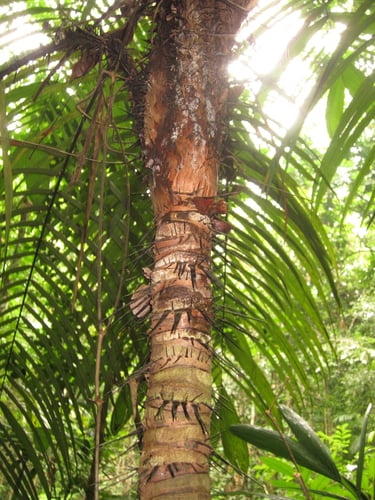
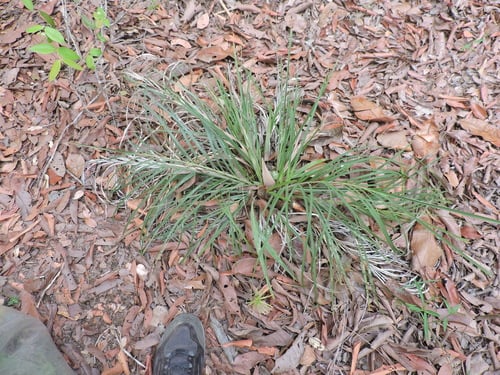
Hyphaene dichotoma
(White) Furtado
Indian doum palm
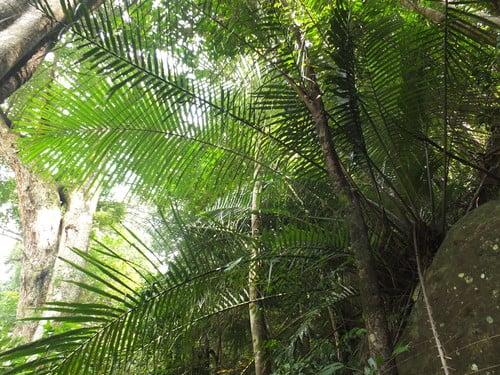
iNaturalist· cc-by-nc
(c) Radha Veach, some rights reserved (CC BY-NC)
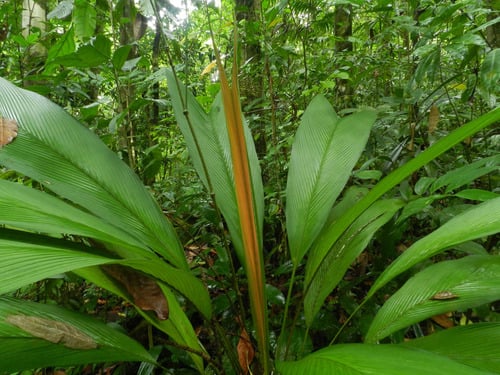
iNaturalist· cc-by-nc
(c) Radha Veach, some rights reserved (CC BY-NC)
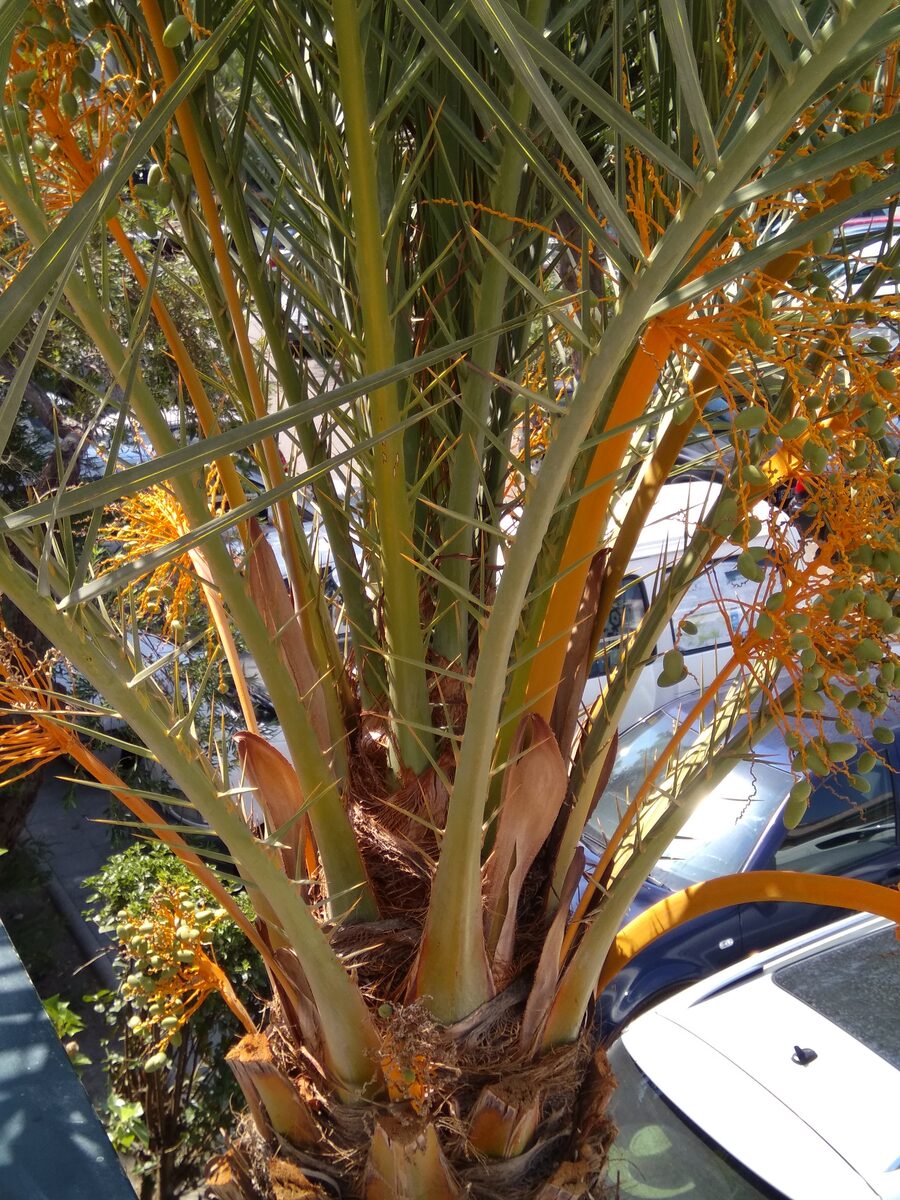
iNaturalist· cc-by-nc
(c) Radha Veach, some rights reserved (CC BY-NC)
Summary
Source: WikipediaHyphaene dichotoma is a species of palm tree in the family Arecaceae. It is found in India and Sri Lanka. It is threatened by habitat loss. It also widely found in most parts of East Africa and in very healthy populations, The tree's nuts are also a common eaten wild nut for almost all the areas it grows in. Hyphaene dichotoma is nowhere close to being threatened by habitat loss in this parts of Africa especially Kenyan Coast as in some places it forms an almost entire forest.
Description
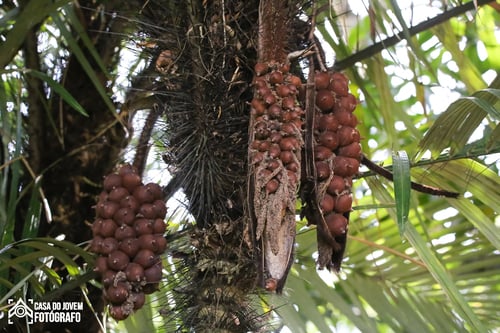
A branched palm. It can form clusters. It branches 3 or 4 times. It can grow 15 m tall. The leaf crowns are large and round. The leaves are deep green. The leaf blade is almost round and over 1 m long. It is divided into about 40 segments. The leaf stalk is about 1 m long. It is armed with black spines. Male and female flowers are on separate trees. The female trees bear clusters of pear shaped brown fruit. They are about 7 cm across. They are deep orange-brown. These are edible. The seed is 3.5 cm long by 2.5 cm wide.
Edible Uses
The fibrous mesocarp of the fruit is eaten. The unripe kernel and nuts are also consumed.
Traditional Uses
The fibrous mesocarp is eaten. The unripe kernel is eaten.
This uses section is brief — help expand it
Distribution
A tropical plant. It suits the tropics and subtropics. It grows in open savannas at low altitudes in India. It can tolerate in colder drier places. It grows naturally in coastal sands. It can grow in arid places.
Where It Grows
Africa, Asia, Egypt, India, North Africa,
Cultivation
Plants can be grown from seed. The seed are sown in sandy beds.
Production
It grows slowly.
Notes
There are about 9 or 10 Hyphaene species. (Some authorities estimate 40).
Synonyms
Also Known As
Branching palm, Makamberu, Oka mundel, Ravana tal
References (8)
- Balick, M.J. and Beck, H.T., (Ed.), 1990, Useful palms of the World. A Synoptic Bibliography. Colombia p 513
- Haynes, J., & McLaughlin, J., 2000, Edible palms and Their Uses. University of Florida Fact sheet MCDE-00-50-1 p 6
- Johnson, D.V., 1998, Tropical palms. Non-wood Forest products 10. FAO Rome. p 40, 132
- Jones, D.L., 1994, Palms throughout the World. Smithtonian Institution, Washington. p 228 (As Hyphaene indica)
- Riffle, R.L. & Craft, P., 2003, An Encyclopedia of Cultivated Palms. Timber Press. p 354
Show all 8 references Hide references
- Royal Botanic Gardens, Kew (1999). Survey of Economic Plants for Arid and Semi-Arid Lands (SEPASAL) database. Published on the Internet; http://www.rbgkew.org.uk/ceb/sepasal/internet [Accessed 5th May 2011]
- Sahni, K.C., 2000, The Book of Indian Trees. Bombay Natural History Society. Oxford. p 182
- World Checklist of Useful Plant Species 2020. Royal Botanic Gardens, Kew