Iguanura geonomiformis
(Griff.) Mart.
Pinang boreng, Bogen
gbif· cc0
President and Fellows of Harvard College
gbif· cc0
President and Fellows of Harvard College
gbif· cc0
President and Fellows of Harvard College
Description
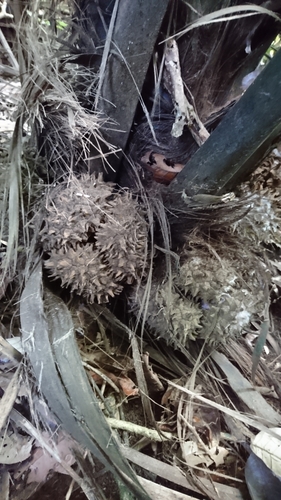
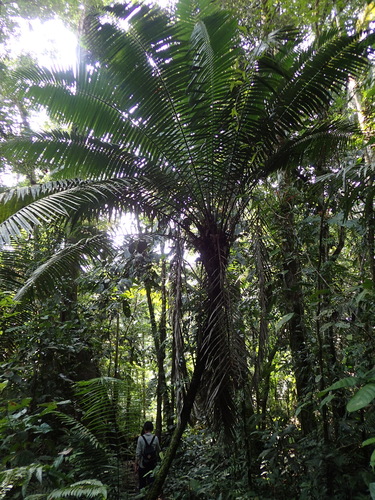
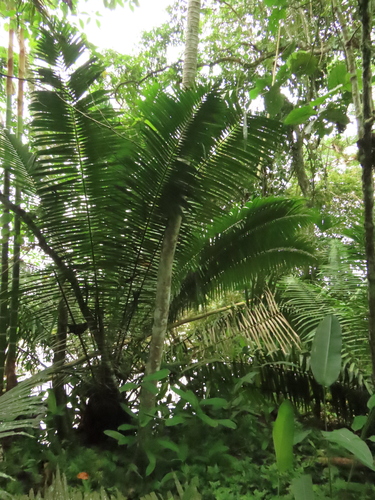
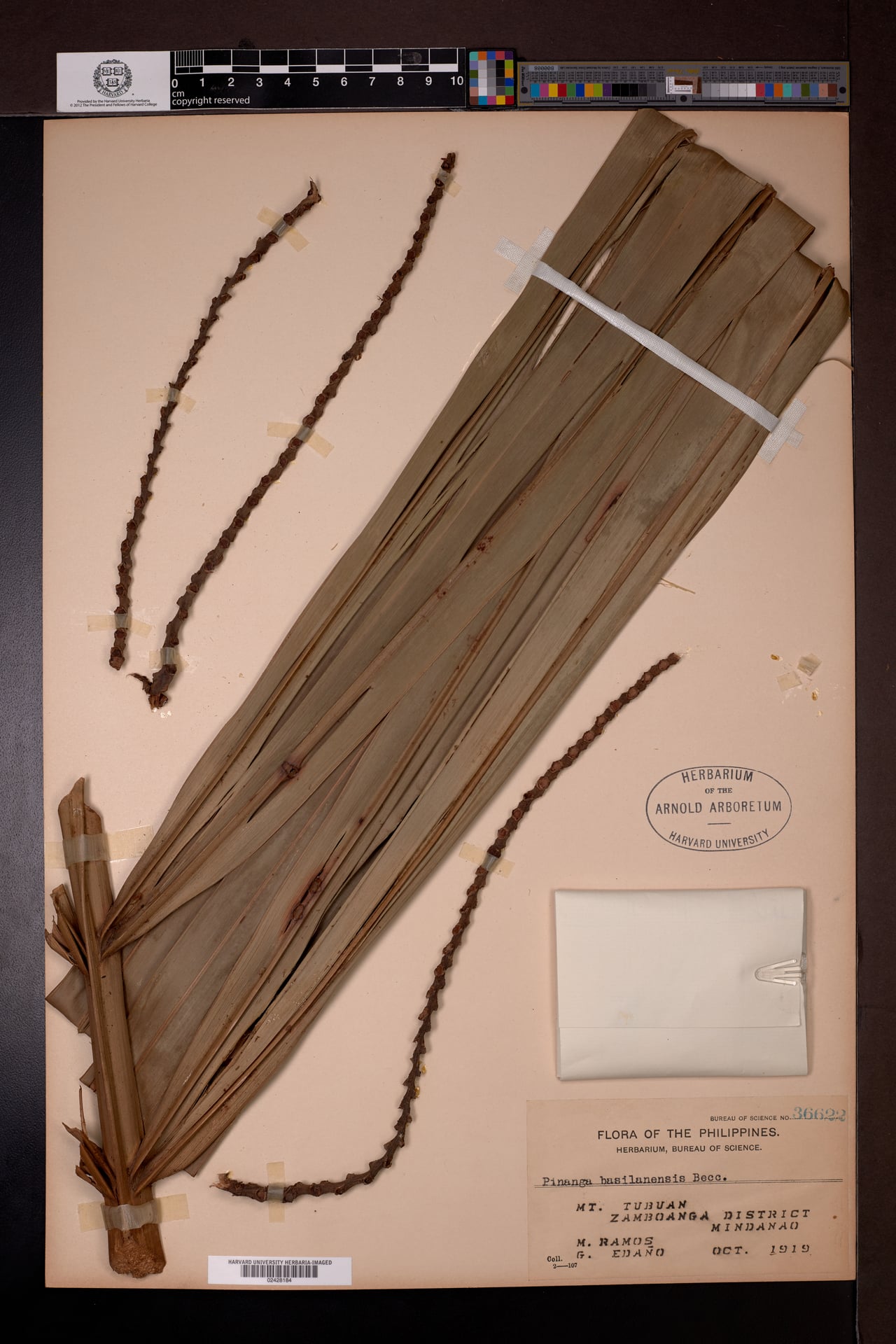
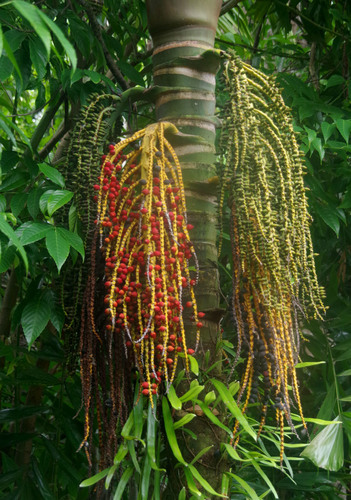
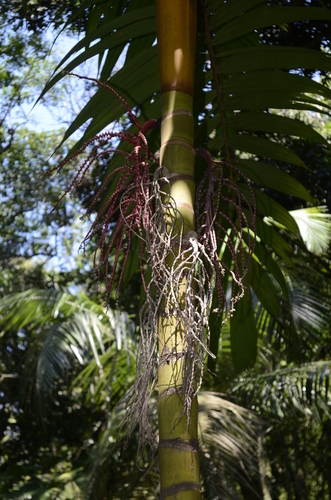
A palm. It is small and usually occurs in clusters. It grows 5 m tall. The stems are 2 cm thick. The leaves grow steeply upwards. There can be lobed or leaflets. The leaves are 50-85 cm long by 20-30 cm wide. The flowering stalk is amongst the leaves. It is 20-90 cm long and can branch into 2-7 branches. The fruit is fleshy and 1 cm long by 0.8 cm wide. It is white but turns red when mature.
Edible Uses
The seeds are used as an inferior substitute for those of areca palm (Areca catechu L.). The seeds of areca are used as a masticatory. The apical bud of leaves is edible. Fruit - raw. A bitter flavour.
Traditional Uses
The fruit are used as betel nut. The bud shoots are eaten.
This uses section is brief — help expand it
Medicinal Uses
The roots and leaves have been taken by women as a contraceptive.
Distribution
A tropical plant. It grows in the undergrowth along streams and damp sites. It can tolerate waterlogging. It grows up to 1,200 m above sea level.
Where It Grows
Asia, Indochina, Malaysia, SE Asia, Singapore, Thailand,
Synonyms
Also Known As
Pinaebong, Pinang burong, Pinang kelasak, Pinang tikus
References (3)
- Burkill, I.H., 1966, A Dictionary of the Economic Products of the Malay Peninsula. Ministry of Agriculture and Cooperatives, Kuala Lumpur, Malaysia. Vol 2 (I-Z) p 1242
- Hist. nat. palm. 3:229. 1845 "geonomaeformis"
- PROSEA