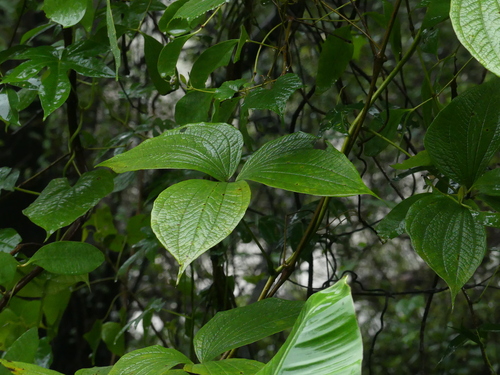
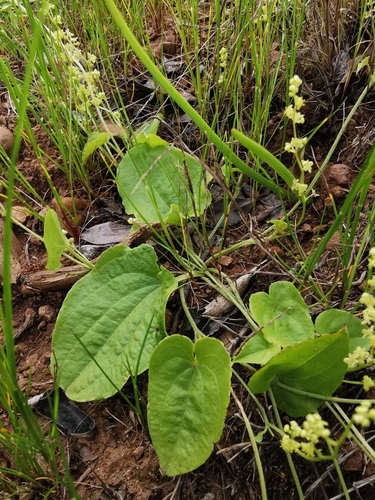
Dioscorea sylvatica
Ecklon
iNaturalist· cc-by-nc
(c) magdastlucia, some rights reserved (CC BY-NC), uploaded by magdastlucia
iNaturalist· cc-by-nc
(c) Adriaan Grobler, some rights reserved (CC BY-NC)
Summary
Source: WikipediaDioscorea sylvatica ("forest elephant's foot") is a species of a twining tuberous vine that is native to Africa. It is common and widespread in forest and thicket, throughout the summer rainfall areas of East and Southern Africa.
Description
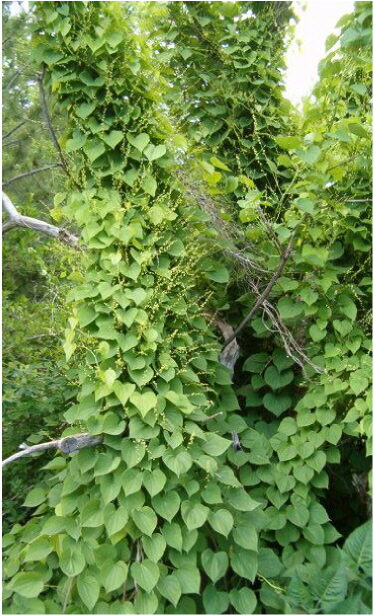
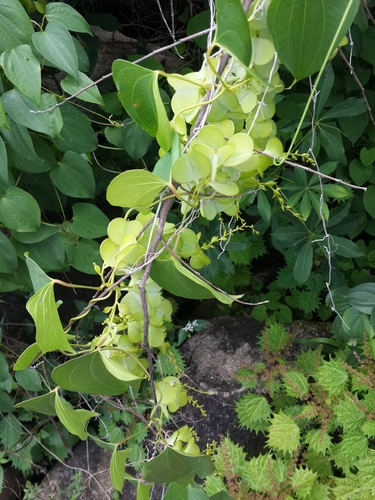
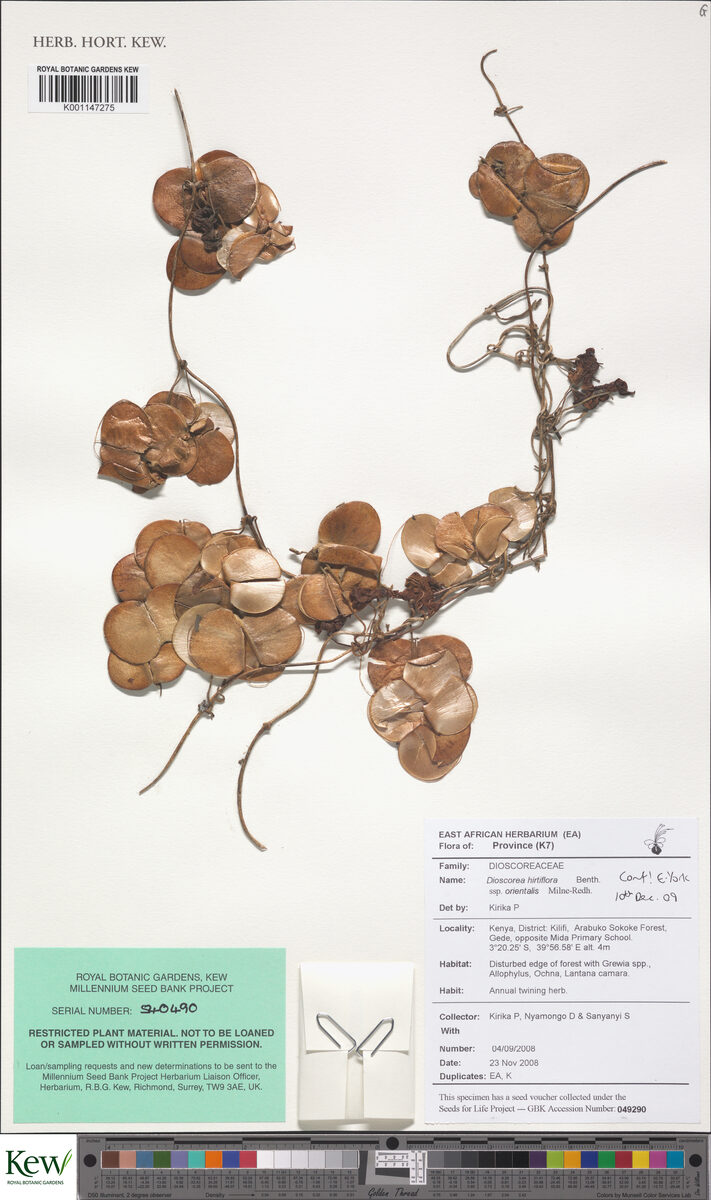
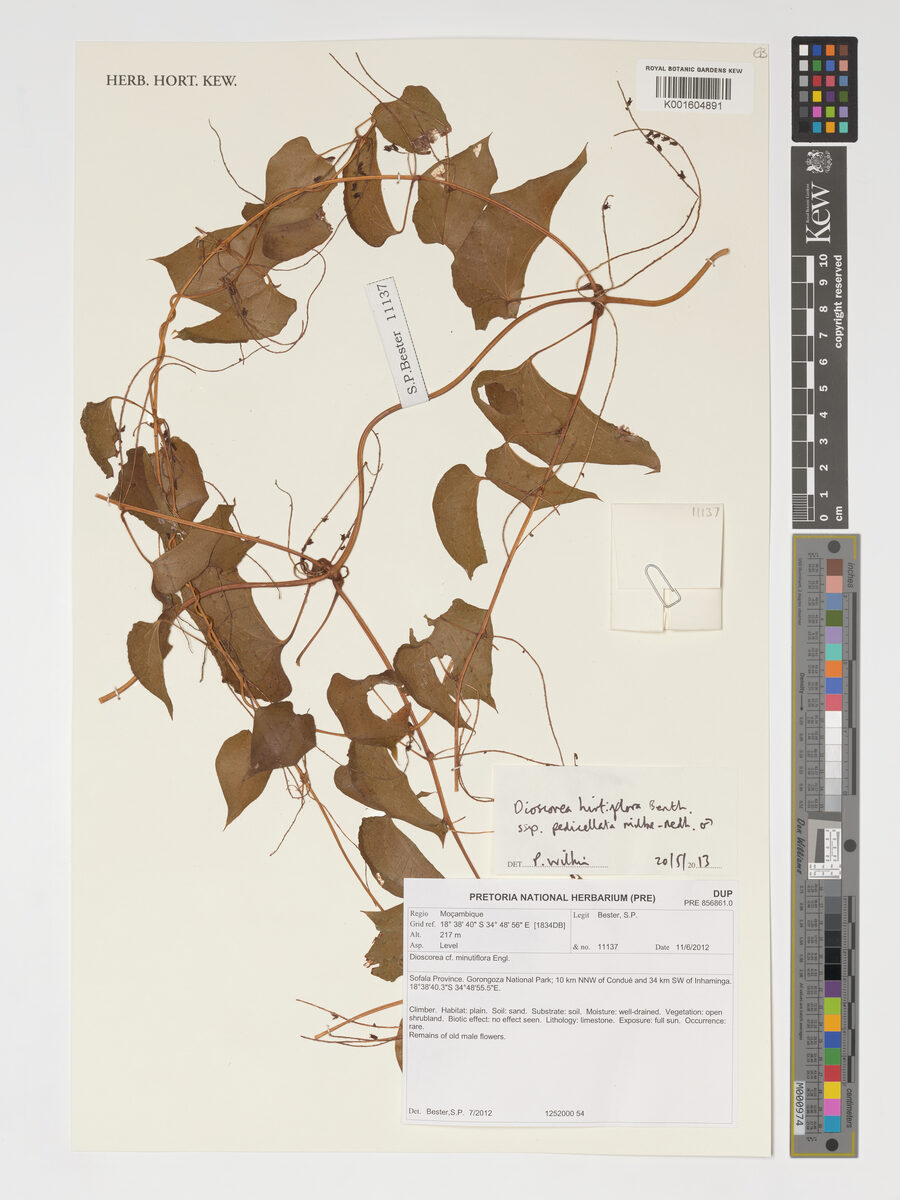
A yam vine. The tubers are single. They are 30 cm across. They have deep lobes. They have a corky covering. It can be in a scale like pattern. The stems twine to the left. There are no bulbils. The leaves are alternate and can be entire or have 3 lobes. They are heart shaped. They are papery to rough. It is similar to Dioscorea elephantipes.
Edible Uses
The tubers have been used as food after soaking and processing.
Traditional Uses
The tubers have been used as food after soaking and processing. Caution: It contains steroids.
This uses section is brief — help expand it
Known Hazards
Contains steroids.
Distribution
It is a tropical to subtropical plant. It grows in rocky areas and also on sandy soils. It can grow from sea level to 1,800 m altitude. It is best in light, well-drained soils. It suits an open, sunny position. It is damaged by drought and frost. It can grow in arid places.
Where It Grows
Africa*, Australia, East Africa, Mozambique, South Africa, Southern Africa, Zambia, Zimbabwe,
Cultivation
It can be grown from seed or by cuttings.
Synonyms
References (5)
- Bodkin, F., 1991, Encyclopedia Botanica. Cornstalk publishing, p 345
- Fowler, D. G., 2007, Zambian Plants: Their Vernacular Names and Uses. Kew. p 86
- Royal Botanic Gardens, Kew (1999). Survey of Economic Plants for Arid and Semi-Arid Lands (SEPASAL) database. Published on the Internet; http://www.rbgkew.org.uk/ceb/sepasal/internet [Accessed 16th April 2011]
- Wilkin, P., 2001, Dioscoreaceae of South-Central Africa. Kew Bulletin, Vol. 56, No. 2 (2001), pp 361-404
- World Checklist of Useful Plant Species 2020. Royal Botanic Gardens, Kew