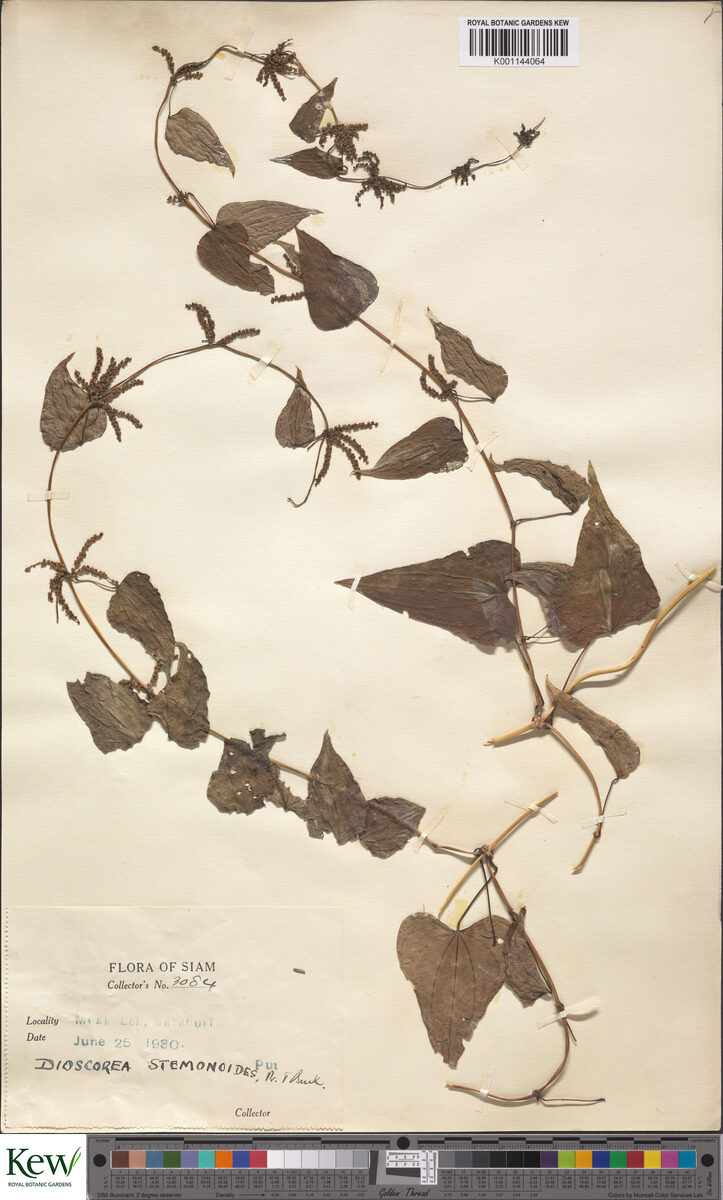
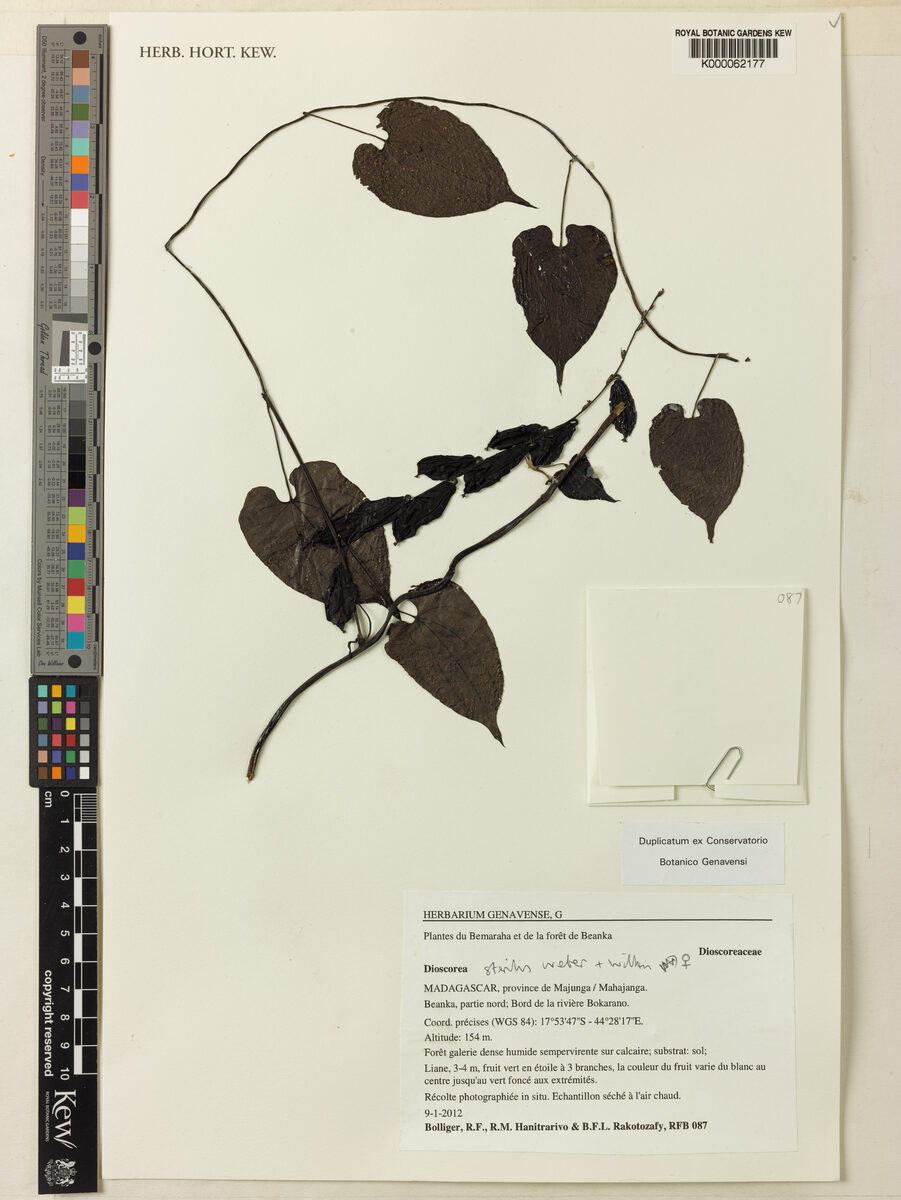
Dioscorea burkilliana
Miege
gbif· cc-by
Royal Botanic Gardens, Kew
gbif· cc-by-nc-sa
MBG
gbif· cc-by-nc-sa
MBG
Description
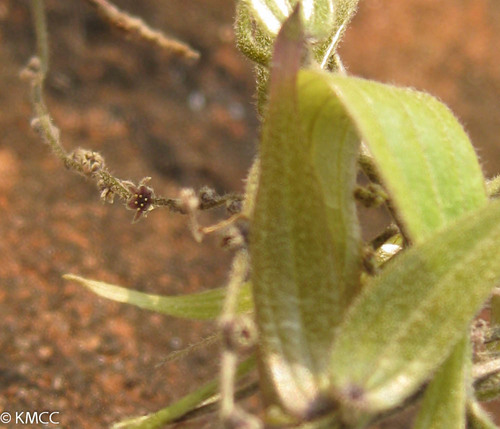
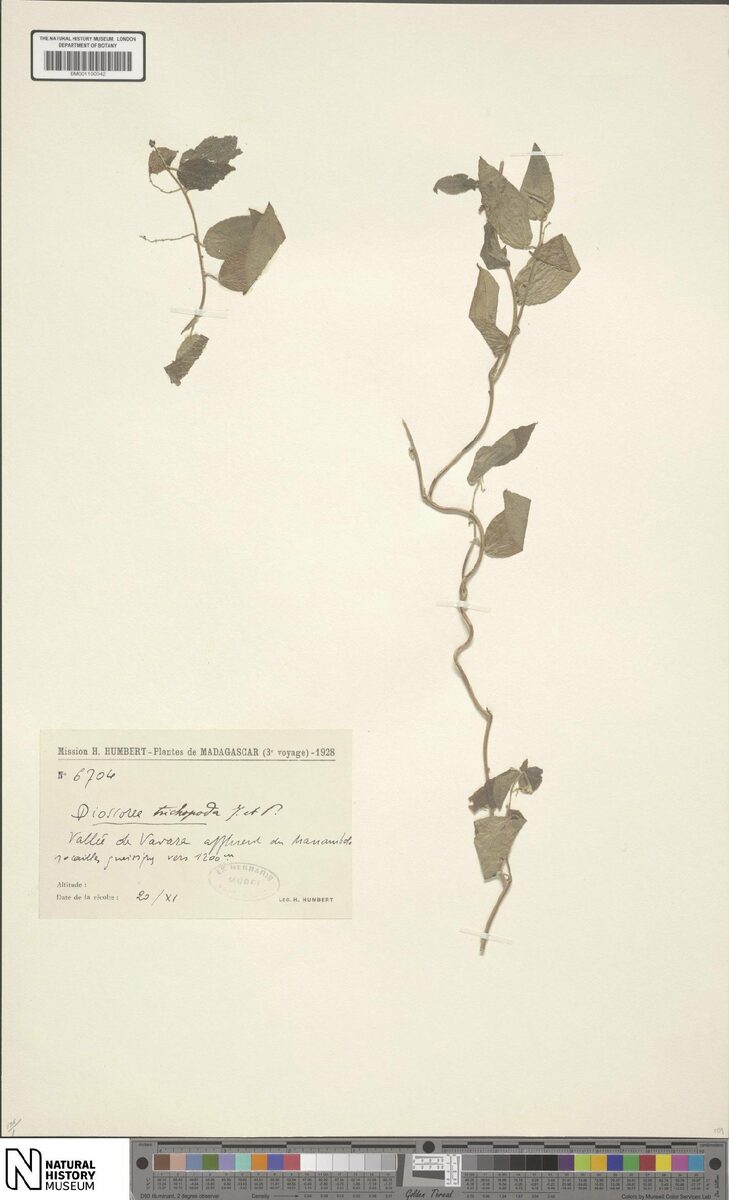
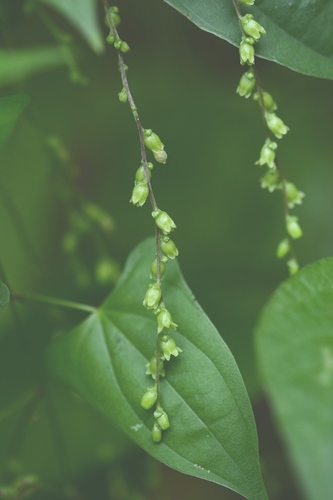
A yam. It is a vine plant. The tubers keep developing form year to year. The stems twine to the right. The stems can be 8 m long.
This description is brief — help expand it
Edible Uses
The tubers are cooked and eaten as a starchy staple.
Traditional Uses
The tubers are cooked and eaten as a starchy staple.
This uses section is brief — help expand it
Medicinal Uses
The tubers are also considered medicinal.
Distribution
It is a tropical plant.
Where It Grows
Africa, Benin, Cameroon, Central Africa, Congo DR, Côte d'Ivoire, Ivory Coast, Nigeria, Sierra Leone, West Africa,
Notes
It is also considered as medicine.
Also Known As
An-buk, An-tankali, An-tantali, Epheli, G-beli-gbeli, Ipheli, Keke, Kokua, Liphe, Mbole, Yuphe
References (7)
- Billong Fils, P. E., et al, 2020, Ethnobotanical survey of wild edible plants used by Baka people in southeastern Cameroon. Journal or Ethnobiology and Ethnomedicine. 16:64 p 7
- Burkill, H. M., 1985, The useful plants of west tropical Africa. Vol. 1
- Idohou, I., et al, 2013, National inventory and prioritization of crop wild relatives: case study for Benin. Genet Resour Crop Evol (2013) 60:1337–1352
- Termote, C., et al, 2011, Eating from the wild: Turumbu, Mbole and Bali traditional knowledge of non-cultivated edible plants, District Tshopo, DRCongo, Gen Resourc Crop Evol. 58:585-618
- Sato, H., 2001, The potential of edible wild yams and yam-like plants as a staple food resource in the African Tropical Rain Forest. African Study Monographs Suppl. 26:123-134
Show all 7 references Hide references
- Yasuoka, H., 2006, Long-Term Foraging Expeditions (Molongo) among the Baka Hunter-Gatherers in the Northwestern Congo Basin, with Special Reference to the "Wild Yam Question". Human Ecology, Vol. 34, No. 2, April 2006, pp 275 ff
- Yasuoka, H., 2009, Concentrated Distribution of Wild Yam Patches: Historical Ecology and the Subsistence of African Rainforest Hunter-Gatherers. Human Ecology 37:577-587